|
|
|
Psychological
Healing
in the Catholic Mystic tradition

Spiritual
Counsels |
|
To develop
love for God and healthy self-love |
Neither shall you
allege the example of the many
as an excuse for doing wrong. |
— Exodus 23:2 |
Fear |
Love |
Humility |
Therapy |
Books |
About CSF
Introduction |
The Mandate |
A Basis both Ecclesiastical and Psychological |
Rationale |
The Counsels
 HE
meaning of life is very
simple: God created everything with love so that everything could participate in His love.
The reality of evil is also simple: Satan and many angels rebelled at God’s love for the
world, and so they set about obstructing God by sowing hatred and chaos in the world. HE
meaning of life is very
simple: God created everything with love so that everything could participate in His love.
The reality of evil is also simple: Satan and many angels rebelled at God’s love for the
world, and so they set about obstructing God by sowing hatred and chaos in the world.
God’s remedy
for this rebellion was the Incarnation; His Son was born into the world as true God and
true man as a sacrificial redemption from our slavery to
Satan and his works, and one of His primary acts was to cast out demons from our lives so
that we could be free to love God.
Therefore, as Christians, our task is to reject
Satan and his works by staying close to God’s love through His Real Presence in the Holy
Eucharist, through constant heartfelt prayer, and through living a holy life of keeping His
commandments.
As simple as this is, most Catholics today don’t
have a clue as to the meaning of it. Today, many, if not most, Catholics have little or no
awareness of demonic oppression and naively believe that the world exists for their pleasure
and that the Church exists for human fellowship—and “love.”
|
Many times, throughout the
course of His teaching and healing, young men would approach Jesus asking Him to accept them
as disciples. But they didn’t really want to serve Him; they really wanted to “jump on the
bandwagon” of His ministry so that their family and friends would think they were “special.”
The concept of dying to the self never entered their minds. Jesus knew this, so
when He would ask them whether they were willing to forsake home and parents, distribute
their goods to the poor, obey blindly, and suffer persecution for His sake, they would shrug
their shoulders and walk away. |
|
The mandate of Christianity is not about social
acceptance. The mandate of Christianity is love. Love is the “crux” of the
matter—literally—of living a holy life. Yet in this simplicity, complicated problems can
spring up like weeds. First, the real love of Christianity must be learned and separated
from common love—that is, common secular distortions about love. Second, prayer for
divine protection of love must be learned; Christians must constantly pray for protection from
the evil that will assault them as they progress on the path to living
a holy life.
Regarding common love, more often than not
most persons today, even Catholics, use “love” as a mere excuse for
self-indulgence and sentimentality (the reduction of a virtue
to a mere feeling). In the modern world especially—although it has been a problem throughout
Church history—most persons commonly scorn real love because they prefer the warm feeling of
being accepted by someone. Thus they scorn the suffering, self-sacrificial love with which
Christ loved us to save us from our sins. And even though Christ commanded
us to love each other “as I have loved you,” many persons scorn
this love because they have so perverted and sentimentalized the concept of “love”
that they even condone sin today in the name
of Christ. Heretics even go so far as to bless sin in
the name of Christ. Sadly, many persons in the average parish today are just pagans
in Catholic clothing, and they believe that Christianity amounts to the warm
feeling of an unconditional acceptance of anything, even to the point of
unconditionally accepting sin—and they do it in the name of
“Christian love” and Catholic compassion.
Regarding evil, most persons have forsaken real
love because children are brainwashed from infancy by movies,
television, social media, magazines, popular music, and sports that are all awash
with the evil Satanic vices of aggressiveness, competition, defiance of authority,
disobedience, entitlement, hatred, anger, revenge, and lust. Today, these vices, rather than
Christian virtues, affect everyone’s behavior whether they realize it or not.
In today’s culture
of insanity the fundamental Christian principle of dying to the self has so
lost its meaning that most Catholics find the concept to be incomprehensible.
Instead of dedicating their lives to fighting
the great spiritual battle against evil, using love for God as their weapon, Catholics
ignore their baptismal promises and welcome moral corruption into their hearts as they go
about eagerly seeking acceptance from a corrupt social world.
The Mandate
So, before explaining the spiritual
counsels that can assist the development of your love for God and your
protection from evil influence, let’s consider the practical
reality of a Christian life: before we can enter into
the pure love within the Kingdom of Heaven, we must be purged of all that is
not pure
love.[1]
Therefore, our mortal life should be a life of spiritual purgation, whereby
we
Therefore, a life of genuine
Christian faith and love must
be directed to doing everything we can to fulfill the Christian mandate
and to avoiding anything that contradicts this mandate.
A Basis both
Ecclesiastical and Psychological
Through its tradition and laws,
the Church is able to “guarantee to the faithful the very necessary
minimum in the spirit of prayer and moral effort, in the growth in love of
God and neighbor” (Catechism of the Catholic Church, 2041). Now,
in this context, the very necessary minimum means that salvation is
not possible with anything less than what the Church
requires.
But can it be advisable to do
more than what the Church minimally requires?
Well, remembering how easy it
is to pervert love into something it isn’t, it is just as easy to make
“the very necessary minimum” into a mere intellectual performance.
If we do that, we end up deceiving ourselves—and that, sadly, is far
from what is really needed. Even at its very necessary minimum, love must be
more than a surface scratch—it must cut deeply into the heart.
Now, in the realm of psychology,
when attempting to heal emotional wounds that block spiritual growth, we
need to go far deeper than surface appearances. We need penetrating psychological
insight to get to the roots of the weeds that choke our spiritual
development.
The best way to develop
psychological insight and spiritual development is to turn away from social
“outsight”—that is, attachment to social identifications that
merely cover over our inner confusion and turmoil with a surface feeling
of acceptance by others. So, considering that unconscious psychological
conflicts [2]
more often than not lead us away from complete trust in God and right
into spiritual disobedience, and
considering the consequences of disobedience—all the temporal misery
of purgatory, or, even worse, the unending misery
in hell—it would be prudent to make certain
that “the very necessary minimum” is not just an intellectual
superstition.
Therefore, seek true
love—the true and single ecclesiastical and
psychological goal—at any cost. Aim high or you will miss
the mark altogether. It is necessary to do everything we can to remain aware,
at every moment of our lives, from the very depths of our hearts, that we are
totally dependent on God’s love for us.
Rationale
All the counsels that follow derive
from pure love as exemplified by the Catholic mystics
through the ages. There is nothing arbitrary, or artificial, or puritanical about
them. As Christ told Saint Catherine of Genoa:
Yet, sadly, most everyone
who reads these counsels will balk.
“I can’t do that,”
they say. “I’ll die if I have to give up
masturbation, television,
Facebook,
video games, cigarettes . . .”
“I’ll die if I have to stop wearing sexy clothes.”
“I’ll die if I have to give up the emotional and financial
security of living with my boyfriend.” “I’ll die if I
can’t watch football every Sunday.” “I’ll die
if I have to wear a chapel veil.” Well, maybe you get the
idea. We claim that we want to follow Christ, but, like the rich young man of
the Gospels, we all have something we refuse to do because we’re
afraid that life will be dull and empty at the foot of
the Cross.
Christ told us, however, that
in order to follow Him we had to take up the cross and die to our social
identities. What is Christianity but death to this world and birth to a new,
ineffably delightful spiritual life? And what is the basis for this new life?
Love. Pure, simple love. And what are the things that
obstruct pure, holy love? Well, how about entertainment,
tobacco, sports,
and lust, for example—the very things to which you
cling in order to preserve your social life
as you think it should be.
So how do these things obstruct
love? Well, in trying to preserve what now seems to you to be
“life”—that is, in defending your pride
of feeling accepted by the world—you in effect prevent yourself from
doing what Christ told us all to do: give up everything for Him, from the
very depths of your heart, so as to serve Him with every aspect of your being, as
preparation for everlasting life. To do what He asks is love, for it is to value
the holy everlasting life He offers through Himself more than your own
illusions about how you think life should
serve your own pleasure.
|
 The
present time is very precious. Now are the safe days. Now is the acceptable time.
But how sad that you do not spend this time well while you have strength to gather
the merit which will allow you to live forever! The time will come when you will
wish for one day or one hour for changing your ways, and I do not know whether
you will get it. . . . Learn now to place Christ at the center of your life,
that then you may begin to live your life with Christ. Learn now to let go
of all things that stand between you and Christ . . . . Do, do now, dear
friend, whatever you can do, because you do not know when you will die, nor
do you know what will happen to you afterwards. Gather everlasting riches
while you have time. Think of nothing except your eternal well-being. Care
only for the things of God. . . . Keep your heart free and lifted up to God,
for this world is not your permanent home . . . . The
present time is very precious. Now are the safe days. Now is the acceptable time.
But how sad that you do not spend this time well while you have strength to gather
the merit which will allow you to live forever! The time will come when you will
wish for one day or one hour for changing your ways, and I do not know whether
you will get it. . . . Learn now to place Christ at the center of your life,
that then you may begin to live your life with Christ. Learn now to let go
of all things that stand between you and Christ . . . . Do, do now, dear
friend, whatever you can do, because you do not know when you will die, nor
do you know what will happen to you afterwards. Gather everlasting riches
while you have time. Think of nothing except your eternal well-being. Care
only for the things of God. . . . Keep your heart free and lifted up to God,
for this world is not your permanent home . . . . |
|
|
—Thomas à Kempis
The Imitation of Christ, 1. 23
(trans. by William Creasy) |
|
Right now, with all your illusions
wrapped around you, you are dwelling in blindness, even though you deny it.
Of course you can’t see it. Without deep spiritual scrutiny, who could see
it?
Just remember, for example, that many
individuals caught up in addictions, such as alcoholism, will, while in a state of
intoxication, claim that they are doing nothing harmful to their lives.
It’s only when they get into a sober state of mind that they can perceive
how close to death and total destruction they really were. And so it is in
the spiritual realm. When you’re caught up in all the attractions of
the world it’s literally impossible to see how
much of your life is a refusal to serve God and
how close to spiritual ruin you really are, even if you already claim to
be a devout Catholic.
|
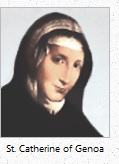 I have seen this in myself,
for from time to time I have found many natural
desires destroyed within me which had previous
seemed to me very good and perfect; but when they were thus removed I saw
that they had been depraved and faulty, and in accordance with those spiritual
and bodily infirmities which, being hidden from me, I had not supposed myself
to possess. And this is why it is necessary to attain such a subtlety of
spiritual vision, in order that all which at first appears to us perfection
may in the end be known as imperfections, robberies, and woes: all this is
clearly revealed in that mirror of truth, pure love, in which all things
appear distorted which to us had seemed upright. I have seen this in myself,
for from time to time I have found many natural
desires destroyed within me which had previous
seemed to me very good and perfect; but when they were thus removed I saw
that they had been depraved and faulty, and in accordance with those spiritual
and bodily infirmities which, being hidden from me, I had not supposed myself
to possess. And this is why it is necessary to attain such a subtlety of
spiritual vision, in order that all which at first appears to us perfection
may in the end be known as imperfections, robberies, and woes: all this is
clearly revealed in that mirror of truth, pure love, in which all things
appear distorted which to us had seemed upright. |
|
|
—Saint Catherine of Genoa
The Life and Doctrine of St. Catherine of Genoa
Chapter XXIV |
|
Therefore, if only you would
now do what is revealed here, in true imitation of Christ, you would soon
discover for yourself an experience of holy love so palpable and real that
every unconscious resistance will dissolve
into oblivion and only pure love will
remain.
|
Instead of seeking
your own pleasure, seek to do God’s will. Instead of defending your
pride, defend the Faith.
Instead of serving your self-interests, serve others with real love, as Christ
Himself commanded us to do. |
|
COUNSELS for Healing
To Develop Love for God and Healthy Self-love
The greatest commandment is this:
to love God with all your heart, all your soul, all your mind, and all your
strength. If you really loved God, all the things you do and all the things
you refuse to do—that is, all the behaviors of your life—would
express your love for God. Although many various behaviors characterize this
love, the mere performance of such behaviors is not an act of love. Still,
practicing behaviors that characterize love can help to lead you into an
understanding of divine love. Therefore, the goal of these counsels is not
to strive to perform them perfectly; the goal is to perform the counsels
in the hope of growing in love.
|
Practice the counsels
now as an act of self-discipline to start your healing; eventually, when you have healed
from your emotional pain and trauma, you will be performing the counsels spontaneously
and gracefully as an act of love for God. |
|
There are four basic aspects
to this growth process: prayer, abstinence from defenses,
charity, and self-encounter.
1. Make
prayer the basis
of your emotional stability. Prayer has its foundation in the formal prayers of the
Church, but reciting them out of duty will not help much with your emotional healing.
Instead, your healing will depend on the power and efficacy of constant moment-by-moment
quiet love for and trust in God.
Note that prayer is not about bribing some cosmic magician to
get rid of your problems; prayer is about doing the hard work of bringing your emotional pain
before God so as to face your problems and overcome them through trust in God’s
guidance.
• |
Maintain a constant awareness of the
presence of God by practicing gratitude throughout the
day and pray from your heart constantly for guidance in your mission of service to
God, courage to face the reality of evil, strength to fight with love against evil,
and perseverance to continue in the face of any opposition.
|
• |
Sit frequently in silent prayer and accept your
helplessness before God. Feel the pain of the emotional wounds from your childhood,
and let your tears be prayers. Weep for what was inflicted on you, and
weep also for the pain you have inflicted on others
because you have not dealt in a healthy way with your own emotional wounds but instead
have used defenses such as addictions,
lust, and anger to
suppress your pain. Admit that you cannot make others act as you would like them
to act. Admit that you cannot save the world from its insanity. Admit that without
God you are nothing. Feel the nothingness and accept it. Accept that only in your
helplessness and nothingness will you ever receive a mission from God to do anything
meaningful. When we try to flaunt our greatness—whether it be physical allure,
athletic prowess, military power, social celebrity, intellectual finesse, philosophical
reasoning, or whatever—we push God out of our lives. A life of
humility, however, keeps us oriented toward God’s
majesty.
Oh, the depth of the
riches and wisdom and knowledge of God! How inscrutable are His judgments and how
unsearchable His ways! For who has known the mind of the Lord or who has been His
counselor? Or who has given Him anything that He may be repaid? For from Him and
through Him and for Him are all things. To Him be glory
forever. |
—Romans
11:33-36 |
|
• |
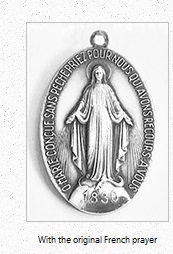 Wear the Miraculous
Medal [3]
around your neck at all times as a seal upon your heart; having it on
your Rosary beads misses the point. The chain for the medal, therefore,
should be long enough to keep the medal over your heart, rather than over
your throat as a piece of jewelry. Say its prayer (in English: “O Mary, conceived without
sin, pray for us who have recourse to thee.”) many times a day. [Click here for a supplier of the medal with the original French prayer.] Wear the Miraculous
Medal [3]
around your neck at all times as a seal upon your heart; having it on
your Rosary beads misses the point. The chain for the medal, therefore,
should be long enough to keep the medal over your heart, rather than over
your throat as a piece of jewelry. Say its prayer (in English: “O Mary, conceived without
sin, pray for us who have recourse to thee.”) many times a day. [Click here for a supplier of the medal with the original French prayer.]
Like the angels, Mary had
free will, and in her conception she was given the grace, like the angels, to be free
of the desire to commit sin. Unlike Mary, the rest of humanity, in its state of
original sin, is afflicted with the desire
to commit sin, and so, for the sake of our salvation, we must endeavor always to renounce
that unholy desire which lurks deep in the heart of our fallen being. Keeping the medal of
the Blessed Virgin over our hearts gives us assistance in our battle of renouncing sin and
evil.
|
• |
Attend
Mass every Sunday (if not daily) and on every
holy day of obligation.
Wear modest and reverent dress clothing.
Women, keep
your neck and shoulders covered.
Men and women,
if you have tattoos, keep them totally covered.
Women, wear a skirt, not pants, and cover your heads with
a scarf or chapel veil before entering the church.
Men, remove your hats, beanies, or anything else covering your head.
When you enter the church, look at the tabernacle and genuflect,
saying silently, “My Lord and my God.”
Be careful to arrive on time (before the priest enters the sanctuary); if you do arrive
late, do not receive the Eucharist.
Receive the Eucharist only on the tongue and only from
the hands of a priest (never from a lay person).
Do not leave before the dismissal, and, when you leave, look at the tabernacle and
genuflect, saying silently, “My Lord and my God.”
If you have a family, read the
Scriptural texts for the next day’s Mass in the evening as a family activity.
Spend time reflecting on the meaning of the texts. If you need help interpreting
the texts, then use the book A Practical Commentary on Holy Scripture
as described on the Reading the Bible page of this
website.
Also, if you have young children, teach them how to sit quietly
at home in prayer so that when you take them to Mass they will not be unruly and
noisy. Unruly children at Mass are an indication that the parents have an unruly
prayer life.
|
• |
If you go to Eucharistic Adoration, rather
than pray the Rosary or read spiritual texts, use the time to reflect on the emotional
pain of your past and to shed prayerful tears for your emotional wounds.
|
• |
Pray the
Waking Prayers every morning to begin the day.
|
• |
Pray the
Deliverance from the Tyranny of Evil as daily
protection from demonic influence.
|
• |
Pray the
Litany of Humility daily.
|
• |
Endeavor to pray the
Act of Reparation to the Sacred Heart of Jesus (adapted)
as much as possible as a critical part in the spiritual battle against the smoke of Satan in
the deep Church.
|
• |
Every noon (and at 6:00am and 6:00pm also if
possible) stop what you are doing and pray the Angelus
(or the Regina Coeli during the
Easter season). Note that the Angelus is prayed kneeling
whereas the Regina Coeli, because of its joyful character, is prayed standing.
|
• |
Practice a constant attitude of
gratitude.
|
• |
Every night, before going to bed, go
before the Crucifix, review the day, and give thanks for everything you accomplished
that day.
|
• |
Pray
always for all the souls in Purgatory (and know that they will be praying for you,
in return).
|
2. You can encounter
your inner brokenness by abstaining from all self-indulgent defenses that serve
only to distract you from your brokenness. These defenses do nothing to lead you to
spiritual purity and do quite a bit to seduce you into spiritual impurity. Have you ever
affirmed a vow to renounce the works of Satan? Well, think carefully. The things that
follow are—either directly or indirectly—all works of Satan.
• |
Sexual
activity. Sex is not love,
so outside of its procreative function in
Holy Matrimony,[4]
it serves only the narcissistic purpose of making ourselves
“feel good.” Learn, therefore, to place your trust in
God, not in your own body or in the body of a
“partner”—that is, a “partner in sin.” To learn to
trust in God, it is important to face your
emotional emptiness directly,
without defenses. Therefore, to develop a love for God,
live in chastity and abstain from eroticism: no fornication, no
masturbation, no pornography;
in general, no lust.
If you are struggling to
overcome an obsession with pornography or masturbation, keep in mind that following
the other counsels on this page will aid your struggle against sexual temptations. Also, add
the Litany of Chastity to your daily prayers.
|
• |
Immodesty. For
both men and women, immodesty is a grave opening to sin. Avoid
tight or revealing clothing, sports insignia, piercings, and
tattoos. (If you have an existing tattoo,
cover it in sorrow for having defiled your body, the
temple of the Holy Spirit.) For women, do not wear
leggings, jeans, or slacks; keep your shoulders, neck, and chest covered; and cover your
head with a chapel veil when praying, especially in church. To
learn true humility, set aside all
vanity.[5]
|
• |
Social Media.
As popular as they may be in contemporary culture, social media
(such as Facebook, Instagram, and Pinterest) have only one psychological purpose:
to get approval and acceptance from others. In your desperation to get approval, you are
drawn into an evil breeding ground for pride and lust, as well as for anger, rudeness,
hostility, hate, and bullying of anyone you don’t like—and so you are drawn away from
developing contemplative love for God. Note carefully that these evil behaviors, as Saint
Paul warned, will exclude a person from the Kingdom of Heaven (see Galatians 5:19–21).
It’s that simple.
|
• |
Entertainment.
Most entertainment, such as TV, movies, social media,
sports, electronic gaming, gambling, and secular music, distracts you from a prayerful
focus on holy things. Entertainment, in general, not only squanders your time on
frivolities and buries your talents, but it also infects
you with the anti-Christian values (such as lust, pride, avarice, vanity, self-indulgence,
competition, hostility, etc.) of contemporary society. Furthermore, these things
incite you to idolize (that’s a mortal sin, remember) social acceptance, to
neglect constant prayer, and, ultimately, to
dilute the holy presence of God in your life. So, instead of turning to a corrupt
social world for emotional satisfaction, turn to God in
contemplative silence and prayer.
Even if you participate in some
entertainment that isn’t specifically anti-Christian, then give to charity an amount equal
to the cost of the ticket or admission fee.
|
• |
Tobacco and nicotine.
When you light a cigarette, a cigar, or a pipe, you are playing with hell fire,
because tobacco smoke is the smoke of Satan. Tobacco
smoke floods the body with poisonous chemicals, and when you breathe that smoke you
are poisoning the breath of the Holy Spirit. Tobacco smoke, as well as nicotine pouches,
open a hellgate to addiction and demonic possession, because demons want you to love the
addiction more than anything else—more than the welfare of your own soul and, therefore,
more than God.
|
• |
Alcohol. A
small glass of wine can be a legitimate part of a meal, and an occasional glass
of beer or a cocktail can be a part of a festive celebration, but any
habitual use of alcohol simply for pleasure is nothing but
a way to soothe yourself when you should be turning to God in
prayer.
|
• |
Marijuana
(cannabis). Recreational drugs, especially marijuana
(now called cannabis to hide the fact that it is an age-old street drug),
cause you to let down your guard against evil. Marijuana—even “medical marijuana”—deceives
you with the false belief that you can function competently even though your brain is
scrambled, and this self-deceived state opens a hellgate to
demonic influence, making you the plaything of
demons.[6] Marijuana
is for atheists (those who reject the idea of God) and for Satanists (those who reject
God). Self-induced altered states of consciousness are all a fraud, in the spiritual
sense, because recreational drugs have no place in real love
and devotion to holy things; instead, they manifest a hatred for
authority.
|
• |
“Junk” foods and
“fast” foods. If you really
believed that your body is the
temple of the Holy Spirit, you would eat a healthy
diet, not “bad for you” foods. As much as possible, avoid eating meat, because meat
is an expensive luxury. Eat simple
foods.[7]
And avoid a use of restaurants, because, no matter where you go, from fast food to
fine dining, morally corrupt hands will be touching your food and transmitting demonic
influence onto you.
|
• |
Colas and
soft-drinks. Drink water. Our bodies need water for
survival,[8]
but soft-drinks are just self-indulgence: empty sweetness with no nutritional
or spiritual value.
|
• |
Coffee.
Avoid coffee or tea that is not a part of a legitimate meal (i.e., breakfast, afternoon
tea, and dinner). Coffee and tea, like wine, can aid digestion, but, taken
repetitively throughout the day simply as pleasure, coffee or tea become harmful addictions.
Drink water throughout the day for healthy hydration, rather than poison yourself with
an addiction.
|
• |
Secular reading.
Avoid magazines and newspapers not necessary for professional purposes. Read
literary classics to understand the history of Christian culture. Read spiritual texts
that will help you understand the true Faith. (You can begin with
the recommended readings from this website.) |
Neither shall you allege
the example of the many as an excuse for doing wrong. |
—Exodus 23:2 |
For many, as
I have often told you and now tell you even in tears, conduct themselves
as enemies of the cross of Christ. Their end is destruction. Their God is
their stomach; their glory is their “shame.” Their minds are occupied
with earthly things. |
—Philippians
3:18-19 |
3. You can learn
to minimize your sense of self-importance and pride by treating others with
charity.
• |
Avoid cursing and
minced oaths, whether aloud
or silently. train your thoughts to be as calm, peaceful, and prayerful as
possible. Avoid all hostility. Do not engage in protest
or seek revenge, and do not make arrogant, angry threats.
When injured, give a silent blessing to the person who injured you and pray for the
sake of that person that he or she will come to recognize and repent such hurtful
behavior.
But now you must
put them all away: anger, fury, malice, slander, and obscene language out
of your mouths. |
—Colossians 3:8 |
|
If anyone who
does not control his
tongue [9]
imagines that he is devout, he is self-deceived; his worship is
pointless. |
—James
1:26 |
|
For the judgment
is merciless to one who has not shown mercy. |
—James 2:13
|
|
• |
Avoid all gossip and
competitive behavior, including
sports. Learn to focus instead on your own
inadequacies.
Do nothing out
of selfishness or out of vainglory; rather, humbly regard others as more
important than yourselves, each looking out not for his own interests, but
everyone for those of others. |
—Philippians
2:3-4
|
|
• |
To every beggar who asks you for money,
say, “I cannot give you any money, but I will give you a blessing.” Then take out
the small bottle of holy water you should always have with you, show it to the beggar,
and say, “If you would like, I will sprinkle you with holy water.”
|
Give to everyone
who asks of you. |
|
|
—Luke 6:30;
Matthew 5:42 |
|
|
4. You can learn
to encounter your unconscious fears and conflicts by
• |
entering into the scrutiny of
Healing and the Four Steps
to Humility; |
• |
keeping a nightly log of your
dreams—and
interpreting
your dreams; |
• |
keeping a personal journal of
your experiences; |
• |
reading spiritual texts and setting
aside time for contemplative prayer.
 Study the books on the
Recommended Readings page of this website. Begin with
the Imitation of Christ. Read it straight through once, quickly, but
thereafter open it at random and read bits of it in depth, as a sort of daily
guidance, while reading the other books. Study the books on the
Recommended Readings page of this website. Begin with
the Imitation of Christ. Read it straight through once, quickly, but
thereafter open it at random and read bits of it in depth, as a sort of daily
guidance, while reading the other books. |
 EMEMBER
, the mystics did all these things,
and more, out of pure love and reverence for God. The
martyrs gave their lives out of faithful love for Christ. EMEMBER
, the mystics did all these things,
and more, out of pure love and reverence for God. The
martyrs gave their lives out of faithful love for Christ.
|
The prefect Rusticus
said: “Now let us come to the point at issue, which is necessary and
urgent. Gather round then and with one accord offer sacrifice to the gods.”
Justin said: “No one who is right thinking stoops from true worship
to false worship.” The prefect Rusticus said: “If you do not do
as you are commanded you will be tortured without mercy.” Justin said:
“We hope to suffer torment for the sake of our Lord Jesus Christ, and
so be saved. For this will bring us salvation and confidence as we stand
before the more terrible and universal judgment-seat of our Lord and
Saviour.” |
|
|
—From the Acts of the martyrdom
of Saint Justin
and his companion saints
Office of Readings, June 1:
Saint Justin, martyr |
|
So what are you willing to do for
the sake of love? Can you keep these counsels? Ultimately, you may
do what you want—that is, no one can force
you to live a holy life, because if your actions are not based in love, then
they are all worth nothing, as Saint Paul said (1 Corinthians 13:1-3).
And the spiritual awareness that our lives, without grounding in divine love,
are worth nothing, is the justification for these counsels. So, having
successfully encountered the work of your healing, you just might have
a changed outlook on Christian mysticism and morality, and
love—real love.
Now I occupy
my soul
and all my energy in His service;
I no longer tend the herd,
nor have I any other work
now that my every act is love.
If, then, I am no longer
seen or found on the common,
you will say that I am lost;
that, stricken by love,
I lost myself, and was found. |
—Saint John
of the Cross,
The Spiritual Canticle,
The Poem, Stanzas 28-29 |

Notes.
1.
Keep in mind this analogy: fire does not burn itself—only that which
is not fire is burned by fire. Thus, in the spiritual realm, God’s
love burns and torments whatever is not love. The fire of Purgatory
is God’s love purifying and burning out of repentant souls every worldly
attachment that is not love, until those souls become pure love. And the
fire of Hell is God’s love that burns and torments
unrepentant souls who are “not love” because in this life they
have chosen lifestyles defiant of love, thereby refusing the opportunity
to become love.
2.
A conflict refers to the psychological fact that one part of your
unconscious mind wants healing and health and another part of your unconscious
mind resists healing. This resistance usually derives from two things. First,
because you have been so mistreated by others, in the depths of your mind
you secretly believe that you are worthless and
don’t deserve anything good. Second, because you are so
angry with others for having mistreated you, you
experience a certain unconscious satisfaction in remaining a victim so that
you can “throw your pain back into their faces” in
protest.
3.
Just as Christianity “began,” so to speak, with the Blessed Virgin,
so your spiritual healing should begin with her guidance.
But please understand that the Miraculous Medal is not
“magic.” The graces that flow from
its use, through the hands of the Blessed Virgin, depend entirely on your
willingness to open your heart to them totally, free from
superstition, with a deep yearning to have
your life profoundly changed by them.
In this sense, then, the Miraculous Medal is a
sacramental. Tangible things, such as holy water, icons, statues, medals,
and scapulars, as well as intangible things, such as blessings, are all sacramentals.
Sacramentals, says the Catechism of the Catholic Church, “signify effects,
particularly of a spiritual nature, which are obtained through the intercession of the
Church. By them, men are disposed to receive the chief effect of the
sacraments, and various occasions in life are rendered holy” (§ 1667).
Thus, whereas sacraments, which
in and of themselves are God’s real presence in this world, produce graces
of divine love for those who are properly disposed to receive them,
sacramentals inspire us to
desire and hope in divine love rather than put our
hope in frivolities that come to an end in
hell.
4.
In lieu of genital contact, try practicing non-genital emotional and physical
intimacy such as cuddling, holding hands, and embracing.
5.
Please understand that I’m speaking here of vanity (from the Latin
vanitas, meaning “emptiness” or “worthlessness”).
We all need to go shopping at times, but some persons make shopping into
a self-serving hunger for materialism. We all must keep our fingernails trimmed,
but wasting money on having them painted is, well, wasteful. We all have
hair that must be groomed, and premature gray hair is sometimes more attractive
if it is returned to its natural color, but some persons change the color
of their hair just to project an illusory sense
of identity. The point here is that personal grooming shows a necessary respect
for the body, the temple of the Holy Spirit, whereas
self-indulgence and vanity—both sins of
pride—impede not only
humble service to Christ but also true
love to others and are therefore spiritually
worthless.
6.
The use of marijuana is evil. “Medical marijuana” is a demonic
deception. No matter what your reason for using it, marijuana turns your brain to
mush. This is why liberals advocate any use of marijuana: when your brain is mush,
you are vulnerable to Luciferian brainwashing by the government. So, if you use
marijuana you are playing with hell fire. If you don’t want to believe this, then
do what you want to do. And if you don’t learn the truth until you get to hell,
then have no doubt the demons will be roaring with laughter at
you.
7.
Don’t be rigid about this, however. The point here isn’t to punish
yourself or make your life misery; the point is to introduce
simplicity to life. Even though simplicity is a core value of Christianity,
there is nothing wrong with eating special foods once in a while or of feasting
occasionally.
8.
In general, one glass (8 oz—or 250 ml) of pure water per hour is recommended
for good health. Be advised, though, that exceeding the maximum recommended
water intake—½ qt/hr (500 ml/hr) in moderate temperatures and easy
work load—can lead to a medical condition called water intoxication
(hyposmolality/hyponatremia).
9.
“If we put bits into the mouths of horses to make them obey us, we also
guide their whole bodies. It is the same with ships: even though they are
so large and driven by fierce winds, they are steered by a very small rudder
wherever the pilot’s inclination wishes. In the same way the tongue
is a small member and yet has great pretensions” (James
3: 3–5).

Healing
|
Though
Demons
Gloat
|
Anger
&
Forgiveness
|
Falling
Families,
Fallen Children
|
Emotional
trauma
|
Psychology
from the
Heart
|
 |
 |
 |
 |
 |
 |
Psychological Healing
in the Catholic Mystic tradition |
True Christian
Identity
In Confronting
Evil |
How to Turn the
Emotional Wounds
of Daily Life Into
Psychological Growth. |
The Psychological
and
Spiritual Remedy
For Our Cultural
Disintegration |
And its
Psychological
and Spiritual
Nature |
Collected Texts
About the Spiritual Depth of
Clinical Psychology |
More information |
More information |
More information |
More information |
More information |
More information |
Desire
and
Distraction
|
Fear
|
Stopping
Smoking
|
Borderline
Personality
Disorder
|
Catholic
Compassion
|
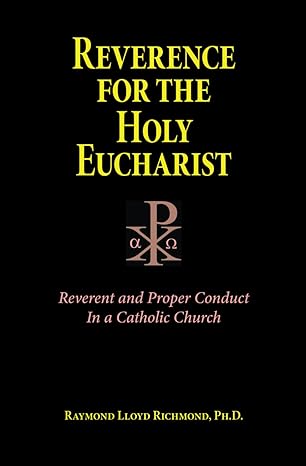
Reverence
for the
Holy Eucharist
|
 |
 |
 |
 |
 |
 |
A Catholic Perspective
On Behavioral Change
and Its Subversion |
A Catholic Explanation
Of a Universal
Problem |
Through
Faith
and
Prayer |
Healing
the
Rage |
When They Tell You
That the Moral Teachings of the
Catholic Church
Are Wrong |
Reverent and
Proper Conduct in
a Catholic Church |
More information |
More information |
More information |
More information |
More information |
More information |
|





















 Read an excerpt about spiritual blindness