|
|
|

I read
Little Cindy’s
Letters [1] per your recommendation on the
website, and I was a little disturbed by Rob’s handling of the Marian
consecration part. I’m on a Catholic Yahoogroup list for ladies who
struggle with food issues and there were others who voiced their concern
with that part as well. It almost seemed to imply that Marian consecration
was a distraction to following Christ fully and his logic for asserting possible
demonic consecration instead was a little bizarre. I wonder if this guy has
ever read Montfort’s True Devotion to Mary? The copy we have has an
endorsement by John Paul II!
 ou raise an issue that is actually
far more subtle than it might seem at first glance. Throughout the book,
Robert Abel, the counselor, does what he can to break Cindy of the superstitions
that maintain her addictive behavior. ou raise an issue that is actually
far more subtle than it might seem at first glance. Throughout the book,
Robert Abel, the counselor, does what he can to break Cindy of the superstitions
that maintain her addictive behavior.
What? Superstitions?
Superstition
Well, yes. Superstitions. An eating
disorder—and any addiction, for that matter—is, at its
core, a superstition.
Let’s pause a bit here and
consider the meaning of the word superstition. It is composed of
super- (from the Latin super, above) and -stition (from
the Latin stare, to stand). Thus the word implies a “standing
above” something, and so it conveys a sort of haughty disregard for
rational authority. Thus superstition is the direct opposite of
understanding, a “standing under” something, which implies
humble obedience.
Because our
salvation depends on our understanding of God’s
ultimate plan for all of His creation, anything that obstructs our understanding
will thwart our salvation. And nothing can obstruct understanding better
than superstition.
For example, superstition can
take a valid sacramental and make it into
a mere charm. It can turn the focus from a thing that helps us be receptive
to divine grace to the thing itself. Instead of submitting totally
to God in pure love, we can be led astray by
superstition into thinking that the things we do make us holy.
We end up reducing devotion to dry, external, ritualistic forms of, well,
magic.
|
Note that
superstitions can have two causes. One cause is fear: the fear that
something bad will occur if you don’t do something. Another cause is
magic: the belief that a thing or action, in itself, will make
something occur.
In regard to
an eating disorder, fear can manifest in the belief that if a
particular food, or a particular amount of food is not eaten, then some bad
event will occur; e.g., “If I don’t eat a muffin my morning will be ruined.”
Moreover, magical thinking can manifest in the
belief that just by eating a particular food, or a particular amount of
food, then a desired event will occur; e.g., “If I eat this whole bag of chips
I will do well in the interview.”
Accordingly,
healthy eating bypasses both fear and magic when food is eaten simply as
prudent nutrition—no snacking, no junk food, no food unhealthily processed
with sugars and oils—and only of an amount necessary to maintain a desired
weight. |
|
Distortion of
Genuine Devotion
In regard to the matter of the
consecration in Little Cindy’s Letters, therefore, the issue does not
concern whether John Paul II admired and endorsed St. Louis de Montfort’s Marian
teachings. The issue concerns the distortion of genuine devotion to Christ found
in the consecration followed by Cindy.
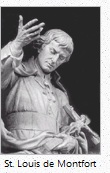 St.
Louis de Montfort placed heavy emphasis on being led “to Jesus through
Mary,” and his Act of Consecration (found on pages 141-143 of
True Devotion to the Blessed Virgin)
has its goal in being fully mature in the fullness of Jesus. St.
Louis de Montfort placed heavy emphasis on being led “to Jesus through
Mary,” and his Act of Consecration (found on pages 141-143 of
True Devotion to the Blessed Virgin)
has its goal in being fully mature in the fullness of Jesus.
But, if you compare the Act of
Consecration in True Devotion to the Blessed Virgin with the so-called
“consecration” that Cindy followed, you will be very surprised.
Cindy’s version (see pages 146-147 of Little Cindy’s
Letters)—which was provided to Cindy by a priest himself given over
to superstition, especially numerology—is a blatant
New Age distortion of St. Louis’s text. And that’s
what Rob reacts to.
Rob sounds harsh, yet keep in
mind that he is not criticizing true devotion; he criticizes superstition
and its demonic connections. And he has to. In order
for Cindy to be healed of her eating disorder, she
must renounce all the superstitions that defend
her from her emotional pain, and she must then encounter Christ’s
mercy in full
understanding of His love.
It’s a hard task. And sadly
it’s not a task that applies only to a woman with an eating
disorder—it applies to the majority of Catholics today. If you look
carefully and deeply, you will find that most Catholics today—let alone
most so-called Christians—don’t have much of a clue at all about
real Christian love and its demand for sacrifice,
obedience, and prayer. And you will see that they hide their ignorance
behind a multitude of superstitions.

Notes
1. Little Cindy’s Letters documents
the spiritual journey of a Catholic
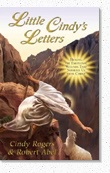 woman who, through
her communication with an addictions counselor, found freedom from her eating
disorder by learning to love the hurt little girl from her childhood through
trust in Jesus’ healing forgiveness. Until June 2006 this book had
been offered for free to visitors of my website through the publisher’s
website, but because of low inventory the publisher has asked that this offer
be discontinued. woman who, through
her communication with an addictions counselor, found freedom from her eating
disorder by learning to love the hurt little girl from her childhood through
trust in Jesus’ healing forgiveness. Until June 2006 this book had
been offered for free to visitors of my website through the publisher’s
website, but because of low inventory the publisher has asked that this offer
be discontinued.
|