|
|
|
“ |
 ES, this church is cold,” the priest
admitted at the beginning of his homily. The priest was referring to problems
with the building’s furnace, but I knew from years of
Lacanian psychoanalytic training that
another meaning hid behind his prophetic words. I looked at the huge drop
cloth covering the chapel of the Blessed Virgin. “Some sort of
renovation,” I thought, but I didn’t miss the message that on that
day in particular Mary’s chapel was closed. So I considered the deeper
meaning in the priest’s words. ES, this church is cold,” the priest
admitted at the beginning of his homily. The priest was referring to problems
with the building’s furnace, but I knew from years of
Lacanian psychoanalytic training that
another meaning hid behind his prophetic words. I looked at the huge drop
cloth covering the chapel of the Blessed Virgin. “Some sort of
renovation,” I thought, but I didn’t miss the message that on that
day in particular Mary’s chapel was closed. So I considered the deeper
meaning in the priest’s words.
The
Chill
While the priest gave his homily
about social justice, my thoughts wandered off into a consideration of what
he wasn’t saying. Just as I must be careful not to be misled by what
my clients say to me and have to listen carefully for what they
don’t say—and therefore what they are trying to avoid—I thought
about his words. Yes, social justice is admirable. But what about devotion?
What about prayer? What about the total submission
of self to God that has to occur internally through divine grace, especially
with the aid of the Sacraments, before one
can even think about social changes? In the midst
of these reflections I heard his voice again. “This church is cold.”
And so I understood. On that particular day, with the Blessed Virgin’s
presence covered up, as I shivered in the cold draft blowing through the
pews of that parish, the chill of neglected devotion bit my heart.
And that chill, like the misty
rain, lingered through the day.
At a dinner later that evening
I met a nun who worked with a rehabilitation program for prostitutes. She
clearly had the hard-nosed features of a shrewd administrator. I wondered
if she had the spirit of Mary in her heart.
During the course of the evening,
the nun told us about a prostitute who, as a young child, had been physically
and sexually abused by her father and who was struggling
to forgive him. “I don’t think I could forgive someone who abused
me like that,” she concluded.
I winced. Doesn’t the capacity
to forgive point out the difference between the
Blessed Virgin and a feminist? No wonder she didn’t
wear a habit. No wonder she had been talking earlier about waiting for the
day when there would be women “priests.” Here was a nun admitting
that her furnace, too, had been shut off. I felt the chill in the
air.[1]
Seduction
If there were no lust, there
would be no prostitution. If men were
not roaming the world—after the example of the devil, “like roaring
lions, looking for someone to devour” (1 Peter 5:8)—preoccupied
with the desire for self-indulgent pleasure, there would be no money in
prostitution. If women were not willing to use their bodies as goods to be
bartered for wealth and power, the flame of lust would die out. If we, men
and women, did not trust so much in psychological
defenses against our emotional wounds, we would
trust in God and wouldn’t be so vulnerable to
seduction.
|
Make no mistake:
God is not mocked, for a person will reap only what he sows, because the
one who sows for his flesh will reap corruption from the flesh, but the one
who sows for the spirit will reap everlasting life from the
spirit. |
|
|
—Galatians 6:7–8b |
|
Forgiveness—and
Transformation
Certainly, women have received
many wounds from men throughout history. And with this sadness comes the
danger of the temptation to reject real healing and to
fall bitterly into an obsession with victimization and revenge.
Granted, politics is based on revenge. But Christianity
isn’t. In order to be healed from past emotional wounds, one must forgive.
But if you do
not forgive others, neither will your Father forgive your
transgressions. |
—Matthew 6:15 |
Every personal injury has to
be carried and healed within one’s own heart, through an inner
transformation by Christ’s real presence. To bear all injuries through
surrender to God is the basis of any sanctuary in God. And sometimes, when
we recite words about forgiving others, as in the
Lord’s Prayer, we really don’t
understand what we are saying.
How often do we recite prayers
as if they were just a string of words? In our psychological impatience,
we end up endowing our reverence with all the murk of split pea
soup—“Elemeno P” soup, we might say, if you remember your
childhood alphabet recital.
So we all too often miss the
reverence of slow, prayerful submission, and in this loss we miss the
seven distinct petitions of the Lord’s
Prayer. And one of them is Thy will be done.
|
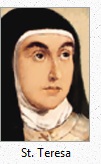 |
To say that we
surrender our will to another’s will [i.e., God’s will] seems very easy
until through experience we realize that this is the hardest thing one can
do if one does it as it should be done. |
|
|
—Saint Teresa of Avila
The Way of Perfection, ch. 32, no. 5 |
|
Yes, “as it should be
done”: through true inner transformation with devotion and
prayer.
The
Goddess
When a person grows cold by
neglecting true inner transformation through devotion and prayer, he or she
may as well be a pagan devotee of the goddess through New Age
“spirituality” where
sin has been “deconstructed” into a mere
patriarchal invention that “oppresses free-spirited souls” who
take delight in their “wicked” disobedience.
And who is this
goddess?
Let’s just say the goddess
took on all comers without discrimination. But not for money. In her time during
the Bronze Age, in the days when her natural cycle of birth, initiation,
consummation, repose, and death was worshiped solstice after solstice, year
after year, she demanded only one thing: recurring human sacrifice—the death
of her current king and
consort.[2] It
was a gruesome reality.
|
Altar Girls?
Goddesses thrive
on lust, and they receive their power from demons. Consider, then, that
“altar girls”—whether they understand it or not—are just pretend goddesses,
and that shows that they are a Satanic deep Church attempt to destroy reverence
for the Mass. |
|
So what does this goddess want
today?
Maybe, like Shylock claiming
his pound of
flesh,[3]
she wants the destruction of the one King who wouldn’t give her what
she wanted and instead told her to “go and sin no
more.”
Hell hath no fury like a goddess
spurned.
The Real New
Age: the New Spiritual Dark Age
When the Roman Empire collapsed
as a result of barbarian invasions and the destruction of Rome, all of the
technological expertise of the Roman culture was lost as well. In the following
centuries, the Dark Ages of Western Europe were dark because of the loss
of secular learning. But there was no loss of
faith. In fact, during the Middle Ages, the Catholic
Church provided western culture with its only light, its only source of human
dignity and hope.
Today, we are awash in technology.
We are so overly dependent on trust in gadgets—and the glorification
of the self that they buttress—that most
persons have lost any sense of trust in God. And so we are on the brink of
a new Dark Age—a spiritual Dark Age of ingratitude, insolence,
and atheism, lost in its own spiritual
blindness.
NEW AGE HEALING
PRACTICES
Christianity teaches us that
all of us, through a fundamental disobedience and lack
of trust, have lost the place in divine life for which God created us.
Christ, the only Son of God, came into this world, like a shepherd looking
for lost sheep, to lead us back into the divine presence. In his flesh he
manifested
faith: “Whoever
has seen me has seen the Father”(John 14:9). And in the shedding of
his blood he manifested love, the willingness
to sacrifice oneself for the sake of saving others from their own
self-destruction.
Thus Christ told his Apostles,
“I am the way and the truth and the life. No one comes to the Father
except through me” (John 14:6). Therefore there is no healing, no truth,
and no path to divine glory except through the Cross, the way of
sacrifice, obedience, and prayer. So, if we want
truth and life, we have to follow Christ in the Way of the Cross.
Still, many persons
fear the cross. Beaten down by abuse and
hypocrisy, they
desire only to be accepted and validated. Like
that nun in the story above, casting forgiveness from their hearts, and angry
with the Father because of the sins of their own
fathers, they want an easy way to feel good about
themselves.
And so a multitude of lost and
wounded souls seek out healing practices that, with an offer of easy
acceptance along with
“spiritual” [4] benefits,
covertly oppose fundamental Christian faith.
|
All these
non-Christian practices, in denying or subverting the reality of sin, hold
out the expectation that we can set aside our dependence on receiving divine
grace through the Sacraments, and, like an angry, spurned goddess, they seduce
us into taking matters into our own hands so as to attempt to heal
ourselves of our separation from the divine life. |
|
|
Buddhism.
Buddhism is not a religion; in its purity, it is an Oriental, atheistic
philosophy whose goal is to escape human suffering. Because the philosophy
is an ethical system, based in a natural philosophy with nothing in it that
must be “believed” (as opposed to a theological system based in
supernaturally revealed truth), its ideas are often taught in the West for
their value in achieving a sense of psychological
relaxation.
|
Many individuals
who have turned away from God—especially because of
anger at God—turn to Buddhism precisely because
the system is atheistic and holds out nothing to believe in.
But in the psychological sense, what does it mean to believe in? Well,
in the words of the psychoanalyst Jacques Lacan, we
“ believe in beings in so far as they are
able to say
something.” [5]
And what is Christianity all about but the Word of God speaking to us, saying
something very, very important? That Word is the core of all belief—and
the core of all love. So, with nothing to believe
in, you put yourself in a wasteland where there is no real love, no God,
nothing at all. You can call this emptiness Nirvana or anything else you
want, but it has nothing to do with Heaven. |
|
Centering
Prayer. This type of prayer is a form of meditation, similar to
Transcendental Meditation (TM). TM was popularized by a Hindu guru in the
US and Europe during the latter part of the 1960s, just as the new Age of
Aquarius began to billow into the world on clouds of marijuana smoke. Marijuana
is for atheists (those who reject the idea of God) and Satanists (those who reject
God). Similarly, in Centering Prayer a person spends a half hour or so once or
twice a day focusing on his or her breathing to establish a sense of relaxation. A
“Christianized” form of this prayer instructs practitioners to
meditate on the name of
Jesus.[6]
|
Simple forms of
meditation can be helpful in teaching a person how to relax and focus attention.
Similar practices based in pure physiology, such as
Progressive Muscle Relaxation
(PMR) which I explain on A Guide to Psychology and its Practice and
Catholic Autogenics (from
this website) are purely
physiological practices that can facilitate a healthy state of mental and bodily
relaxation. All of these practices can serve as a prelude to learning prayer and
contemplation in the context of the Christian worship of the Triune God. |
|
|
The danger with centering
prayer (and all other similar practices), for a Christian, is that a person
is tempted to follow just simple, easy practices (such as spending only a
half hour in meditation a day) and neglect other
prayer (such as the offering of the
Eucharist, Eucharistic Adoration, the
Liturgy of the Hours, the
Rosary, and the Chaplet
of The Divine Mercy) as well as the moral
obligations of a holy lifestyle. In this neglect of worship, devotion,
and morality, the psychology of the self becomes raised to the level
of the (pseudo)mystical, and Christianity becomes reduced to a form of
“Christian” Buddhism. |
|
Liturgical Dance.
Liturgical Dance is really just a variation of a witch’s dance. Sadly, it can be best
described with an adaptation from a poem by Robert Frost:
|
We dance round in a ring and suppose,
But Satan sits in the middle and knows. |
|
Reiki.
Reiki is a Japanese technique for stress reduction and relaxation that allegedly
promotes “healing”. It is administered by physical touch (or near touch),
as a sort of “laying on of hands.” Reiki is based on the idea that
it can stimulate and direct an unseen “life force energy” in such
a way that facilitates “spiritually-guided” physical healing under the
guidance of angels or spirits. Practitioners claim that Reiki is not a religion,
but they advocate “simple ethical ideals” that supposedly promote peace
and harmony.
|
Peace and harmony
sound nice, don’t they? Well, the danger is
that those “simple ethical ideals” are a watered-down
version of Christian morality that, like a Trojan Horse, will attack genuine
Christianity from within.
It can be good for someone to pray for you or with you, but it is
spiritually dangerous for a lay person to lay hands on you to pray over
you. Not only can a lay person contaminate you spiritually with moral impurity,
but also that person’s personal hellgate (a pathway to
demonic influence) can open up a hellgate in you.
Furthermore, let us not forget that not all angels are holy beings; the fallen
angels are demonic. A Christian who dabbles in spiritism
is playing with fire—hell fire. Just remember that
if you follow the way of sacrifice, obedience, and
prayer, your “energy fields” will be guided by
Christ Himself. What greater healing is there than that? |
|
Shaminism.
Shamans claim to perform both physical and spiritual healing with the assistance
of animal helpers and spirit guides.
|
For the most part,
Shamans are really using personifications of the
unconscious.
Because the unconscious is the totality of your personal life experiences, various aspects
of those experiences can be accessed psychologically just as a computer program
can access parts of an electronic data base. Thus it may seem that an animal
helper is giving you wisdom, but the “animal” really derives from
your own personal unconscious experiences.
Shamans may also attempt to
access spirits of nature, but these things are really spirits of a fallen nature and
so are limited in knowledge because they are trapped inside the
box of sin. Thus their “spiritual wisdom”
cannot perceive the reality of the divine—nor can it perceive the
reality of sin and hell.
Shamans may also attempt to
access spiritual beings, buy these are really demons masquerading as healing spirits.
Keep in mind that the whole point of evil is to deceive
unwary souls and lead them to their perdition. Demons are quite happy, therefore,
to perform works of “healing” if, in the end, a person is led into
idolatry and away from God. |
|
Spiritism.
Some forms of healing are claimed to have been received as teachings directly
from angels or as “channeling” from spirits.
|
In his letter to
the Colossians, Saint Paul warned against anyone who advocates
“ the worship of angels, taking his stand
on visions” (Colossians 2:18). Remember, not all
angels are holy beings; the fallen angels are
demonic. A Christian who dabbles in spiritism is
playing with fire—hell fire. |
|
Tai Chi.
Tai Chi originated as a Chinese martial art, but many persons now practice it for
personal health reasons, believing that it can benefit physical and mental health
as well as longevity.
|
In the popular mind, the
slow meditative movements of Tai Chi often take on an implicit—or even
overt—spiritual quality. Although a Christian could practice the art for the
sake of physical health benefits, it should be remembered that neither tai chi nor
any other natural physiological practice offers spiritual rewards points to
anyone. Furthermore, you are more likely than not to be led astray by the spiritual
delusions of the people with whom you must associate to carry out these
activities. |
|
Wicca.
Wicca is another name for witchcraft, though Wicca tends more often than
not to be practiced as a form of “white” witchcraft—a worship of the White Goddess
(see Note 2)—rather than outright Satanism. Nevertheless, “white magic” is just
sugar-coated black magic. Thus there is no such thing as a “good witch”; all witches
are prostitutes of demons. The Mexican and Latin American practice of
Santeria, though veiled under some Catholic practices,
is just another form of witchcraft. Wicca can be traced back to Neolithic and Bronze
Age fertility cults that included human sacrifice as a fundamental component of the
natural cycle of the seasons.
|
In today’s world,
especially because of the fascination with fantasy
literature, Wicca tends to be popular with those who seek a
“natural” spirituality. But the spirits of nature are fallen
angels—that is, demons. Wicca also tends to be
popular with school girls who are completely ignorant of the demonic dangers
with which they dabble. In fact, many girls are led into Wicca by feminist
teachers (and nuns!) under the delusion of reclaiming some sort of mythic
“lost femininity.” But Wicca is fundamentally opposed to Christianity,
for the White Goddess wants nothing more than the destruction of the one King
she couldn’t seduce.
In this regard, note carefully that “altar girls”—whether
they understand it or not—are just pretend goddesses, and that shows that
they are a Novus Ordo—New [World] Order [of Lucifer]—attempt
to destroy reverence for the Mass. |
|
Yoga.
Yoga, an ancient Hindu practice, has two basic forms. Raja yoga consists
of meditational practices based in polytheistic religious beliefs. Hatha yoga
consists of body movements that purport to enhance the flow of body energy
forces.
|
If practiced purely
as a form of self-discipline and physical exercise to keep the body limber,
hatha yoga exercises can be helpful even to a Christian. Still, danger derives
from the anti-Christian spiritual beliefs that underlie yoga’s physical practices.
Remember that yoga, like Tai Chi, does not offer spiritual rewards points to
anyone. Furthermore, you are more likely than not to be led astray by the
spiritual delusions of the people with whom you must associate to carry out
these activities.
Therefore, if you choose to practice yoga-like exercises with
no religious undertones, it would be best if you simply called them “stretching
exercises” to avoid the scandal of other Catholics believing that you are condoning
a pagan religion. |
|

Notes.
1. One reader, a Protestant woman, has actually
demanded that I remove this story. And yet in making this demand she only
proves the psychological point of this entire web page. That is, in hearing
that this nun—indeed, any person—is subject to God’s judgment,
the reader’s fear of punishment for her own
unconscious anger is aroused, and so she reacts
by demanding that the truth be suppressed. Therefore, we can say that a fear
of punishment is the psychological basis for the New Age denial of sin.
So please remember that neither in protesting God’s justice nor in
attempting to hide from it will you be saved from it. Your only hope is to
reconcile yourself with God the Father through the
mercy offered to us through Christ His Son.
2. See Robert Graves, The White Goddess
(New York: Octagon Books, 1972).
3. William Shakespeare, The Merchant of
Venice, Act I, Scene III.
4. In the New-Age sense, spirituality does
not mean much more than an awareness of some sort of “enlightenment” that imbues
one’s life with an esoteric feeling that appears to transcend the conscious
“self” while making no particular demands on anyone.
5. Jacques Lacan, “Seminar of 21 January
1975.” In Mitchell, J. & Rose, J. (Eds.), Feminine Sexuality:
Jacques Lacan and the école freudienne (New York: W. W. Norton
[paperback], 1985). See p. 169.
6. Centering prayer, however, should be distinguished
from the Jesus Prayer, which was popular with the desert monks of the Eastern
Church who practiced hesychasm (from
the Greek hesychia, stillness). The prayer has many variations, from
the basic “Lord Jesus Christ, Son of God, have mercy upon me” to
a shorter “Lord Jesus Christ, have mercy” to an even shorter “Son
of God, help me.” If the prayer is practiced properly as a way to pray
constantly (see the writings collectively known as the Philokalia
for more information) it will lead to an understanding of Christianity as
an all-encompassing lifestyle of mind in the
heart, and it will draw you into true detachment
from the world. Many persons today, however, make
the unfortunate error of using the Jesus Prayer as a quasi-Buddhist meditative
practice where the words themselves, rather than their heartfelt meaning,
drive away distractions. Still, the Jesus Prayer
can be used today by the laity as a sort of background prayer to maintain
a constant awareness of God within the silent spaces between and behind all
of our work activities. Think of it as a “mortar” that binds together
all the other work and vocal prayers of the
day.


Healing
|
Though
Demons
Gloat
|
Anger
&
Forgiveness
|
Falling
Families,
Fallen Children
|
Emotional
Trauma
|
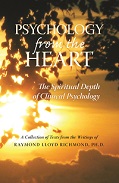
Psychology
from the
Heart
|
 |
 |
 |
 |
 |
 |
Psychological Healing
in the Catholic Mystic tradition |
True Christian
Identity
In Confronting
Evil |
How to Turn the
Emotional Wounds
of Daily Life Into
Psychological Growth. |
The Psychological
and
Spiritual Remedy
For Our Cultural
Disintegration |
And its
Psychological
and Spiritual
Nature |
Collected Texts
About the Spiritual Depth of
Clinical Psychology |
More information |
More information |
More information |
More information |
More information |
More information |
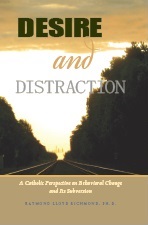
Desire
and
Distraction
|
Fear
|
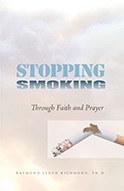
Stopping
Smoking
|
Borderline
Personality
Disorder
|
Catholic
Compassion
|
Reverence
for the
Holy Eucharist
|
 |
 |
 |
 |
 |
 |
A Catholic Perspective
On Behavioral Change
and Its Subversion |
A Catholic Explanation
Of a Universal
Problem |
Through
Faith
and
Prayer |
Healing
the
Rage |
When They Tell You
That the Moral Teachings of the
Catholic Church
Are Wrong |
Reverent and
Proper Conduct in
a Catholic Church |
More information |
More information |
More information |
More information |
More information |
More information |
|




















 Discover a Catholic relaxation
recording
Discover a Catholic relaxation
recording