|
|
|

I .
. . wonder about evil. It would be easy to say the devil made me do
it!
 o begin to answer your question,
let’s recognize that the word evil essentially has two
meanings. o begin to answer your question,
let’s recognize that the word evil essentially has two
meanings.
Evil as Something
Harmful
In its most general sense,
evil refers to something that is harmful or destructive. This
meaning focuses on the effects of something, not its origin. Hence, we read
in Job, “We accept good things from God, and should we not accept
evil?” (Job 2:10). The meaning here is that God can subject us to unpleasant
trials, if He wants; as Job himself discovered, however, God does
“evil” things not to be arrogant or mean but to serve the greater
good—which, from our limited perspective,
we cannot easily see.
Evil as the Refusal
to Serve God’s Will
The second, more specific—and
common—meaning of evil refers to the refusal to serve
God’s will. This is what caused the fall of Lucifer, the angel of light, and
Satan, the “devil.” As they fell, many other angels followed them. Together, all
these fallen angels, now called demons, epitomize evil. Unwilling to submit to
God’s authority, evil makes self-interest, at the expense of others, into its
own god.
|
In its extreme,
this self-interest can be spoken of as wickedness—that is, something
harmful for its own sake, so as to exhibit cruel power. But it is just as
true, for example, to speak of those who follow lifestyles defiant of chastity
as being evil, for even though they may not have a conscious desire to harm
other individuals, they still do psychological and spiritual damage, and,
in it all, they defy the will of God. |
|
Why Hell?
Why does God allow people to go
to hell? Some people get stuck on such questions and, lacking any real
theological wisdom, they decide for themselves that God is “mean” and
arbitrary and that they want nothing to do with Him.
The true answer to these questions,
though, is something of a surprise.
Consider that when God created
all things, He gave all creatures free will
so that they could participate in love. In other words,
those who cannot refuse to love aren’t really capable of
love—they’re just robots. Real love, after all, is an act of will.
Without having free will, we could not love. So, in order to give all of
His creation the capacity to love, God gave all of His creation free
will.
So, there was Satan, an angel
with free will. And somehow he decided that he did not want to serve God
but rather wanted to serve himself. Maybe—just like many individuals
in the world today—he thought something like, “I resent the idea
of worshiping this God who created me. I want to be free to wield my power
for myself. I want to do what I want to do.”
Now, God, in the fullness of
His love, did not get mad. Instead, He must have said something like,
“All right. If you want to be your own king, I will give you a place
that you can have all for yourself in the company of those who choose to
follow you.” So, God allowed Satan to have hell with the
understanding that anyone who wants to reject love for the sake of self-interest
is free to go to hell.
The astonishing thing about this
transaction is that the creation of hell is an act of God’s
mercy, not an act of punishment. Because it is
absolutely too horrific to contemplate any place entirely separated from
God, [1]
Satan received from God a place—hell—that still exists within
God’s love. The flames of hell are the flames of God’s love that
torment only those who have rejected love. So if you say, “I
don’t want anything to do with a god who would want anyone to suffer
in hell,” you really don’t understand anything about God’s
love. God does not want anyone to go to hell. Still, many persons, in their
free will, reject God’s love and send themselves to hell anyway.
Furthermore, not being entirely
excluded from creation, Satan and evil spirits have the power of influence
over souls in this world. It’s perfectly fair—Satan has the free
will to tempt us to join him in hell, and we have the free will to accept
his seduction or, through faith and
love, empowered by the
sacraments, to reject it. We even have the
power, given by Christ Himself to His priests, to cast out demons from all
creatures.
Demonic Influence
or Mental Illness?
Many persons today—even
priests—propagate the false idea that when Jesus cast out demons He
was really curing a mental illness. But the truth is, Jesus knew the difference
between a demon and a psychological or medical problem. How could the
LORD Himself not know His own creation?
Moreover, our failing to recognize
this difference between a demon and a mental illness has led to many tragic
mistakes.
In the times before modern science,
it was believed that all mental illness was the result of demonic possession,
and the mentally ill were often treated like animals simply because no one
knew what to do with them. Physicians lacked the medical knowledge of psychology,
and they lacked the faith to cast out demons, so they were essentially
helpless.
In contrast, modern science sees
everything as a matter of brain chemistry, even to the point of ignoring
the psychology of the unconscious. Most modern physicians disavow all belief
in demons and wouldn’t recognize one even if he spit in their
faces.
But, in all truth, there
are demons and there is mental
illness, and it would do us well to understand the difference between
them.
To understand this difference,
it is important first to understand the unconscious.
The
Unconscious
A brilliant French psychoanalyst,
Jacques Lacan, has explained the technical
aspects of the
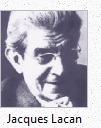 unconscious better than anyone. Lacan emphasized the
relation of language
to unconscious functioning.
Language, being metaphoric and symbolic, is one step—one large step—removed from
“reality,” and in the gap between the
symbolic and the
real is all the deception, lies, and
fraud of human social existence. unconscious better than anyone. Lacan emphasized the
relation of language
to unconscious functioning.
Language, being metaphoric and symbolic, is one step—one large step—removed from
“reality,” and in the gap between the
symbolic and the
real is all the deception, lies, and
fraud of human social existence.
As humans, we cannot communicate
directly mind-to-mind or soul-to-soul. We have to rely on symbolic communication;
that is, language. Language, however, cannot express the fullness of reality; thus
much of our experience goes unspoken. No matter how much we say, and no matter how
eloquently we may say it, some aspect of our reality fails to get communicated. Although
it might seem, on the surface, that our lives are structured simply by conscious
thought and speech, we are actually more influenced by that gap between the real
and the symbolic—or, in other words, by what is “missing” from our lives simply
because we must filter all our raw experience (the real) through our
social dependence on the imperfection of language (the symbolic).
Therefore, the unconscious is a
side-effect, so to speak, of our separation from raw reality because our use of
language fails to adequately express our reality. Lacan saw clearly that, because
separation and lack lead to
desire, the unconscious is primarily governed by
“the desire of the Other”—that is, by the social world (the “Other”) around
us that is lost in its incomplete expression of reality. Desire, then, could be
described as the unspoken—and hidden—aspect of our speaking lives.
Hence the unconscious holds the
deepest—and often, the most frightening and ugly—truths about ourselves.
Thus many persons fear the unconscious—some persons are afraid of even the idea of
the unconscious—because
they fear truth itself.
|
It’s similar to the
time at the beginning of modern medical science when some doctors refused to believe
that bacteria caused infections. Not being able to see with their own eyes any
evidence of the so-called “germs” that a few other doctors were claiming to be the cause
infection, these men derisively dismissed the whole concept of bacterial
infection—and the need for sterile surgical environments. |
|
Nevertheless, despite the many
misconceptions of the unconscious, let us be clear about what the
unconscious is
not.
• |
The unconscious
is not, as Sigmund Freud believed, rooted in repressed “infantile
sexuality.” Instead, the unconscious has its basis in our social use of
language. |
• |
The unconscious
is not something alien to ourselves. |
• |
The unconscious
is not, in itself, sinful. |
• |
The unconscious
is not, in itself, evil. |
Because of our unconscious
functioning, however, we are vulnerable to being influenced by
evil.
Vulnerability
to Evil through Psychological Defenses
You are vulnerable to the influence
of the devil and other demons in proportion to the extent that you are influenced
by unconscious psychological defenses. That’s
a powerful statement, so let’s explain
it.
Your psychological
defenses, like the psychological defenses of all of us, were created
in your childhood to protect you in the face of
assaults [2]
from the world. Unless these defenses are altered through deep personal
scrutiny or
psychotherapy, however, they will
continue on into your adulthood, like sealed time capsules within your
unconscious mind, where they cause you, no matter how old you may be, to
behave with the selfish desperation of a frightened and angry
child.
|
For all individuals,
unless childhood defenses are altered therapeutically, defensive
functioning becomes the predominant aspect of their being; thus
they lack “well-being” and are said to suffer from mental
“illness.” Yet it’s not really an illness, it’s a psychological
and spiritual distress that afflicts them, and that distress must be cured
not with medications but by deciphering the psychological meaning
of those defenses. |
|
Therefore, when you behave with the selfish
desperation of a frightened and angry child, you are behaving with a raw
self-interest that is very similar to the demonic refusal to serve God. In
this desperate state of mind you are thinking only of yourself; you aren’t
thinking clearly, and you certainly aren’t thinking about God, and so
you are vulnerable to falling under the influence of demons (UID).
Under the Influence of
Demons
As I use the term, “under the influence
of demons” can refer to a range of experiences from ordinary temptation to
obsession, [3]
oppression, parasitism, infestation, and possession.
• |
Temptation
is simply an inclination to do something harmful to oneself or to another. |
• |
Obsession
is an intense fixation on particular thoughts or ideas that are troubling to the person
being affected. |
• |
Oppression
refers to physical blows or infirmities caused by demons. |
• |
Infestation
refers to demonic activity in a particular location. |
• |
Parasitism
refers to demonic presence in a person that can exert harmful influence over that person
but that, like a physiological parasite, does not control a person’s mind or
behavior. |
• |
Possession
refers to demonic control of a person’s body. |
Hatred and the Desire
for Revenge
The easiest opening that evil spirits
can follow into your heart is the path opened by your psychological defenses
in the desire to get revenge for injuries inflicted on you. If the injury
came from God (as a rebuke or a spiritual lesson), you will resent God; that
resentment will breed anger, hatred, and a desire for revenge which will open
the door to the influence of demons, in spite of the opportunity for purification
God is giving you. If the injury came from others, you will resent the abusers; that
resentment will breed anger, hatred, and a desire for revenge which will open
the door to the influence of demons; moreover, because of spiritual
blindness, you will want to use the justification
that “The devil made me do it!” But demons cannot make you do anything;
demons can only tempt you to commit sin. Thus, when you fall prey to temptation, the
responsibility for your sin is all on you.
Because this anger and desire for revenge
is not a feeling or emotion, and is often unconscious, rather than conscious, especially
in regard to childhood traumas, some persons might even say that because they live such
pious lives they are certain that they don’t hate anyone and don’t want revenge
on anyone. But unconsciously they are constantly under the influence of anger—and any
of those behaviors that “the devil made me do” are the evidence of UID, right
along with all those sins that keep getting repeated despite repeated
confessions.
What Can You
Do?
If you carry in your heart any
bitterness about past
injuries and injustices, especially mistreatment or abuse in childhood, then, when
new trials afflict you, all that unconscious
bitterness in your heart will gush forth in anger
and revenge—along with envy, rivalry, pride, and on and on—and
you will fall right into all the snares of self-hatred, self-sabotage,
disobedience, and sin
that the devil has laid out for you.
|
Do you need
an exorcism? Well, you may not need a formal one from
a priest exorcist, but you can do much to “exorcise” yourself simply by not
providing the food on which the demons can feed. Once the demons realize that they
have nothing to feed on in you, they will leave you and go elsewhere where they can
find easier prey.
Therefore, in regard to
demons and their “food,” seek to purge from your life anything associated with the
desire to hurt or “get even with” others, such as social rudeness, clutter and filth,
cursing, lust, violence, competitive sports, marijuana and other drugs, and political
arguing, as well as the social media, television, movies, popular music, and video
games through which evil is socially transmitted. Even though
lust,
[4] meanness,
hostility, and triumph are accepted as “virtues” by our culture, they are just breeding
grounds for strife and
hatred, [5] and
they draw demons to your soul like blood attracts sharks. |
|
If you decide to purge from your house all
that demons feed upon, then cling to the following counsels.
• |
Renew your Baptismal Promises
to reject the works of Satan, and then vow to carry out those promises in every moment
of your life; |
• |
As soon as any temptation arises
in you, immediately renounce the spirit of that temptation; |
• |
Believe that God is not a tyrant
seeking to punish you, but instead is merciful and gracious and desires
your salvation, if only you will work for it; |
• |
Participate in the
sacraments, especially the Eucharist and
Confession. |
• |
Pray
constantly for the grace and the
desire to live a holy life, and pray daily for all the
souls in Purgatory; |
• |
Respect
yourself and your
body; |
• |
Live a
chaste and modest
lifestyle. |
• |
Detach yourself from
the worldly need to defend your pride and
trust completely in God to protect you; |
• |
Face everything with
patience and
humility; |
• |
Renounce hatred and practice
forgiveness of others; |
|
Note carefully that
continued hatred and a refusal to forgive others for the injuries
they have inflicted on you, or a continued unchaste lifestyle (such as
repeated masturbation or fornication) may require
psychotherapeutic intervention to discover
the ego states in your unconscious that cling to their
accustomed behaviors as the only security they have ever known. And realize that
ego states will be terrified if they are commanded to change; instead, like frightened
children, they need compassion, patient explanations, and persistent teaching to lead
them away from the demons who, with clever lies, pretend to be their
protectors. |
|
If you can do all these things, then
you truly will be serving God from the depths of your heart, and, like an
alcoholic convicted of driving under the influence
of alcohol who finally accepted treatment in a rehabilitation program and
became clean and sober, you will no longer be Under the Influence of
Demons. But if you fail to heed this warning, demons will be laughing at you.
The following
advertisement is presented in compliance with the
California EOO (Equal Opportunity of Opinion)
Diversity Enhancement Ordinance BS7734:
Trending now near
you!
Well, the
state of California gloats in Pride, but don’t let them deceive you.
Atheism is a myth created by the devil. The ideology of atheism would have you
believe that you can, as it were, have your cake and eat it too because hell
is “just a medieval myth created by the Church to scare you away from
wicked excitement.” But beware. Even if you don’t believe in hell
now, you will believe in it sure enough should you end up there, choking on
your cake as you realize that you have been duped and that all hope—and
excitement—has ended. |

Notes.
1. See, for example, Saint Catherine of Genoa,
Treatise on Purgatory, Ch. IV: “The punishment of the damned
is not, it is true, infinite in degree, for the all-lovely goodness of God
shines even into hell. He who dies in mortal sin merits infinite woe for
an infinite duration; but the mercy of God has made the time only infinite,
and mitigated the intensity of the pain. In justice, He might have inflicted
much greater punishment than He has done.”
2. We are all constantly being “assaulted”
by others around us in their desires to get from us what will most
benefit their self-interests. And so the unconscious motive to satisfy
others will often conflict with our basic need for self-preservation. Moreover,
in addition to these social demands, the physical world around us often assaults
us through accidents and natural disasters. Therefore we all must deal with
constant emotional conflict or internal or external “assaults”
on our well-being.
Common ways of protecting ourselves emotionally
were called mechanisms by Sigmund Freud. When seen in pathological
settings, these mechanisms can technically be called defense mechanisms;
when seen in everyday life, they can be more properly called dynamic
mechanisms. Modern psychiatry, however, uses the term defense
mechanism in both pathological and everyday settings.
In contrast, Catholic theology teaches us to lay down
our weapons of self-protection and to trust entirely in God: Our help
is in the name of the LORD, Who made heaven and earth
(Psalm 124:8).
3. Note that temptations are a general part of ordinary
human psychology, and that the term obsessions is not limited to the literature
of exorcism but is also used in psychiatric terminology. Thus it can be problematic to
judge where psychology ends and demonic influence begins. For example, a psychologist
must wonder whether a person is obsessed with particular thoughts because of
psychological defenses created in response to a childhood trauma or whether the
obsessions have a demonic origin—or whether they may be both. Consequently, this
nebulous distinction between the psychological and the demonic illustrates the close
connection between trauma and evil.
4. Lust is a powerful attraction for demons. In fact
all sinful passions that the Church
fathers have warned against open a person to demonic influence. Just keep in mind
that anger, which is not technically a passion (unlike wrath, which is anger
inflamed with defiant infuriation) is the psychological basis for all
the sinful passions. Why? Well, the desire to harm or
defile any aspect of God’s creation is a desire to harm God—and the
desire to harm God is what sin is all about.
5. Keep in mind that the “door” to evil
influence is opened as much by self-hatred as by hatred for others.
Recommended
Reading
 |
|
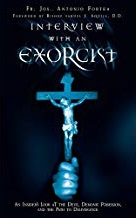
Interview with
an Exorcist by Fr. Jose Antonio Fortea provides clear answers to questions about angels and
demons, the reality of evil, demonic activity, temptation and sin, demonic oppression
and possession, and the path to deliverance from evil influence.
Order
at Amazon.com |
|

Healing
|
Though
Demons
Gloat
|
Anger
&
Forgiveness
|
Falling
Families,
Fallen Children
|
Emotional
Trauma
|
Psychology
from the
Heart
|
 |
 |
 |
 |
 |
 |
Psychological Healing
in the Catholic Mystic tradition |
True Christian
Identity
In Confronting
Evil |
How to Turn the
Emotional Wounds
of Daily Life Into
Psychological Growth. |
The Psychological
and
Spiritual Remedy
For Our Cultural
Disintegration |
And its
Psychological
and Spiritual
Nature |
Collected Texts
About the Spiritual Depth of
Clinical Psychology |
More information |
More information |
More information |
More information |
More information |
More information |
Desire
and
Distraction
|
Fear
|
Stopping
Smoking
|
Borderline
Personality
Disorder
|
Catholic
Compassion
|
Reverence
for the
Holy Eucharist
|
 |
 |
 |
 |
 |
 |
A Catholic Perspective
On Behavioral Change
and Its Subversion |
A Catholic Explanation
Of a Universal
Problem |
Through
Faith
and
Prayer |
Healing
the
Rage |
When They Tell You
That the Moral Teachings of the
Catholic Church
Are Wrong |
Reverent and
Proper Conduct in
a Catholic Church |
More information |
More information |
More information |
More information |
More information |
More information |
|