|
|
|
God
does not demand that we be perfect before He will love us. Nor does He hate
us because of our sins. He simply asks us to accept His guidance so that
we can learn from our failures and grow in perfection. |
Catholic Psychotherapy |
Spiritual Counsels |
Books |
About CSF
Introduction |
The Refusal to Acknowledge
Wretchedness |
Scrutiny |
Wretched {period} |
Conversion? |
Hidden Spiritual Pride |
The Mistake of Self-punishment |
Bypassing Denial |
Wretched {gracefully} |
Summary
 AINT Paul, in his letter to the Romans,
reminds the members of the Roman church that they “have been freed from
sin” (Romans 6:22). This statement, however,
does not mean that Christians do not sin. Even though many
heretics and so-called mystics over the years have
tried to make the claim that they are “above sin,” the fact is
that all of us—Christian or not—commit sin. AINT Paul, in his letter to the Romans,
reminds the members of the Roman church that they “have been freed from
sin” (Romans 6:22). This statement, however,
does not mean that Christians do not sin. Even though many
heretics and so-called mystics over the years have
tried to make the claim that they are “above sin,” the fact is
that all of us—Christian or not—commit sin.
“Freedom from sin”
means that when Christians live out their love for
Christ in a genuinely devout and holy lifestyle—that is, if they
desire God above all things—they will be
given a grace that shields them from the desire to commit
sin.
Nevertheless, no matter how ardent
our love for God, we all fall short in our attempts to live holy lifestyles.
No matter what we do, we leave something undone. Our desires are not always
pure. All our actions are flawed and imperfect. We ae powerless to change our own
lives.
In short, we are wretched
creatures.
The Refusal to
Acknowledge Wretchedness
Sadly, many so-called Christians
refuse to acknowledge their own wretchedness. They go to Mass,
they practice their devotions, and they say their favorite prayers. Their lives go
smoothly, and they give thanks to God for their blessings. They are in control of
their lives, they say. They are content and at peace, they say. All is well—so they
think. They practice their faith intellectually, rather
than live it from the depths of their wretched hearts. They aren’t wretched, they
say.
Why won’t they accept the truth?
Well, they fear to acknowledge their own wretchedness because
they don’t understand the difference between being wretched {period}
and being wretched {gracefully}.
Scrutiny
The only way to understand this
difference between being wretched {period} and being wretched {gracefully}
is through deep and profound self-examination (or
scrutiny).
|
It does not matter
how many virtues a man may have, even if they are beyond number and limit.
If he has turned from the path of self-scrutiny, he will never find peace.
He will always be troubled himself, or else he will be a source of trouble
for others, and all his labors will be wasted. |
|
|
—from the teachings of Saint
Dorotheus, abbot,
Office of Readings, Monday,
Ninth Week in Ordinary Time |
|
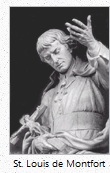
 Saint Ignatius of Loyola
called for deep self-examination in his Spiritual Exercises. Saint Louis
Marie de Montfort in his True Devotion to the Blessed Virgin called
for self-examination in the preparation for the Consecration to Jesus through
Mary.[1]
In fact, all the saints, in one way or another, have realized that a truly
devout life depends on self-knowledge, for as we look deeply into ourselves,
we cannot help but see our pitiful wretchedness. Saint Ignatius of Loyola
called for deep self-examination in his Spiritual Exercises. Saint Louis
Marie de Montfort in his True Devotion to the Blessed Virgin called
for self-examination in the preparation for the Consecration to Jesus through
Mary.[1]
In fact, all the saints, in one way or another, have realized that a truly
devout life depends on self-knowledge, for as we look deeply into ourselves,
we cannot help but see our pitiful wretchedness.
|
By nature we are prouder
than peacocks, we cling to the earth more than toads, we are baser than goats,
more envious than serpents, greedier than pigs, fiercer than tigers, lazier
than tortoises, weaker than reeds, and more changeable than weather-cocks.
We have in us nothing but sin and deserve only . . . the eternity
of hell.
—Saint Louis Marie de
Montfort
True Devotion to the Blessed Virgin, 79 |
 |
|
Well, there you have it. That’s
wretched {period}.
Wretched
{period}
I said above that many persons
refuse to acknowledge their wretchedness. Many other persons, however, wallow
in it. They have had wretchedness pounded into their heads since childhood. Sometimes
the pounding was literal, as in physical abuse and sexual abuse. Sometimes the
pounding was emotional, as in emotional abuse and neglect. Sometimes the pounding was
very subtle, the cumulative result of parental threats and
manipulations in botched attempts at discipline. But, however severe
or subtle the abuse, it ends up leading the child to one inevitable conclusion:
This all happened to me because I must be a wretched
person—a piece of garbage—and I deserve
nothing but condemnation.
And then a profound psychological
twist happens. Feeling wretched—hopelessly trapped with
no escape—we run and we hide. We do whatever
we can to push our wretched helplessness out of awareness. So we seek out
ways to make ourselves feel important and satisfied. We turn to
entertainment, sports,
sexual pleasure,
tobacco,
overeating, alcohol,
drugs—and on and on down a barren road on
a quest to “feel good” about ourselves.
Conversion?
It sometimes happens that,
because of a surprise slap-in-the-face with divine grace, some of us will
open our eyes as if waking from a dream and,
finding ourselves in the middle of that barren nothingness of self-satisfaction,
will turn back to the Church. But, unless that conversion is followed by a profound
self-scrutiny, we will continue to cling unconsciously to our being wretched {period},
and we will remain attached to whatever the world can offer us in our continued
unconscious need for recognition. We will say, “Listen. I can’t
be a saint. I’m just afraid of going to
hell.”
No one knows, of course, what
God in his mercy will do with any particular soul,
yet anyone can see that the mere desire to avoid hell is an act of selfishness,
not love. Real love seeks greater and greater
purification, at any cost (see Matthew 13:44–46), but lukewarm complacency
can easily end up in the very hell it wants to avoid. Believing otherwise
is nothing but denial of the truth.
Hidden Spiritual
Pride
Moreover, even as we try to deny
it, some persons can remain stuck in their wretchedness because their
wretchedness, oddly enough, has become a sort of hidden spiritual
pride.
Consider here that in order to
learn confidence and faith, children need to feel special in the eyes
of their parents. Children need the nurturing love of a mother and the
protective, guiding love of a father. Children who
grow up in dysfunctional families know the
devastating emotional pain of wanting their parents’ love while finding
it always withheld from them. They will try over and over to make their parents
see them as special—and because of their parents’
fear of love, they will fail, over and over, to draw
any parental love into their aching hearts.
Consequently, having tried and
failed to make their parents look upon them as special, they make one
last dramatic effort: clinging to their resentments, they throw themselves so
deeply into dysfunction as to make themselves believe that God must be looking
upon them as special in His contempt for them.
|
This explains why
some persons’ lives are always in a confused state of panic, chaos, or
melodrama.
As painful as the dysfunction may be on the surface, and as much as they consciously
complain about it, or even seek psychotherapy
for it, they nevertheless cling to an unconscious enjoyment of the chaos and confusion
because it gives them a special identity. |
|
Maybe you cannot accept the truth of this,
and maybe it does not make sense to you. Maybe it does not make sense to you because
maybe you fear admitting that this is what you have been doing all along.
Still, excelling in wretchedness does not
achieve anything except hidden spiritual pride. God is love; God does not look
with contempt on anyone, not even the souls in hell who have pushed love away.
But pride, in casting itself away from love—from the very love it yearned for
as a child—condemns itself.
The Mistake of
Self-punishment
The problem with self-condemnation
and self-punishment is that it usurps God’s wisdom, and, in doing that,
it pushes away God’s mercy. As long as
you’re punishing yourself, you simply are denying any mercy that God
could show to you.
|
Consider, for
example, the difference between Judas Iscariot and Saint Peter. Judas betrayed
Christ and then, in despair, ran off to kill himself. Peter, too, betrayed
Christ, but then, in tears and sorrow, he sought out Christ’s mercy.
Furthermore, Christ built His Church on Peter to demonstrate that the Church,
from the pope to the laity, must be largely
composed [2]
of those who (a) have the capacity to betray Him, (b) have an awareness of
their wretched capacity for betrayal, and (c) seek out His mercy in tears
and sorrow. |
|
That’s why self-punishment is such
a mistake: it puts up a profound impediment to all that you could offer in
service to God. It’s as if you bury all of your talents. Your life
hasn’t really been ruined by what others have done to you (or failed to do for you),
but if you cling to your resentments and consequently sabotage yourself to prove to
others how much they have hurt you, then it will appear to you that others have
ruined your life when really you have been bringing ruin onto yourself. Moreover,
it’s even more ironic that if you presume to punish yourself for your previous mistakes
of self-punishment, you stay locked in self-punishment—and you never learn anything, and
your talents remain buried.
Bypassing
Denial
Only one solution, therefore,
can bypass the denial of forgiveness and repair the ruin we bring on ourselves. We
must die to ourselves, as Christ told us, as Saint
Paul admonished us, and as all the Catholic mystics since then have reminded
us.
|
 If we do not die to self
and if our holiest devotions do not lead us to this necessary and fruitful
death, we shall not bear fruit of any worth and our devotions will cease
to be profitable. All our good works will be tainted by self-love and
self-will . . . . Consequently, when we come to die we shall
find ourselves devoid of virtue and merit and discover that we do not possess even
one spark of that pure love which God shares with only those who have died to
themselves and whose life is hidden with Jesus Christ in Him. If we do not die to self
and if our holiest devotions do not lead us to this necessary and fruitful
death, we shall not bear fruit of any worth and our devotions will cease
to be profitable. All our good works will be tainted by self-love and
self-will . . . . Consequently, when we come to die we shall
find ourselves devoid of virtue and merit and discover that we do not possess even
one spark of that pure love which God shares with only those who have died to
themselves and whose life is hidden with Jesus Christ in Him. |
|
|
—Saint Louis Marie de
Montfort
True Devotion to the Blessed Virgin, 81 |
|
 To die to self is to
step outside our own wretched psychology and into the completely different
reality of divine mercy where Christ stands between
us and the condemnation that we so wretchedly deserve. Christ’s mercy
is a graceful reality—that is, it’s the reality of
love, offered through a grace we don’t deserve
but can attain if only we set aside our wretched desire to punish
ourselves. To die to self is to
step outside our own wretched psychology and into the completely different
reality of divine mercy where Christ stands between
us and the condemnation that we so wretchedly deserve. Christ’s mercy
is a graceful reality—that is, it’s the reality of
love, offered through a grace we don’t deserve
but can attain if only we set aside our wretched desire to punish
ourselves.
|
In the book of
Genesis we are told how both Cain and Abel made offerings to God, but that
God looked with favor only on Abel’s offering. Cain “greatly resented
this and was crestfallen” (Genesis 4:5). He felt wretched. But
then God, in His mercy, reassured him: “Why are you so resentful and
crestfallen? If you do well, you can hold up your head; but if not, sin is
a demon lurking at the door: his urge is toward you, yet you can be his
master” (Genesis 4:6-7). Cain, though, did not heed this advice to master
his wretchedness and his anger. Instead, he killed Abel. |
|
Unlike Cain, you can “hold up your head.”
The process is simple, but not easy.
First, gather up all your
emotional pain, acknowledge its truth, and present
it to God. This is not self-pity, it’s an act of emotional
honesty.
Then look to God and say,
“I’m sorry; because of all the emotional pain I failed to acknowledge,
thinking it was just self-pity, I made a mistake. I’ve made a mess of
things. From now on I will get out of your way with my attempts to punish
myself. I surrender to the truth. Teach me what to do from here. I will learn,
even if it’s a slow process and even if I make more mistakes along the
way. I won’t give up, though; I resolve to keep learning no matter
what.”
Anything can be learned if only you
ask—from your heart—to be taught. Anything can be forgiven if only you stop
denying the forgiveness because you’re too preoccupied with punishing yourself.
Remind yourself that you’re not a bad person because you didn’t know something or
because you made a mistake.
Therefore, if we, unlike Cain,
choose to understand God’s graceful mercy, we can then understand how
to be wretched {gracefully}.
Wretched
{gracefully}
We can understand that, in spite
of our inclinations to self-love and self-will, in spite of our knowing that
we can never do enough, in spite of all we
don’t know, in spite of all our fear of
making mistakes, in spite of all the wretchedness
that separates us from God, we still have one chain of hope.
• |
Like Saint Peter who denied Christ
and ran from the cross, and then came back to Christ, weeping in sorrow,
we can
admit
that apart from God we truly are wretched {period}. |
• |
In admitting it, we can
face
the helplessness and pain of it without hiding it in the unconscious through
denial. |
• |
In facing it, we can
see
that even if we avoid all mortal sin we still
sin constantly in small ways. |
• |
In seeing all those small sins
through the illumination of grace we will be
moved
to love God more deeply, to repent those sins, to learn from them, and to
seek greater and greater purification from our wretchedness. |
And here, at the end of the chain,
we find ourselves being wretched {gracefully} in God’s love. The more
we admit our wretchedness, and the more we are willing to learn from our
mistakes, the more we gain access to divine grace.
|
I willingly boast
of my weakness, that the power of Christ may rest upon me. Therefore I am content
with weakness, with mistreatment, with distress, with persecutions and difficulties
for the sake of Christ; for when I am powerless, it is then that I am strong. |
|
|
—2 Corinthians 12:9b–10 |
|
So ultimately we discover a great
irony. When we stop trying to use psychological
defenses to hide our being wretched {period},
and when we turn back to the Church in total
obedience, and when we die to ourselves by
detaching ourselves from the
world’s attachment to
sin, and when we give up trying to make ourselves
feel good through our own efforts with our
own bodies, then—in our very own self-examination—we find the opening
to divine grace.
We can then be wretched {gracefully},
freed from that trap of hopelessness that is sealed and locked, like the
last sentence of a paragraph, with the wretched period of sin.
Summary
What is the difference, then,
between being wretched {period} and being wretched {gracefully}? The difference
is that those who are wretched {gracefully}, despite knowing they are wretched,
want to be holy and will do anything it takes to grow in holiness.
It’s that simple.

Notes.
1. Complete instructions for the Consecration
to Jesus through Mary can be found in St. Louis Marie de Montfort’s
book, True Devotion to the Blessed
Virgin.
2. Some very, very few individuals, such as Saint
John, purely through grace, can love Christ without ever having betrayed
Him. In this context, consider why John and Peter are often paired together
in the Gospels. The answer comes from the footrace to the tomb on Easter
morning. John got there before Peter, but then stepped aside, waiting for
Peter to enter the tomb first. This illustrates symbolically that John, who
attained love before Peter, was able, as an act of love itself, to lead Peter,
in his wretchedness, to attain that same love. Thus the Church was built
on Peter, the penitent, rather than on John the innocent.
Recommended
Reading
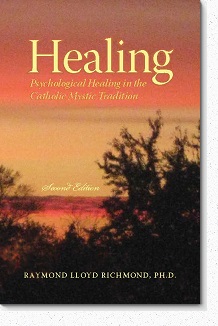
A treasure of a resource for psychological and spiritual healing. Information
gathered from my websites (including this webpage) is now available at your fingertips
in book form.
 |
 |
Healing by Raymond Lloyd Richmond, Ph.D. explains how psychological
defenses help to protect us from emotional injury. But if you cling to the
defense mechanisms that were created in your childhood and carry them on
into adulthood—as most everyone does unconsciously— your quest for spiritual
healing will be thwarted by overwhelming resentments and conflicts. Still, God
has been trying to show you that there is more to life than resentment and
conflict, something so beautiful and desirable that only one thing can resist its
pull: hate So now, and in every moment until you die, you will have a profound choice
between your enslavement to old defenses and the beauty of God. That decision has to
come from you. You will go where you desire.
More
Information |
|
|