|
|
|
Psychological
Healing
in the Catholic Mystic Tradition

Guidelines:
Staying Safe on
the Journey
When you are sick
of sin
come to Me. |
Fear |
Healing |
Therapy |
Spiritual Counsels |
Books |
About CSF
Spirituality |
Religion |
Self-interest |
The Danger of Moral Depravity |
The Danger of Offense to Chastity
The Danger of Infatuation with Mystic Phenomena |
Compunction |
Sick of Sin
 N TODAY’S
world, especially
in the San Francisco Bay area, we often hear of persons who claim to value
spirituality. In this New-Age sense, spirituality
does not mean much more than an awareness of some sort of
“enlightenment” that imbues one’s life with an esoteric,
otherworldly feeling while making no particular demands on anyone. N TODAY’S
world, especially
in the San Francisco Bay area, we often hear of persons who claim to value
spirituality. In this New-Age sense, spirituality
does not mean much more than an awareness of some sort of
“enlightenment” that imbues one’s life with an esoteric,
otherworldly feeling while making no particular demands on anyone.
Spirituality
In its best and most practical
sense, however, spirituality can be defined psychologically as an
inner belief system that provides a person with a sense of confidence and
emotional comfort that transcends the conscious
“self.”
Spirituality can be valuable
as a first step leading us away from psychological self-centeredness. But
it’s only a first step. And it’s often a misstep leading us right
into its own narcissistic illusions, however esoteric they may appear—as
I describe below.
Religion
In contrast, religion (deriving
from the Latin religare, to bind back) refers to the beliefs and practices
with which we worship God who created us.
|
Our help is in
the name of the LORD
Who made heaven and earth. |
|
|
—Psalm
124:8 |
|
Therefore, religion essentially
denotes a lifestyle that draws us away from our self-centeredness and back
to God in adoration and gratitude.
Note carefully, though, that
if religion does not have a spirituality breathing life into it, religion
will be just dry intellectual superstition.
In other words, unless religion is a lifestyle
that provides spiritual confidence and comfort, it will be stiff and lifeless.
And it is for this precise reason that so many children
reject their parents’ religion:
“It’s not relevant to my life!”
But once we properly understand
both spirituality and religion we can then speak, as I do here, of a mystic
spirituality—that is, a firm grounding in the Christian religion
that allows us to live our faith with awesome reverence, rather than
intellectually. This spirituality can guide us
in our religious practices to seek profound purification of heart and soul,
and to accept, in perfect and chaste obedience,
the obligations of love that Christ placed upon
us: deny ourselves, take up the cross, and follow Him
in the holy mission of bringing souls back to
God in adoration and gratitude.
Self-interest
Human nature is such that, left
to ourselves, without any external guidance, we tend to seek nothing more
than our own self-interest. The Biblical history of the ancient Hebrews reveals
that, time and time again, we seek God when we are in crisis and then we
forget Him when things start looking rosy.
Saint Paul encountered the same
human nature among the Greeks of Corinth. Corinth, after all, was one of
the most morally corrupt cities in Greece, sort of like a combination of
San Francisco, Las Vegas, Hollywood, and Amsterdam
today. That bad. And the church at Corinth gave Saint Paul constant
headaches.
Indeed, throughout its history,
the Church has had to contend with almost constant arguing and bickering
about what Christ really asked of us, because the hard, narrow way, to many
persons, has seemed too narrow to allow them to squeeze through with all
their self-interests wrapped around them.
Therefore, those who choose to
live lives of holiness through deep contemplation
and prayer need to recognize the dangers that are
essentially inevitable along the way.
The Danger of
Moral Depravity in Mysticism
Moral depravity is not
a term much used in today’s world. After all, in the name of
“diversity” just about anything goes today. And when anything goes
everywhere, all paths lead nowhere. What one person sees as depravity, another
person sees as . . . well, self-interest.
So there are many ways—specific
to mystic aspirations—by which a person can lose a sense of chaste moral
direction and fall into depravity.
The 007
Mentality
In the fictionalized James Bond
stories, the “double 0” designation meant that a spy was of such
unique and specialized worth that he had a license to kill anyone, without
question, in carrying out his secret mission. Similarly, many self-styled
mystics through the ages have developed a belief that they have such a unique
and enlightened relationship to God that they can do things that are morally
forbidden to persons of lesser holiness. This moral relativism amounts
essentially to a “license to
sin.”
From the miracle workers in Corinth
who challenged Paul, to the Messalians (or Euchites) who gave headaches to
Basil
 of Caesarea in the fourth century, to
the Albigensians whom Saint
Dominic of Caesarea in the fourth century, to
the Albigensians whom Saint
Dominic suppressed with his preaching in the
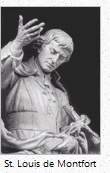
thirteenth century, to the Jansenists whom Saint Louis-Marie de Montfort
suppressed with his preaching in the eighteenth century, to the ordinary
person of today’s world who says, “Oh, there’s your dogma
again. I have no use for dogma. If Christ told me in my heart that He wanted
me to marry someone who was divorced, I would do it. It’s between me
and Christ,” it’s all the same thing. License to sin. It all flouts
the demands of Christian chastity. suppressed with his preaching in the
thirteenth century, to the Jansenists whom Saint Louis-Marie de Montfort
suppressed with his preaching in the eighteenth century, to the ordinary
person of today’s world who says, “Oh, there’s your dogma
again. I have no use for dogma. If Christ told me in my heart that He wanted
me to marry someone who was divorced, I would do it. It’s between me
and Christ,” it’s all the same thing. License to sin. It all flouts
the demands of Christian chastity.
The Messalians,
for example, believed that there was evil in every person that could not be
overcome by sacramental grace alone. Now, in a way, there is some truth in this,
in the sense that a passive acceptance of the
sacraments, without a concomitant will
to be changed and strengthened by them, won’t amount to much spiritual
benefit. But the Messalians, missing the whole point here, taught that only
intense prayer and ascetic contemplation could do the job—if it were
forceful enough to produce palpable, psychological effects—and they
abandoned the sacraments along with church
attendance.
Similarly, the
Albigensians—derivatives of the Manichaenism that
almost snared Saint Augustine in his youth—taught about a guaranteed salvation
in the context of a complete indifference to morality. In their scheme of things,
nothing a person did or did not do would make any difference to the person’s
salvation: the devil created the world, God created the spirit, and so everyone
will end up in heaven anyway—or so they
believed.
So, too, those who followed
Jansenism, a form of quietism (see below), while
smugly awaiting their spiritual “baptism,” refused all moral discipline.
Like the Albigensians, the Jansenists believed that, because of Adam and Eve’s
fall from grace, human nature is corrupt and depraved, and that evil cannot
be
avoided.[1]
So they looked for an endowment of irresistible grace from the Holy
Spirit. In their rolling on the floor and babbling in
“tongues” they acted much as some
charismatics do today. In fact, many charismatics
today fall into Jansenism without realizing it, and their emotionally charged
activity is really nothing more than a psychological regression into infantile
behavior, not a mature mystic spirituality. Thus many charismatics are just noisy
Quietists.
It really shouldn’t seem
astonishing that such silly ideas could have such a broad appeal, because
they appeal psychologically to that part of the human psyche that wants an
easier way than the hard, narrow, disciplined way of Christianity. Which
is why, even today, most Protestants, and many
Catholics even, are unconsciously riddled with these same errors. Sadly,
few gullible souls ever read the fine print that says, “No license granted
by the devil will be honored by God.”
Quietism
Some persons build their spirituality
on the idea of self-abandonment. In contrast to
self-surrender,[2]
which is based on the emptying of the self through a
humble and devout love
for God, self-abandonment is based in a sort of
spiritual pride whereby one seeks an indifference
to the external world, including traditional virtue itself. Abandonment,
after all, means just that: total lack of direction. Abandonmnent,
therefore is a Satanic lie clothed in Catholic piety.
Whether based on the Buddhist
perception that creation is evil and that one must therefore avoid
suffering by freeing oneself from attachment
to the world by meditation, or based in the infamous seventeenth century
heresies of Jansen, Molinos, Guyon, and Fénelon, or based on the naive
concept that marijuana, psychedelic drugs, and sexuality
have some spiritual value, or based in a preoccupation with
apparitions and visionaries, or even based
in pseudo-Catholic “centering prayer,”
Quietism looks to psychological feelings as the focus of
“spiritual” experience. Enlightenment comes, so it is said,
by doing nothing. But this “doing nothing” becomes an exclusive
narcissistic activity that attempts to feel with the senses what traditional
theology attributes to the nonsensory workings of divine grace. In essence,
then, all these varieties of Quietism have nothing to do with
“religion”—they are really nothing more than psychological
techniques.
|
This desire for
sensory, psychological satisfaction is not unique to Quietism, however. In
fact, it’s a universal phenomenon, and it derives from
sin itself—that is, from our natural separation
from God.
Just as philosophers
through the ages have noted that we can find hints and traces of divinity
in the natural world, so too we all experience a “hunger” for spiritual
connectedness with each other and with God, as a sort of deep aching for
what is missing in ordinary life. But given our state of separation from
God, and the spiritual blindness that results
from that separation, most of us fill our hunger with what is most immediately
and naturally available: the five physical senses
of the flesh.
And so Christ
had to teach us the truth that we cannot see because of our natural blindness:
“Whoever eats My flesh and drinks My blood has eternal
life. . . . Just as the living Father sent Me and I have life
because of the Father, so also the one who feeds on Me will have life because
of Me. . . . It is the spirit that gives life, while the flesh
is of no avail” (John 6:54,57,63).
And in our hunger
for Christ we find the mystic basis for the Church’s teaching about
sexual morality. It’s not that sexual pleasure
is, in itself, bad or evil; it’s just that it simply misses the point
when taken out of its proper context of marriage and procreation.
In Christ, then,
we have access to real life and to a non-sensory ecstasy far, far greater
than any mere physical sensation of pleasure. The physical realities of this
life are . . . well, realities, yes, and they all have a temporal purpose,
but understood in the Christian sense they should point us to the ultimate
reality—and ecstasy—of God’s great glory in His
Kingdom.
And so mystics
through the ages have noted that the choice between spirit and flesh is
either–or. Just like Christ and John the
Baptist, as one increases, the other must decrease. If we don’t understand
that, then we simply miss the point of what Christianity is all about: entering
into the awesome and glorious presence of God, to be filled, not with
erotic fantasies, but with all the fullness
of God (cf. Ephesians 3:19). |
|
As an added “bonus”
to Quietism, of course, is the lack of moral obligation: the perfectly abandoned
soul does not sin, the Quietists taught, because the soul is so detached
from everything that sin becomes irrelevant. So you can have your cake and
eat it too. At least, until the day of your
judgment.
In these false concepts of
“mysticism,” you are pulled away from external good works, away
from psychological understanding of yourself,
away from supervision by pastors and confessors, away from obedience to Church authority,
and away from reliance on the liturgical, sacramental, and devotional life of the
Church. So there you are, like a sheep without a shepherd, free to pursue your own
self-interests—and vulnerable to the self-interest of any wolf that happens
along.
The Danger of
Offense to Chastity
 All the baptized are called to chastity, but many of the
baptized don’t even know what chastity is.
So, in order to help define it, let’s look at the things that offend it
(emphasis added to key words). And why are these things offenses to chastity?
Because the Catechism of the Catholic Church (CCC) says so? No. They
offend chastity because they pervert the
meaning
of sexuality that God, in His creative love, intended for us. To anyone
who has not entered into the experience of mystic love, all of this might
seem difficult to grasp, but if you ever do surrender yourself to
pure love, you will not only understand these things,
but you will feel them in the aching depths of your
heart.
All the baptized are called to chastity, but many of the
baptized don’t even know what chastity is.
So, in order to help define it, let’s look at the things that offend it
(emphasis added to key words). And why are these things offenses to chastity?
Because the Catechism of the Catholic Church (CCC) says so? No. They
offend chastity because they pervert the
meaning
of sexuality that God, in His creative love, intended for us. To anyone
who has not entered into the experience of mystic love, all of this might
seem difficult to grasp, but if you ever do surrender yourself to
pure love, you will not only understand these things,
but you will feel them in the aching depths of your
heart.
| • |
“Lust is disordered
desire for or inordinate enjoyment of
sexual pleasure. Sexual pleasure is morally disordered
when sought for itself, isolated from its procreative and unitive purposes”
(CCC 2351). |
| • |
“By masturbation
is to be understood the deliberate stimulation of the genital organs in order
to derive sexual pleasure. ‘Both the Magisterium of the Church, in the
course of a constant tradition, and the moral sense of the faithful have
been in no doubt and have firmly maintained that
masturbation is an intrinsically and gravely
disordered action.’ ‘The deliberate use of the sexual faculty,
for whatever reason, outside of marriage is essentially contrary to its
purpose.’ For here sexual pleasure is sought outside of ‘the sexual
relationship which is demanded by the moral order and in which the total
meaning of mutual self-giving and human procreation in the context of true
love is achieved’”
(CCC 2352). |
| • |
“Fornication is carnal
union between an unmarried man and an unmarried woman. It is gravely contrary
to the dignity of persons and of human sexuality
which is naturally ordered to the good of spouses and the generation and
education of children. Moreover, it is a grave
scandal when there is corruption of the young”
(CCC 2353). |
| • |
“Pornography consists
in removing real or simulated sexual acts from the intimacy of the partners,
in order to display them deliberately to third parties. It offends against
chastity because it perverts the conjugal act, the intimate giving of spouses
to each other. It does grave injury to the dignity of its participants (actors,
vendors, the public), since each one becomes an
object of base pleasure and illicit profit for
others. It immerses all who are involved in the
illusion of a fantasy
world. It is a grave offense. Civil authorities should prevent the production
and distribution of pornographic materials”
(CCC 2354). |
| • |
“Prostitution does
injury to the dignity of the person who engages in it, reducing the person
to an instrument of sexual pleasure. The one who pays sins gravely against
himself: he violates the chastity to which his
Baptism pledged him and defiles his body, the
temple of the Holy Spirit. Prostitution is a social
scourge. It usually involves women, but also men, children, and adolescents
(The latter two cases involve the added sin of scandal.). While it is always
gravely sinful to engage in prostitution, the imputability of the offense
can be attenuated by destitution, blackmail, or social pressure”
(CCC 2355). |
| • |
“Rape is the forcible
violation of the sexual intimacy of another person. It does injury to justice
and charity. Rape deeply wounds the respect, freedom,
and physical and moral integrity to which every person has a right. It causes
grave damage that can mark the victim for life. It is always an intrinsically
evil act. Graver still is the rape of children committed
by parents (incest) or those responsible for the
education of the children entrusted to them”
(CCC 2356). |
Chastity for
those who are Single
| • |
“People should cultivate
chastity in the way that is suited to their state of life. Some profess
virginity or consecrated celibacy which enables them to give themselves to
God alone with an undivided heart in a remarkable manner. Others live in
the way prescribed for all by the moral law, whether they are married or
single. Married people are called to live conjugal chastity; others practice
chastity in continence”
(CCC 2349). |
| • |
“Those who are engaged
to marry are called to live chastity in continence. They should see in
this time of testing a discovery of mutual respect, an apprenticeship in
fidelity, and the hope of receiving one another from God. They should reserve
for marriage the expressions of affection that belong to married love. They
will help each other grow in chastity”
(CCC 2350). |
| • |
“Homosexuality refers
to relations between men or between women who experience an exclusive or
predominant sexual attraction toward persons of the same
sex. . . . Basing itself on Sacred
Scripture, which presents homosexual acts as acts of grave depravity,
tradition has always declared that homosexual
acts are intrinsically disordered. They are contrary to the natural law.
They close the sexual act to the gift of life. They do not proceed from a
genuine affective and sexual complementarity. Under no circumstances can
they be approved. . . . Homosexual persons are called to
chastity”
(CCC 2357; 2359). |
Chastity in
Marriage
| • |
“Sexuality is ordered to
the conjugal love of man and woman. In marriage the physical
intimacy [3] of
the spouses becomes a sign and pledge of spiritual communion. Marriage bonds
between baptized persons are sanctified by the sacrament”
(CCC 2360). |
| • |
“Called to give life,
spouses share in the creative power and fatherhood of God. Married couples
should regard it as their proper mission to transmit human life and to
educate their
children; they should realize that they are
thereby cooperating with the love of God the Creator
and are, in a certain sense, its interpreters. They will fulfill this duty
with a sense of human and Christian
responsibility”
(CCC 2367).
“For just reasons, spouses
may wish to space the births of their children. . . .
Periodic continence, that is, the methods of birth regulation based on
self-observation and the use of infertile periods, is in conformity with
the objective criteria of morality. . . . In contrast, every
action which . . . proposes, whether as an end or as a means, to
render procreation impossible is intrinsically
evil”
(CCC 2368; 2370).
“Couples who discover that
they are sterile suffer
greatly. . . . Techniques that entail the dissociation of
husband and wife, by the intrusion of a person other than the couple (donation
of sperm or ovum, surrogate uterus), are gravely immoral. These techniques
(heterologous artificial insemination and fertilization) infringe the
child’s right to be born of a father and mother
known to him and bound to each other by marriage. They betray the spouses’
right to become a father and a mother only through each
other. . . . Techniques involving only the married couple
(homologous artificial insemination and fertilization) are perhaps less
reprehensible, yet remain morally unacceptable. They dissociate the sexual
act from the procreative act. The act which brings the child into existence
is no longer an act by which two persons give themselves to one another,
but one that entrusts the life and identity of the embryo into the power
of doctors and biologists and establishes the domination of technology over
the origin and destiny of the human person. Such a relationship of domination
is in itself contrary to the dignity and equality that must be common to
parents and children”
(CCC 2374–2377). |
| • |
“Adultery refers
to marital infidelity. When two partners, of whom at least one is married
to another party, have sexual relations—even transient ones—they
commit adultery. Christ condemns even adultery of mere
desire”
(CCC 2380). |
| • |
“Divorce is a grave
offense against the natural law. It claims to break the contract, to which
the spouses freely consented, to live with each other till death. Divorce
does injury to the covenant of salvation, of which
sacramental marriage is the sign. Contracting a new union, even if it is
recognized by civil law, adds to the gravity of the rupture: the remarried
spouse is then in a situation of public and permanent adultery. . . . Divorce
is immoral also because it introduces disorder into the family and into society.
This disorder brings grave harm to the deserted spouse, to children traumatized
by the separation of their parents and often torn between them, and because
of its contagious effect which makes it truly a plague on society”
(CCC 2384; 2385).
“Yet there are some situations
in which living together becomes practically impossible for a variety of
reasons. In such cases the Church permits the physical separation
of the couple and their living apart. The spouses do not cease to be husband
and wife before God and so are not free to contract a new union. In this
difficult situation, the best solution would be, if possible,
reconciliation”
(CCC 1649).
“The consent [to
marriage] must be an act of the will of each of the contracting parties,
free of coercion or grave external fear. No human power can substitute for
this consent. If this freedom is lacking the marriage is invalid. For this
reason (or for other reasons that render the marriage null and void) the
Church, after an examination of the situation by the competent ecclesiastical
tribunal, can declare the nullity of a marriage, i.e., that the marriage
never existed. In this case the contracting parties are free to marry, provided
the natural obligations of a previous union are discharged”
(CCC 1628–1629). |
| • |
“Human love does not tolerate
‘trial marriages.’ It demands a total and definitive gift
of persons to one another”
(CCC 2391). |
| • |
“Formal cooperation in an
abortion constitutes a grave offense. The Church attaches the canonical
penalty of excommunication to this crime against human life. A person who
procures a completed abortion incurs
excommunication . . . by the very commission of the
offense. . . . The Church does not thereby intend to restrict
the scope of mercy. Rather, she makes clear the gravity of the crime committed,
the irreparable harm done to the innocent who is put to death, as well as
to the parents and the whole of society”
(CCC 2272).
 |
The Danger of
Infatuation with Mystic Phenomena
Quite often, at least in popular
opinion, the effects of mystic spirituality—the stigmata, the ecstasies,
the levitations, the
apparitions—overshadow the mundane reality
of a lifetime of discipline and hard work. And for some persons these mystic
phenomena become desired at all costs, even to the point of fraud—or
conscious (or unconscious) collusion with the
devil.
Christ, of course, warned us
about this:
|
Nevertheless,
do not rejoice because the spirits are subject to you, but rejoice because
your names are written in Heaven. |
|
|
—Luke
10:20 |
|
Thus there can be only one protection
against the danger of infatuation with mystic phenomena: seek only to
love God, and let God give you whatever gifts He
wants.
Sadly, even this protection can
be twisted and distorted by psychological prevarication. The world is full
of people who claim to love God, and yet—wittingly or unwittingly—they
serve nothing more than their own self-interests. Instead of seeking the
humility that characterizes genuine mysticism,
many persons seek “an emotional feeling of well-being, a reassurance
that what you’re doing is right, and that you can have spiritual delights
while ignoring the discipline that they
entail.” [4] Thus
they hope for miracles, rather than hard work, to change their lives, and
they wander from the Way of the Cross to chase off after the allure of
apparitions and visionaries.
|
In his
fantasy book The Hobbit, the precursor
to the Lord of the Rings trilogy, Tolkien tells of a journey through
the dark and dangerous Mirkwood Forest. The travelers were warned to stay
on the path and never leave it, no matter what should happen. Yet, no
sooner did they get started than they spied fairy lights flickering in the
darkness. Enthralled with the allure of the lights, they left the path in
the hope of discovering the fairies themselves. But the more they sought
after the fairies, the more the lights receded into the distance. And then,
far from the safety of the path and wandering helplessly in the darkness,
the travelers were snared by giant spiders.
Well, the story continues . . . but the lesson is clear: if you forsake the
true path to chase after fairy lights, you do so at great
peril. |
|
So this brings us to one unique
mystical test which reveals a sincere desire
for God. Many genuine mystics through the ages have experienced it personally.
Moreover, some mystics, such as Blessed Anna Maria Taigi and the seers at
Garabandal, [5]
have predicted that it will occur eventually as a worldwide event.
It’s the test of
compunction.
Compunction
Compunction—or the gift
of tears—“is not just a fit of depression; it’s the result
of a genuine and sudden shift in perspective, a pervading attitude of
sorrow for
sin.”
[6]
|
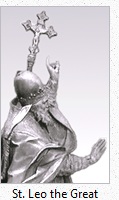 Blessed are they who mourn,
for they shall be comforted. But the mourning for which [the
Lord] promises eternal consolation, dearly beloved, has nothing to
do with ordinary worldly distress; for the tears which have their origin
in the sorrow common to all mankind do not make anyone blessed. There is
another cause for the sighs of the saints, another reason for their blessed
tears. Religious grief mourns for sin, one’s own or another’s;
it does not lament because of what happens as a result of God’s justice,
but because of what is done by human malice. Indeed, he who does wrong is
more to be lamented than he who suffers it, for his wickedness plunges the
sinner into punishment, whereas endurance can raise the just man to
glory. Blessed are they who mourn,
for they shall be comforted. But the mourning for which [the
Lord] promises eternal consolation, dearly beloved, has nothing to
do with ordinary worldly distress; for the tears which have their origin
in the sorrow common to all mankind do not make anyone blessed. There is
another cause for the sighs of the saints, another reason for their blessed
tears. Religious grief mourns for sin, one’s own or another’s;
it does not lament because of what happens as a result of God’s justice,
but because of what is done by human malice. Indeed, he who does wrong is
more to be lamented than he who suffers it, for his wickedness plunges the
sinner into punishment, whereas endurance can raise the just man to
glory. |
|
|
—From a sermon
on the beatitudes
by Saint Leo the Great, pope
Office of Readings, Saturday,
Twenty-Second Week in Ordinary Time |
|
Many mystics through the ages
have described the experience of compunction as the first step into genuine
spiritual life. Once overwhelmed by the profound realization of how much
we have hurt others with our self-indulgent behavior, we then, like Christ
weeping for Jerusalem, begin to weep for ourselves and for others. Saint
Teresa of Avila describes a soul in such
pain:
|
 In some way perhaps the
sorrow proceeds from the deep pain it feels at seeing that God is offended
and little esteemed in this world and that many souls are lost . . .
Even though it sees that God’s mercy is
great—for however wicked their lives, these [souls] can make
amends and be saved—it fears that many are
being condemned. In some way perhaps the
sorrow proceeds from the deep pain it feels at seeing that God is offended
and little esteemed in this world and that many souls are lost . . .
Even though it sees that God’s mercy is
great—for however wicked their lives, these [souls] can make
amends and be saved—it fears that many are
being condemned.
. . .
[T]he pain suffered in this state . . . breaks and
grinds the soul into pieces, without the soul’s striving for it or even
at times wanting it.
. . .
If a soul with so little
charity [7]
when compared to Christ’s . . . felt this torment to be so
unbearable, what must have been the feeling of our Lord Jesus Christ? And
what kind of life must He have suffered since all things were present to
Him and He was always witnessing the serious offenses committed against His
Father? . . . But I consider it so difficult to see the many offenses
committed so continually against His Majesty and the many souls going to
hell that I believe only one day of that pain would
have been sufficient to end many lives; how much more one life, if He had
been no more than man. |
|
|
—The Interior
Castle
V:2. 10,11,14 |
|
Sick of Sin
This profound
sorrow for the sins of the world confirms the
soul’s love for God because it originates at the very core of
free will. No soul can desire
the good, let alone do good, without the grace of God. But contrary to
the fifth century claims of Pelagius, this statement does not contradict
the goodness of human nature, nor does it make a mockery of
free will. Nor must it be supported with the Augustinian
idea of predestination.
 The simple fact is that,
just as psychological change begins with painful remorse for one’s behavior,
the soul, in looking at the corruption of the world
and feeling deep sorrow for it, can freely turn to God and, like Saint Catherine
of Genoa, say, with a cry of inner anguish, “O Lord! no more world,
no more sin!” The simple fact is that,
just as psychological change begins with painful remorse for one’s behavior,
the soul, in looking at the corruption of the world
and feeling deep sorrow for it, can freely turn to God and, like Saint Catherine
of Genoa, say, with a cry of inner anguish, “O Lord! no more world,
no more sin!”
But without divine grace the soul can do
nothing about its sorrow; nor does it even know what to do. Yet its initial, tearful cry
will be heard, and its journey into the holiness of pure
love—and the profound gift of tears—will
begin.

Notes.
1. True Catholic theology teaches us that human
nature is essentially good. Even though we can see evidence of depravity
and corruption all around us, this social corruption is called
concupiscence, the result of Original sin.
But, if we surrender ourselves to divine grace, the
psychological defenses that support us in
concupiscence can be overcome.
2. Surrender always implies a surrendering
to someone. Thus, in the mystical sense, self-surrender means surrendering
the self to God and His will. Consequently,
self-surrender necessitates a
total belief in God. In contrast,
self-abandonment (e.g., Abandonment to
Divine Providence by Jean-Pierre de Caussade) implies a belief
in “nothing” and means an abandonment to anything and everything,
come what may, without qualification—and this opens the soul to
demonic influence as well.
3. Sexuality is ordered to intercourse for the sake
of procreation, but the intimacy which serves as a marriage bond
involves far more than, and does not even have to include, physical contact.
4. Kevin Orlin Johnson, Twenty Questions About
Medjugorje (Dallas: Pangæus Press, 1999), p. 13-14. Dr. Johnson
gives clear, authoritative answers to questions about what Rome has really
said about the so-called apparitions of Medjugorje.
5. Blessed Anna Maria Taigi (1769-1837) predicted
a future “illumination of all consciences.” The seers at Garabandal
in the early 1960s experienced visions of the Blessed Virgin who spoke of many priests,
bishops, and cardinals headed to their perdition because of their betrayal of the Faith;
furthermore, she predicted an imminent Warning intended to correct the conscience
of the world, and, if the world failed to respond, a severe chastisement of
humanity.
6. Kevin Orlin Johnson, Apparitions: Mystic
Phenomena and What They Mean (Dallas: Pangæus Press, 1998), p.
35.
7. That is, herself.

Healing
|
Though
Demons
Gloat
|
Anger
&
Forgiveness
|
Falling
Families,
Fallen Children
|
Disasters
and
trauma
|
Psychology
from the
Heart
|
 |
 |
 |
 |
 |
 |
Psychological Healing
in the Catholic Mystic tradition |
True Christian
Identity
In Confronting
Evil |
How to Turn the
Emotional Wounds
of Daily Life Into
Psychological Growth. |
The Psychological
and
Spiritual Remedy
For Our Cultural
Disintegration |
The Struggle For
Psychological
and Spiritual
Growth |
Collected Texts
About the Spiritual Depth of
Clinical Psychology |
More information |
More information |
More information |
More information |
More information |
More information |
Desire
and
Distraction
|
Fear
|
Stopping
Smoking
|
Borderline
Personality
Disorder
|
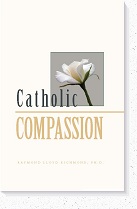
Catholic
Compassion
|
 |
 |
 |
 |
 |
A Catholic Perspective
On Behavioral Change
and Its Subversion |
A Catholic Explanation
Of a Universal
Problem |
Through
Faith
and
Prayer |
Healing
the
Rage |
When They Tell You
That the Moral Teachings
of the Catholic Church
Are Wrong |
More information |
More information |
More information |
More information |
More information |
|




















 Read
an excerpt from a treatise by Saint Cyprian
Read
an excerpt from a treatise by Saint Cyprian