|
|
|

I live
a spiritual life in my own way. Why go to church? It’s just filled with
hypocrites anyway.
 hen many Catholics ask the question,
“Why go to Church,” they are thinking as Protestants think.
After all, anyone can pray at home just as well as in a church. So what is the point of going
to church? Well, for a Protestant, there is no meaningful point. Protestants have “worship
services” not a Mass. hen many Catholics ask the question,
“Why go to Church,” they are thinking as Protestants think.
After all, anyone can pray at home just as well as in a church. So what is the point of going
to church? Well, for a Protestant, there is no meaningful point. Protestants have “worship
services” not a Mass.
That’s
why, for a Catholic, going to church has a very special meaning. In the Catholic
offering of the Mass, a Catholic enters a sacred environment to adore God and
to receive the real presence of Christ. There isn’t anything symbolic about this;
the Mass is a real matter of life versus death.
Now, it’s true—and sad—that
many Catholics who go to church are trying primarily to feel good about themselves,
and they often treat the Blessed Sacrament and the sanctity of the church
environment with casualness, if not outright carelessness. They don’t receive the
Blessed Sacrament, they take it for granted. Such are the liberals of the
Novus Ordo ideology, whose diabolical intent is to undermine the divine mysteries with
a humanistic self-serving agenda. There are also those “Catholics” who attend
Mass out of habit and guilt. Worship for them is an intellectual
matter, not an expression of true love, and it
doesn’t arise out of an ardent desire to
sacrifice everything and
suffer anything to live a holy life. Many of these persons can
be found at the traditional Latin Mass, along with the priests who “go by the book” and
lack a spiritual life of contemplative prayer. Such persons are like leafy branches that
bear no fruit.
|
The English word
hypocrite derives from the Greek word
hypokrites which means “an actor”. To call someone a hypocrite, therefore,
means that we realize that the person acting is not really the character
being acted. For example, the actress portraying a saint in a movie may actually
be stained with perversion and mortal sin in her private life. Similarly, many of
the persons in church who appear to be “holy” may actually be stained with unrepentant
venial and mortal sins. Hence, such persons are literally hypocrites. |
|
Understand, then, that Christ’s sacrifice
on the cross for our sake was met with indifference, ingratitude, and contempt, even
by His own people. So should it be any surprise that today the offering of the holy
Mass is met with indifference, ingratitude, and contempt,
even by His own anointed? Is it any wonder that the Church is filled with
hypocrites breathing the smoke of Satan?
The
Eucharist
Now, the whole point of the Mass
is the Eucharist. And because the Mass is both a sacrifice and a
“meal”—that is, the “bread of angels” that sustains
us spiritually—we have two reasons for attending (assisting at)
Mass.
|
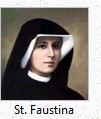 |
If angels were
capable of envy, they would envy us for two things: one is the receiving
of Holy Communion, and the other is suffering. |
|
|
—Saint Faustina,
Diary, 1804 |
|
Suffering
Sacrifice
Worship
The liturgical work of joining
our lives to the sacrifice of Christ is called worship, and worship
far transcends mere spirituality. Many persons today
who do not even believe in God call themselves “spiritual,” but
when we join with Christ’s sacrifice on the Cross, we give meaning to
our constant sacrifices for the souls of others.
Christ’s Passion and death made it perfectly clear that suffering sacrifice
is the only way to crack open the hardened free will
of the human heart. So when we freely suffer for the sake of other souls,
we contribute to paying the mystical price of their
repentance. Even angels cannot do such majestic
work!
Faith and
Love
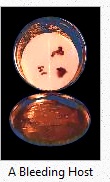 Moreover,
keep in mind that the Body of Christ is faith, and the Blood of Christ
is love. Therefore, to take Communion worthily (1 Corinthians
11:27) [1]
does not mean only that you must be free from mortal sin and able to receive
graces in pure faith. It also means that you
must be willing to “pay the price” of receiving Christ within you.
And what is that price? It is the willingness to make the personal sacrifice
of shedding your own blood—that is, to stop defending your
pride and personal pleasure—so as to
love others according to the Way of the Cross,
in perfect sacrifice. Only in this way can you receive Christ’s love
worthily. Moreover,
keep in mind that the Body of Christ is faith, and the Blood of Christ
is love. Therefore, to take Communion worthily (1 Corinthians
11:27) [1]
does not mean only that you must be free from mortal sin and able to receive
graces in pure faith. It also means that you
must be willing to “pay the price” of receiving Christ within you.
And what is that price? It is the willingness to make the personal sacrifice
of shedding your own blood—that is, to stop defending your
pride and personal pleasure—so as to
love others according to the Way of the Cross,
in perfect sacrifice. Only in this way can you receive Christ’s love
worthily.
|
When Jesus told
Peter that “the spirit is willing, but the flesh is weak” (Mark
14:38), He said this as a warning, not as an excuse. In speaking to Peter,
He speaks to all of us. Unless we discipline ourselves with fasting and
sacrifice, we will fail to reach deep enough within ourselves to overcome
the unconscious anger and
fear that leads us into
disobedience. Without disciplined sacrifice,
all those pious words on our lips won’t do very much at all to help
us attain the holiness we think we
want.
Remember also
that Christ warned us that worship must be an act of genuine love: “I
tell you, unless your righteousness surpasses that of the scribes and Pharisees,
you will not enter into the Kingdom of Heaven” (Matthew
5:20). |
|
Therefore, understand that the
Blessed Sacrament is sacred and that we should partake of it with
due reverence. Keep in mind that it might seem to you that neither God nor
others care about what you do or wear at Mass, but every act of irreverence
will be accounted for at your final judgment. Better to correct things now,
while you have the chance, rather
than pay for it all later.
1. |
Maintain a general
attitude of sacred silence in the church. If you have to communicate with
someone, speak only in a reverent whisper. |
2. |
When you enter or leave
the church, face the Tabernacle and
genuflect [2a]
before the Blessed Sacrament. Also, whenever you walk from one side of the church
to the other, stop, face the Tabernacle, and genuflect as you cross before the
Blessed Sacrament. |
3. |
Fast (i.e., abstain
from food) for at least an hour before receiving holy Communion, according to
Canon law (Can. 919 §1). And for that matter, fast for an hour after receiving.
It’s admirable to not send Christ into a pit of half-digested food, but it
is just as admirable to not pour garbage (such as coffee and donuts) on
Him. |
4. |
In the Roman rite,
genuflect [2b]
before receiving holy Communion, or receive kneeling. |
5. |
In the Roman rite,
receive the Host on the
tongue [3] and only
from the hands of a priest. |
6. |
Dress
modestly. For both men and women, jeans,
sneakers, shorts, shirts or jackets with sports or political insignia, and visible
tattoos.[4]
are grave defilements of reverence. For women in particular, leggings without a skirt,
slacks, short skirts, bare shoulders, and low necklines are all grave defilements of
reverence. |
7. |
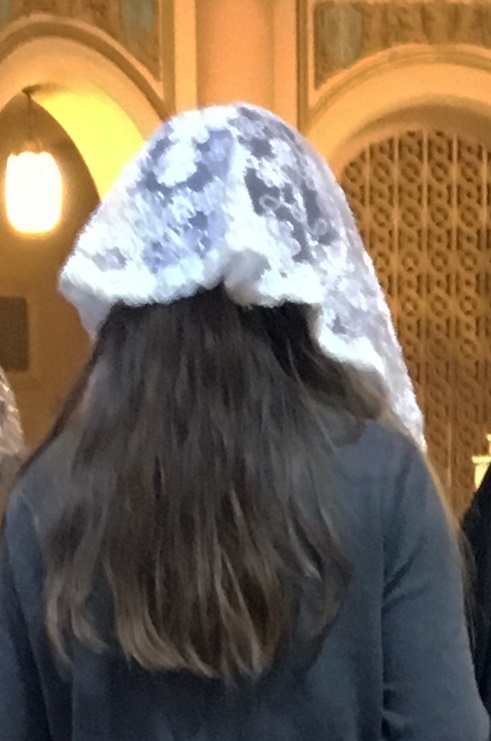
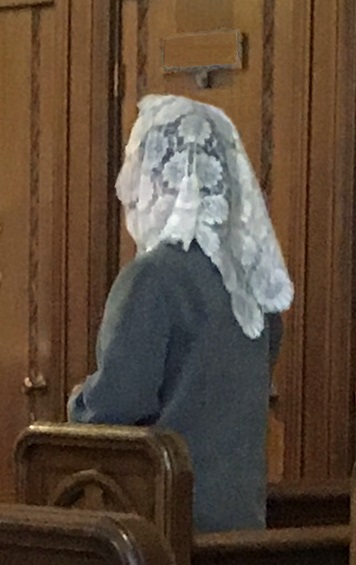
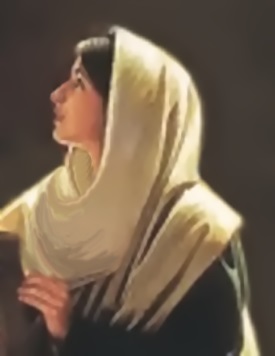
It is admirable and
beneficial for women to cover their
heads,[5]
but let it be a real “veil,” such as a stylish scarf over the head
and shoulders, rather than a doily precariously balanced on the top of the
head. Similarly, a cropped lace “veil” that exposes the back of your head fails
in the true function of a veil. For the same reason, a hat is not liturgically
appropriate. Furthermore, a hat can just as well be worn socially to increase a
woman’s attractiveness, so wearing a hat in church has no protective purpose for a
woman.
|
|
|
A chopped veil that
falls short as a proper veil. |
A good lace veil that
covers the back of her head and neck. |
An elegant use of a scarf
as a chapel veil. |
|
8. |
Arrive before the
formal liturgical greeting by the priest, and do not leave before the
dismissal.[6]
Anything less than this makes a mockery of your lay obligation to
assist [7]
at the liturgy. Moreover, if you really loved God, you would not receive
Communion if you arrive
late.[8] |
|
Protestants say
that their Communion is just a symbol. Well, they’re right. Just as
Melchizedek’s offering of bread and wine was a symbol of Christ’s
sacrifice of His Body and Blood, the Protestants’ “Communion”
is a symbol—a symbol of the real sacrifice of the Catholic
Mass. |
|
Physical and
Spiritual Sustenance
We partake of the Eucharist as
a “meal” to sustain us physically and spiritually. Without the
Eucharist you don’t have a chance to sustain yourself through all the
trials of suffering and sacrifice you will have
to face as you fight the spiritual battle of a holy
life. The Eucharist will sustain you regardless of what anyone around you
does—even regardless of wicked bishops, priests, and deacons given over
to liberal heresies.
In this regard, Jesus told Saint
Faustina,
|
My daughter,
do not pay so much attention to the vessel of grace as to the grace itself
which I give you, because you are not always pleased with the vessel, and
then the graces, too, become deficient. I want to guard you from that, and
I want you never to pay attention to the vessel in which I send you My grace.
Let all the attention of your soul be concentrated on responding to My grace
as faithfully as possible. . . . eternal life must begin already here on
earth through Holy Communion. Each Holy Communion makes you more capable
of communing with God throughout eternity. |
|
|
—Diary,
1599; 1811 |
|
Abuses
In regard to liturgy, the Traditional
Mass and the Eastern Catholic liturgies preserve a reverent environment well
suited to nurturing love. The language, the music, the incense, and the liturgical actions
of the priest(s), server(s) and the congregation all combine to focus human
action into an act of love. Although the Novus Ordo has this potential as
well, the new order of the Mass is also open to abuse. The real division
between the traditional and the modern concerns reverence, or, more technically,
conservatism.
A conservative—a true
conservative—seeks to conserve respect for the divine mystery of
Christ’s Incarnation and Passion that is behind every liturgical action
of the Catholic Church. Thus, the Novus Ordo can be offered
conservatively, and there are places—though they may be hard to
find—where it is offered conservatively.
You may have to travel quite
a distance on Sundays to find a conservative Mass, but you may not have the
time for extensive travel on weekdays. Therefore, if you have to go to a
liberal parish, abstain from receiving Communion and then, instead of putting
money into the collection, leave a note of warning.
|
When I attend Mass
here, I will not support this parish financially as long as you
do any of the following:
|
• |
Refuse to give Communion on
the tongue |
|
• |
Use “altar girls” |
|
• |
Use Extraordinary Ministers
of Holy Communion in non-extraordinary circumstances or refer to them as “Eucharistic
Ministers” |
|
• |
Fail to maintain a general
atmosphere of modest reverence for the sacred environment, especially when women serving
as lectors or ushers wear slacks or jeans instead of skirts |
|
• |
Alter the liturgical texts
or disobey the rubrics |
|
• |
Make the homily into joking
entertainment |
I will give my monetary support
only to those who defend and teach the true faith and who respect the holy mysteries of the
divine liturgy. |
This isn’t being
judgmental, it’s a matter of giving a legitimate warning
about abuses.
|
The psychological
idea behind all abuses is to “dumb down” the Mass so that anyone,
even a child, can understand it; the unwitting consequence of this is that
no one, not even a child, can take the Mass seriously. |
|
Be Not
Afraid
So do not be
afraid. Beware of the Novus Ordo liberals on the one side
and the intellectual traditionalists on the other side. Seek out the truth of Catholic
mysticism. Commune with God in ways that even angels cannot. Remain steadfast in the
Faith, and do not become angry at the sins
of others, but think of the mercy that awaits them, if only
they would repent their sins and accept God’s mercy. And then pray
and make sacrifices that they do accept it.
Pray, and make
sacrifices. |
—The Blessed
Virgin Mary,
Fátima, 1917 |
Conclusion:
Self-deceived
In the end, no matter what prayer
and liturgical practices you follow, if they are not leading you to love
God with all your heart, all your soul, all your mind, and all your strength; if
they are not leading you to exemplify the fruits
of the Holy spirit; if they are not leading you to forsake the
world and
its enticements; if they are not leading you to
live a chaste and modest
lifestyle; and if they are not leading you to treat others with
forgiveness and
compassion, then, to borrow an expression from
Saint James, you are self-deceived.

Notes
1. “Therefore whoever eats the bread or drinks
the cup of the Lord unworthily will have to answer for the body and blood
of the Lord.” For more information about documented and authenticated
Eucharistic miracles, see
Eucharistic
Miracles from The Real Presence Association.
2ab. See Peter Elliot’s definitive text,
Ceremonies of the Modern Roman Rite (San Francisco: Ignatius Press,
1995), §336. A genuflection is a sign of adoration due to God.
To make a proper genuflection, keep your back straight, bend your left leg,
and touch your right knee to the floor. Note that a curtsy is not a genuflection.
Note also that a bow, in the Roman rite, is simply a sign of respect,
as would be given to another person; to bow, rather than to genuflect (or
kneel), before the Blessed Sacrament is to give the appearance of
“respecting” Christ while secretly denying His sacred presence.
It’s true that the norm in the US is to bow
before receiving Communion. And, I will add, it’s also true that the
norm in the US is that most Catholics don’t have a clue as to what
Christianity really is, and that many so-called Catholics are in a perpetual
state of unrepentant mortal sin. So, if
you want to join the spiritual battle against the impending persecution that will
sweep away much of the true faith, then fight aginst the norm of ignorance and apathy
that surrounds you now in the Church itself. Therefore, if you are ever told
that genuflection in a communion line is disobedient, then adore Christ by kneeling
to receive Him. (Reception of Communion while kneeling is protected by church law; see
Redemptionis Sacramentum, 91).
3. This is not an issue in the Eastern rites because
of the universal practice of intinction (dipping the host into the
Precious Blood, with reception in the mouth), but all Roman Catholics have
the right to receive the host on the tongue (see
Redemptionis Sacramentum, 92 and
GIRM, 161). This right cannot be legally denied,
even in the flu season, and any priest who denies you does so illicitly and
thereby commits a grave sin. (If any priest consistently tries to force you
to receive in the hands, then start wearing gloves. Every priest knows that
reception of the host in gloved hands is absolutely forbidden.) It is also
illicit to be denied Communion for kneeling (see
Redemptionis Sacramentum, 91).
Furthermore, in regard to sanitation, it is more sanitary
to receive the host on the tongue that to receive the host in your hands.
Keep in mind that by the time for Communion your hands have been subject
to far more bacterial and viral contamination than the hands of the priest.
Plus, a good priest will not even touch your tongue when giving Communion.
As for “extraordinary ministers of Holy Communion” (see Redemptionis Sacramentum, 154-160), well, what’s
the point of your not touching the host with your hands if you are willing
to receive communion from the hands of a layperson stained with hidden lust and
unconscious anger? Yes, even priests are stained with
hidden sins, but you are protected from the sins of a priest by virtue of his
ordination.
4. If you have a tattoo
that you acquired in a time of spiritual ignorance, then, to prevent the
sin of giving scandal to others, cover it in shame for having so desecrated
your personal temple of the Holy
Spirit.
5. When a woman refuses to cover her head
in prayer, she also refuses to take seriously the spiritual battle with evil—and
that’s a sad thing for her and for the entire Chrurch as well.
6. “Eating and running” is a social
blunder that can get you barred from future dinner invitations. Do you think
that it offends Christ any the less?
7. See Can. 1247
and 1248.
8. You are obligated by Church law to receive
holy Communion only once a year (see
Can. 920 §1); partaking of the
sacrament of the Eucharist more than this minimum is optional. Therefore,
refraining from receiving holy Communion when you have not been able to prepare
yourself properly (e.g., in quiet meditation before Mass begins) would be
of greater honor to Christ than receiving Communion as a formality simply
because you managed to get there “before it was all over.”
Additional
Resources
• |
For information
about documented and authenticated Eucharistic miracles, see
Eucharistic
Miracles from The Real Presence Association. |
• |
Messages to
any mystic from the Blessed Virgin and Jesus do not have to be accepted by
anyone as articles of faith, even though the messages may be approved by
the local bishop as not contradicting the faith. Nevertheless, regardless
of what you might think about the revelations made to Catalina Rivas, you
should still read this explanation of the awesome meaning of the Holy Mass.
After reading it, you might think differently about your personal responsibility
to Christ’s marvelous sacrifice for all mankind.
The
Holy Mass explained to Catalina by Jesus and Mary |
|