|
|
|
You
led us, God, into the snare;
You laid a heavy burden on our backs.
We went through fire and through water,
but then You brought us relief. |
 |
—Psalm
66:11–12 |
Catholic Psychotherapy |
Spiritual Counsels |
Books |
About CSF
Introduction |
The Imaginary |
The Real |
Blame |
Trust in God |
The Symbolic Realm |
The Clinical Issue of Being Believed |
Spiritual Growth through Tribulations |
Breaking the Cycle of Blame and Hatred
 HEN natural disasters and other traumatic
events occur, survivors, journalists, and relief workers can be overwhelmed
with horrendous sights and smells and profound scenes of human
suffering. But more often than not, in the midst
of devastation and helplessness, these persons can do nothing more than cast
weak sympathetic glances at each other, overlooking the greatest strength
of all: complete trust in God. HEN natural disasters and other traumatic
events occur, survivors, journalists, and relief workers can be overwhelmed
with horrendous sights and smells and profound scenes of human
suffering. But more often than not, in the midst
of devastation and helplessness, these persons can do nothing more than cast
weak sympathetic glances at each other, overlooking the greatest strength
of all: complete trust in God.
Moreover, in a tragedy even greater
than the original tragedy, many persons get angry at God, saying, “Why
did God let this evil happen? The reality is
that God has abandoned me.”
In psychological terms, though,
the reality is that in our anger at God we confuse the psychological
realm of the imaginary with the realm
of the real—and in so doing, we
overlook the healing potential of the realm of the
symbolic. For those not familiar with
psychology, this needs some explanation, so follow along with me
here.
The
Imaginary
The
Realm of the Imaginary derives from the
pre-verbal state of childhood. As children, we need—and
desire—others to take care of our needs,
but, without language, we conceive of this caretaking imaginally; that is,
as images in our minds. Hence the realm of the imaginary is all in
our heads, so to speak; it’s all based in the expectation that our needs
should be fulfilled, and it provokes
anger
when our needs aren’t fulfilled.
|
Now, when a parent
takes care of a helpless infant, the caretaking can be an act of
pure—rather than imaginary—love in which
the parent is concerned only for the infant’s ultimate good.
Once the child
becomes capable of language and independent thought, however,
caretaking can then fall back into the imaginary realm and degenerate into
mere bribery, in which a parent “gives” only to manipulate the
child with game playing and guilt into behaviors
more suited to the parent’s comfort than the child’s
well-being.
Although the realm
of the imaginary begins in childhood, it persists even into
adulthood. For example, the desire for romantic fulfillment in another person
resides in the realm of the imaginary because romantic
fulfillment depends on fantasies of someone giving you what makes you
feel good. As hard as it is to admit it, and as much as it contradicts popular
culture, romantic sentiment is based in
self-indulgence, not in a selfless love for
God.
Furthermore,
the pursuit of happiness, which characterizes secular culture (and corrupts
Christian values) also belongs to the realm of the imaginary. Whether it
be the “happiness” of drugs or alcohol or food or eroticism or athletic
triumph or political triumph, it all points back to an infant yearning to be
wrapped in unconscious bliss, seemingly protected—at least momentarily—from
the reality of its own vulnerability. |
|
OK. So there is the realm of
the imaginary.
The
Real
The world is generally quite
stable. We go to bed at night and fully expect our slippers to be there,
right where we left them the night before, when we wake up. Without this
sense of stability we would be living in an Alice in Wonderland type
of craziness. We couldn’t function.
 Yet consider just how fragile this
sense of daily security really is. Any number of things—from a car crash
to an earthquake—could happen suddenly, without warning, and leave us
in chaos. Yet consider just how fragile this
sense of daily security really is. Any number of things—from a car crash
to an earthquake—could happen suddenly, without warning, and leave us
in chaos.
This is reality.
The
Realm of the
Real is therefore the place of our essential
fragmentation, vulnerability, and death.
It’s the “place” where every disaster leaves us, wounded and
helpless. It’s the place of
PTSD.
It’s our wretched reality.
To most persons, the Realm of
the Real is a terrifying place, and so most persons will do most anything
to hide this reality from their own awareness. We try to live secure and
peaceful lives in the moment while pushing away the knowledge that in the
next moment everything and anything worldly that we rely upon—our
possessions and our bodies—can be wiped
away.
Psychologically, then, when you
encounter
the real you experience a shocking disruption of your previously
secure—and imaginary—sense of self. Therefore, you will experience
a
trauma
if you encounter the real with nothing but symptoms and
defenses from the Imaginary Realm.
|
In fact, the
psychological function of a symptom is precisely to hide reality;
a symptom hides an intangible and horrifying reality behind tangible mental
and physical manifestations such as anxiety,
insomnia, lethargy,
nightmares,
depressed mood, and so on. |
|
Furthermore, this encounter takes
us right into all the psychological and spiritual dangers of
blame.
Blame
Consider here the story of Adam
and Eve, which explains the concept of Original Sin.
Adam’s part in this drama is seen most clearly not so much in his eating
the forbidden fruit but in his pointing to Eve and saying to God,
“It’s her fault! This woman you put here made me
do it!” In other words, instead of admitting his mistake and begging
for forgiveness, Adam hid himself and blamed God; and
we have been making excuses, hiding in sin, and blaming God—and blaming
others—ever since.
“Why didn’t you stop them from
abusing me? Why don’t you stop the wars? Why am I denied my rights? It’s not
fair!” We blame God. We blame the government. We blame anyone who doesn’t give
us what we want.
In all blame, we hide from God.
Yet in hiding from Him, we make it impossible to trust in Him.
Trust in
God
Now, many people don’t know
what trust in God really means. They hear the words often enough,
but (to quote one person who has written to me) it seems to mean “something
different to everyone, in the sense that everyone has their own interpretation
of trust and everyone does it only to a degree and the one who does it the
most seems foolish.”
Well, full trust in God is composed
of two separate but interrelated components: trust in God’s justice,
and trust in God’s providence.
1. |
Trust in
God’s Justice. We have all encountered
individuals who commit offenses and seem to “get away with it.”
Although the irritation that we feel is justified, we can also be drawn into
the desire to take matters into our own hands and get revenge. If we remember,
however, that every crime—every sin—every
offense against love—that a person commits is
an offense against God that will be accounted for during his or her judgment
at death, then we can understand that no one can evade God’s perfect justice.
All sins will be paid for. If the sins are not repented, they will be paid for in
hell, but if the sins are repented they will be paid for in
Purgatory, thus demonstrating that
mercy is a fundamental part of God’s justice. To trust
in God’s justice, then, is to set aside our anger for the injuries inflicted on
us and to let God administer His own justice according to His will. |
2. |
Trust in
God’s Providence. Some individuals
have the mistaken belief that “trust in God” means to sit around
doing nothing in the expectation that God will do everything for us. But
this false belief is based in an avoidance of our taking full
responsibility for living holy
lives that bear spiritual fruits.
To trust in God’s providence, therefore, does not mean that we do nothing;
it means that we believe that, in answer to our
prayers, God will guide, protect, and encourage
us as we take responsibility for developing and using our
talents to serve
God. |
The Symbolic
Realm—and the Hope of Healing
The truth is, when “bad”
things happen to you, that is reality. But when you set aside complaining
and place yourself in God’s protection and voice your pain openly to
God in prayer—that is, when you really trust in God—you raise the
Realm of the Real to the level of the Realm of the
Symbolic. In the symbolic realm, the realm of language, horror
can be given containment through the Word, thus allowing us to draw wisdom
from pain and tragedy.
As your hearts
have been disposed to stray from God,
turn now ten times the more to seek Him;
for He who has brought disaster upon you
will, in saving you, bring you back enduring
joy. |
—Baruch 4:28–29 |
To find healing in the Realm of the
Symbolic, though, it is necessary to leave behind our imaginary hopes.
If, however, you get angry
at God that your prayers haven’t been answered as you desire,
maybe you have been mistakenly seeking yourself, and your own
satisfaction, as a continuation of the resentment that enveloped you in childhood.
Maybe you cling to your indignation as a self-consoling comfort,
fearing your own
wretched loneliness—fearing to die to the
Realm of the Imaginary. But take heart, even Christ—in
His humanity and for our sake—had to confront and overcome this
fear:
My God, my God,
why have You abandoned me? |
—Psalm 22:2 |
When Christ cried out these words
from the cross, He was quoting the opening line of Psalm 22 to refer us to
the entire psalm. There we find that what at first appears to be loss and
failure actually results in the redemption of the entire world: For God
has not spurned or disdained the misery of this poor wretch . . .
the poor will eat their fill; those who seek the Lord will offer praise
. . . all the ends of the earth will worship and turn to the
Lord.
Through His
obedient acceptance of the cross, Christ overcame
death. The real cross, upon which Christ hung, is reality itself:
the ingratitude and contempt that humanity inflicts on God’s
love. The symbolic cross, upon which the
Word—and our very destiny—hangs, and which every Christian must
embrace, is the spoken acknowledgment of our brokenness, trauma, and death
that love alone can overcome. Christ offers us a share in the glory of His
achievement if only we accept His call to follow the same path—if only
we stop hiding the real behind empty
defenses, if only we openly admit our
pain to God, if only we let our prayer speak in
honest humility for us.
 |
O Lord, my God,
You are no stranger to those who do not estrange themselves from You. How
can anyone say that it is You who absent Yourself? |
—St. John of the Cross
The Sayings of Light and Love, 50 |
Therefore, in all of our
blame, anger, and
protest—in all of our hiding from God—we
never allow ourselves to hear—or proclaim to others—the final words
of Psalm 22 that express the triumph of the Word over the Realm of the
Real:
The generation
to come will be told of the Lord,
that they may proclaim to a people yet unborn
the deliverance you have brought. |
—Psalm 22:32 |
The Clinical Issue
of Being Believed
When a child is being abused,
the child’s greatest desire is that someone with power and authority will
recognize the abuse and put a stop to it. If this doesn’t occur, and if the
child simply endures years of pain into adulthood without ever being believed,
there will always be a childlike part
of the adult that desires desperately—and
repetitively—to
make others recognize any sort of injustice. This frustration can even be
one of the underlying psychological factors motivating
terrorism.
If such a person enters
psychotherapy for the treatment of trauma, the issue of “Do you believe me?”
can quickly emerge as a therapeutic problem. If the psychotherapist says, “Oh,
that’s all in your head. Why don’t you just get over it?” then all of the client’s
inner experiences surrounding the traumatic memories are invalidated.
And here is precisely where the real
damage is done. Mind you, the damage has nothing to do with accepting or denying
the past. It doesn’t really matter whether the psychotherapist believes that the
events in question actually occurred exactly as the client remembers it. But it
does matter that the psychotherapist believe the client’s pain.
Consequently, the therapeutic
issue is whether the psychotherapist can help the client “believe” his or
her own pain enough to listen to it without running from it, such that the
“adult part” of the personality can (a) listen to
the frightened “child part” tell its story, (b)
accept and validate the emotional pain of the child part, and (c) take adult
responsibility for the healing process that the child part
cannot manage on its own. For the psychotherapy, then, the “Do you believe me?”
question is not about facts but about a yearning for emotional respect and
comfort.
|
It won’t help
you to keep asking, “Why did God do this to me?” or “Why didn’t God stop the
abuse?” Nor will trying to get the suspected person(s) to admit the truth
help you. The thing to do now is to vow that, regardless of the reasons for
what was done to you, you will not keep looking backward in anger but will look
forward, through prayer and hard psychological work, to take personal
responsibility for your healing from your
emotional injuries. |
|
Spiritual Growth
through Tribulations
 Saint Francis of Assisi,
(the saint everyone loves to love and whom few are willing to imitate in
his austerity and chastity) knew this very well. He rejoiced in all things, beautiful
and ugly, life and death, and he taught his followers to
repent their sinful lives, live in chaste
purity of heart and body, and place total confidence in God alone, come what
may, good or bad, as the only path to holy life in genuine service to God.
Moreover, this same sentiment speaks to us through the Old Testament as
well: Saint Francis of Assisi,
(the saint everyone loves to love and whom few are willing to imitate in
his austerity and chastity) knew this very well. He rejoiced in all things, beautiful
and ugly, life and death, and he taught his followers to
repent their sinful lives, live in chaste
purity of heart and body, and place total confidence in God alone, come what
may, good or bad, as the only path to holy life in genuine service to God.
Moreover, this same sentiment speaks to us through the Old Testament as
well:
|
We should be
grateful to the Lord our God, for putting us to the test, as He did our
forefathers. Recall how He dealt with Abraham, and how He tried Isaac, and
all that happened to Jacob in Syrian Mesopotamia while he was tending the
flocks of Laban, his mother’s brother. Not for vengeance did the Lord
put them in the crucible to try their hearts, nor has He done so with us.
It is by way of admonition that He chastises those who are close to
Him. |
|
|
—Judith 8:25-27 |
|
Be willing, therefore, to find the
symbolic, spiritual meaning in tribulations, and then you can break the
self-defeating cycle of blame and hatred.
Breaking the
Cycle of Blame and Hatred
Whenever you
pray for divine guidance, answers will come through
encounters with mundane, daily events. As these events occur, ask yourself,
“What is God trying to teach me in this?” Let none of them pass as a
mere “coincidence.” Seek their symbolic meaning, and open your mind and heart to
what you need to learn about yourself through your encounter with the events, however
troubling—and grow in wisdom rather than stew in resentment.
If your response is, “Yeah,
right. God is telling me that He hates me and that I’m just a piece
of garbage!” then your sarcasm reveals
the depth of your anger at your parents, the magnitude
of your resentment of others, and the pervasiveness of your unconscious tendency
to turn that anger against yourself in repeated self-sabotage. Truly, it’s
far easier to say that God hates you, as an excuse for your hating others,
than it is to listen to the depths of your pain and sadness and, in the process,
open your heart to genuine love.
It would be far better to step
outside this repeated cycle of hatred and ask yourself some meaningful
questions:
• |
“Do
I hide my emotional hurt behind a show of anger and a thirst for
revenge?” If so, maybe your psychological
and spiritual task is to face up to and admit your hidden
emotions. |
• |
“Do
I use pride as a way to hide my feelings of
vulnerability?” If so, maybe your
psychological and spiritual task is to set aside your pride
and stop thinking so much about yourself. |
• |
“Am
I harboring an attitude of resistance to
authority?” If so, maybe your psychological
and spiritual task is to admit that this defiant attitude,
which results from hidden anger at your parents, has been
crippling you all your life. |
• |
“Do
I lack patience?” If so, maybe your psychological
and spiritual task is to admit that, even though you think you live a devout life,
your “faith” is all in your head and you don’t really have
much genuine love for others. |
Recommended
Reading
A treasure of a resource for psychological and spiritual healing. Information
gathered from my websites (including this webpage) is now available at your fingertips
in book form.
 |
|
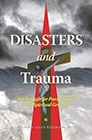
Disasters and Trauma by Raymond Lloyd Richmond, Ph.D. explains how an
event is traumatic because it disrupts your previously secure sense of self.
Wild animals live with a constant, sharp awareness of perpetual
danger, yet most people live with a naive—and deceptive—sense of safety and
security to the point of denying their basic vulnerability and fragmented sense
of self. So when something disastrous happens, the psychological damage from the
shattering of your illusions about life and identity may be more problematic than
any physical damage.
Ordering
Information |
|
|




















 Reprints of this article
are available as a book
Reprints of this article
are available as a book