|
|
|
Psychological
Healing
in the Catholic Mystic tradition

The Beginning
of the Transformation
Christianity
does not make life easy,
it makes life tolerable—and meaningful. |
Catholic Psychotherapy |
Spiritual Counsels |
Books |
About CSF
Introduction |
Transformation |
Opposition from the World |
Neglect |
Chastity |
Mysticism |
The Cross
 ITHIN
the unfathomable depths of
God’s love and mercy, we can find a great treasure that offers us personal
growth, heightened wisdom, and enhanced interpersonal effectiveness. Through
deep faith—lived consistently in a holy and devout life-style—common
hassles and anxieties of life are transformed into true peace and
love. ITHIN
the unfathomable depths of
God’s love and mercy, we can find a great treasure that offers us personal
growth, heightened wisdom, and enhanced interpersonal effectiveness. Through
deep faith—lived consistently in a holy and devout life-style—common
hassles and anxieties of life are transformed into true peace and
love.
Transformation
The wisdom of the Catholic Church
teaches us, though, that peace and
love, like any good thing, do not come without a
price.
When Saint Paul, for example,
was executed by the Romans, he showed that he understood very well what Jesus
meant about his followers having to deny themselves and take up their crosses.
For on one day, as a zealous Jew on his way to persecute Christians, about
twenty or so years before he died, he encountered Christ in a blinding flash.
Humbled—but not humiliated—and enlightened, Paul renounced a pompous,
self-assured lifestyle for a new Christian life of joyful devotion amidst
hardship and service.
This astonishing
transformation is open to anyone. Lives of pain and trauma, bitterness and
hatred, emptiness and despair—lives that, despite free will, are enslaved
to psychological and spiritual
blindness—can be healed and transformed.
|
But please
let’s understand right from the beginning that
spiritual-psychological healing is hard work. It requires discipline. It’s
tedious. It’s often frightening. It requires
constant effort to monitor your feelings and
the impulses that arise with your feelings,
and to override those impulses—those signs of what you want
personally—with a firm decision to live a holy
lifestyle by doing God’s will. It’s all far easier to
serve the devil by doing whatever you
want. |
|
Opposition from
the World
Saint Paul’s martyrdom—and
the martyrdom of all Christians, beginning with Christ Himself—shows
just how opposed the world is to the truth that Christ preached about the
reality of sin, our slavery to sin, and our need
to trust entirely in divine mercy. Still, despite
the persecution it received, the Church stood as a sanctuary from the debauchery
and impiety of the pagan world around it.
Neglect
Through the ages the mystic tradition
of the Catholic Church has offered to us all we need for growth, wisdom,
and interpersonal effectiveness, lived consistently in a holy and devout
lifestyle of true
peace and
love.
So why do even Catholics themselves
neglect and scorn this great treasure of the Church?
Well, in the last two thousand
years we’ve come a long way. The modern secular quest for cultural
diversity has been distorted into such
a neurotic obsession with being “open” and “accepting”
that everyone has become terrified of being labeled
“judgmental.” If you dare to
speak the truth about
sin, you may be called “haughty” and
“arrogant” and lacking in
compassion—and you may even be told that
you have a mental disorder!
|
WARNING
Some material on this website may be banned in California schools.
For the politically correct California version,
click here.
If you get lost, then seek the light of the Cross
to find your way out of the darkness. |
|
|
|
|
And so, in our fear of persecution,
we accept anything and everything today—even sin itself—as our
“Christian” duty. Think about that. The
world has seduced us into crucifying Christ day after day in His own
name. Yet most Christians don’t even have a clue about what
is happening right under their own noses.
We are being converted back to
heathenism by humanistic
psychology.
So, you wonder, what does this
have to do with chastity?
Chastity —
A choice you can make now regardless of your past
Sin feels good. Period.
Sin
gives us raw physical pleasure. It can be intense and intoxicating. But sin is
not bad because someone in authority, for some arrogant and mysterious
reason, says so. Sin is not bad because the Catechism says so. Nor is sin
bad because it feels good. Sin leads you away from the goal of holiness and
into the empty pleasures of merely feeling good. Sin misses the point of
life.
God is the point of life, and, in
regard to sexuality, He gave us genitals so that we could bring new life into
the world. Note that we aren’t creators; God is the Creator and we are
procreators—that is, we stand in the place of the Creator. Our genitals
therefore serve the purpose of procreation. They serve love by bringing
children into the world who will learn to love Love—God Himself—to become
love themselves.
Despite its intensity of feeling, sin
defiles love. Sin is the hatred of love. Sin makes pleasure its own end, and so it
ends in failure.
Still, sin feels good—and that
points to the ultimate spiritual battle. Despite the throbbing intensity of
sin’s attraction, we have to struggle against its pleasures and struggle to remind
ourselves that, despite all the allure, sin is the hatred of love.
The battle against sin can be fought only
with love, and chastity is one powerful weapon in
our hands.
|
Chastity is not
the repression of sexuality, it is the purifying transformation of
desire into
love. |
|
As the full human
response to divine love, chastity encompasses
all the psychological, social, and physical consequences of accepting that
the body is the temple of the Holy Spirit (1 Corinthians
6:19). In chastity we renounce lust, dress
modestly, set aside our
illusions about the “self”, and
distance ourselves from—or, in scriptural
language, die to—the corrupt social world
in which we all live, to prepare ourselves for holy service in the Kingdom
of Heaven.
|
If you take the
TWELVE
FRUITS
of the Holy Spirit—Charity, Joy, Peace, Patience, Longanimity (forbearance),
Goodness, Benignity (kindness), Mildness, Fidelity, Modesty, Continence,
and Chastity—and mix them together, you get a fruit salad called mutual
cooperation. Mutual cooperation is the essence of Christian life. And
chastity is a core ingredient in that recipe. You simply cannot have mutual
cooperation if you are always making others into
objects for your personal pleasure. |
|
Chastity is not just an attitude
toward human sexuality, it is the full acceptance
of the human responsibility to the holy lifestyle
that Christ preached—and lived in His body—and that contemporary
society, in all its psychobabble about happiness and
self-fulfillment, tries its best to subvert.
Chastity, then, is a way of
life—the way of life, the only lifestyle, the only
“orientation”—for anyone who would follow Christ and claim
to be Christian. And woe to the soul that spurns chastity. Love is
chaste, and to spurn chastity is to spurn love. If you spurn love, you will
find that in the end you are left with nothing
but everlasting broken emptiness. To
spurn chastity is to spurn Christ Himself, who, in His real and physical
suffering on the Cross—truly present to us in
the broken bread of the Eucharist—offers
the only means to heal our human
brokenness.
|
There is but
one price at which souls are bought, and that is
suffering united to My suffering on the cross. Pure
love understands these words; carnal love will never understand
them. |
|
|
— as told to St.
Faustina
(Diary, 324) |
|
Mysticism
This leads to a simple definition
of mysticism: a direct and immediate
experience of a pure love for God perceived as more
valuable than any worldly attachment and that transcends all sense perception
and logical reasoning. And, if you read the writings of the Catholic mystics,
you will discover that, when they speak about love, they all say the same
thing, in faithful imitation of Christ: If you want to ascend to the heights
of divine love, then be prepared to
suffer.
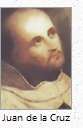 Now, in the Prologue to The
Ascent of Mount Carmel, Saint John of the Cross wrote that “we are
not writing on moral and pleasing topics addressed to the kind of spiritual
people who like to approach God along sweet and satisfying paths. We are
presenting a substantial and solid doctrine for all those who desire to reach
. . . nakedness of spirit.” That’s a strong statement,
and yet it was spoken from all humility by a
man who knew deep in his heart, from personal experience, that God calls
us all, purely out of love for us, to a healing sanctity. We are all called
to be saints, because saints are made, not born. And saints are made when
wretched,
broken hearts open themselves to divine
love and, being willing to pay the price of
holiness, dedicate themselves, through sacrifice,
obedience, and prayer, to the service of others. Now, in the Prologue to The
Ascent of Mount Carmel, Saint John of the Cross wrote that “we are
not writing on moral and pleasing topics addressed to the kind of spiritual
people who like to approach God along sweet and satisfying paths. We are
presenting a substantial and solid doctrine for all those who desire to reach
. . . nakedness of spirit.” That’s a strong statement,
and yet it was spoken from all humility by a
man who knew deep in his heart, from personal experience, that God calls
us all, purely out of love for us, to a healing sanctity. We are all called
to be saints, because saints are made, not born. And saints are made when
wretched,
broken hearts open themselves to divine
love and, being willing to pay the price of
holiness, dedicate themselves, through sacrifice,
obedience, and prayer, to the service of others.
The
Cross
Therefore, if you seek healing
for the emotional emptiness and loneliness that trouble you today, then accept
the Catholic mystic path of active and passive purgation of your senses and
strip yourself of your own self-indulgence and worldly attachments. Overcome
the emotional conflicts that prevent you from
doing what Christ told us all to do: deny ourselves, take up the
cross, and follow Him (see Matthew
16:24).
|
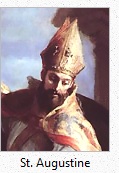 This is not a command for
virgins to obey and brides to ignore, for widows and not for married women,
for monks and not for married men, or for the clergy and not for the laity.
No, the whole Church, the entire body, all the members in their distinct
and varied functions, must follow Christ. . . . They must
take up their cross by enduring in the world for Christ’s sake whatever
pain the world brings. This is not a command for
virgins to obey and brides to ignore, for widows and not for married women,
for monks and not for married men, or for the clergy and not for the laity.
No, the whole Church, the entire body, all the members in their distinct
and varied functions, must follow Christ. . . . They must
take up their cross by enduring in the world for Christ’s sake whatever
pain the world brings. |
|
|
—from a sermon
by St. Augustine, bishop
Office of Readings, Common of Holy Men |
|
Yes, take a deep breath. For
how many of us, religious and laity alike, attempt to follow Christ without
making any effort to deny ourselves? How many so-called Christians want
the satisfaction of believing they have God’s approval and yet turn
Christianity into a sort of hypocritical
complacency? How many of us have been deceived by New
Age
liberalism [1]
into “feeling good” about ourselves
by believing that we can enjoy the glory of the resurrection without seeking
the cross?
|
Your Cross is
not in traumas or illness. Your Cross is in the persecution you experience
for deliberately choosing to serve Christ. |
|
So, if you really want to trust
in God and find true psychological and spiritual
peace, then—instead of denying the cross
and taking up yourself—consider the
counsels of this website, in the spirit and sorrow
of Saint Paul himself: “For many, as I have often told you and now tell
you even in tears, conduct themselves as enemies of the cross of Christ”
(Philippians 3:18).

Notes.
1. What is the difference between a liberal and
a conservative? A conservative—a true conservative—seeks to
conserve respect for the divine mystery of Christ’s Incarnation
and Passion that is behind every liturgical action of the Catholic Church.
A liberal defiles this divine mystery by reducing
Faith to mere human convenience and sentimentality.
Therefore, call yourself what you will, but only a true conservative can
be a Christian.
|




















 Questions and Answers: