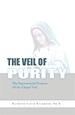
|
|
|
|
Those who are humble
do not speak of being humble.
Those who speak of being humble are not humble. |
 |
Christian Lifestyle |
How to Pray |
Spiritual Counsels |
Books |
About CSF
 |
To be taken with
love for a soul, God does not look on its greatness, but on the greatness
of its humility. |
—St. John of the Cross
The Sayings of Light and Love, 103 |
 O LIVE
in humility, desire to live
always in confidence of God’s love, protection, and guidance; if you do,
you won’t have to be concerned when others insult you—or praise you. Secure
in God’s love, you won’t have to base your identity on whether or not others
notice and accept you, and so you won’t have to compete with them and beat them
down to make yourself feel bigger. And that’s humility. O LIVE
in humility, desire to live
always in confidence of God’s love, protection, and guidance; if you do,
you won’t have to be concerned when others insult you—or praise you. Secure
in God’s love, you won’t have to base your identity on whether or not others
notice and accept you, and so you won’t have to compete with them and beat them
down to make yourself feel bigger. And that’s humility.
Humility does not have anything to
do with humiliation or self-defilement. We have an obligation to serve Christ
effectively and joyfully in pure love, and so it is important that we never
relinquish the noble responsibility of developing our talents to the fullest.
Our self-development is a spiritual necessity, and it won’t become an act of
selfishness if we seek it with proper humility.
As you pray the Litany of Humility,
you ask for three different graces that will allow you to live a genuine Christian
life. These are the graces
|
• |
to set aside your
attempts to make yourself feel “special” through the acceptance
and admiration of others; |
|
|
• |
to overcome your
repugnance to feeling emotionally hurt by
others; |
|
|
• |
to seek the good
of others in all things, setting aside all
competition, even at your own expense. |
|
Still, let’s be careful
that this is done in a psychologically healthy manner.
First, it’s good when our
work is recognized and appreciated; the spiritual point is that we
shouldn’t crave this admiration as an aspect of a personal
identity,
but that we endeavor to accept all benefits of our work in praise of Christ, who
emptied Himself for our sake, who suffered for us, who died on a cross for us,
and in whose service we do our work. But may I never boast except in the
cross of our Lord Jesus Christ (Galatians 6:14).
Second, we all feel
hurt when someone
insults us;
still, the spiritual point is that we don’t need to build up
psychological defenses to protect ourselves from
the pain of being insulted if only, even in our deepest hurt, we always endeavor
to trust in Christ, who alone will protect us from all danger. Be not
afraid, as Jesus says repetitively throughout
the Gospels.
Finally, although “placing
others first” runs counter to natural self-preservation, the spiritual
point is that, if we really trust in God, not only can we stop
competing with others to satisfy our
pride but also we can endeavor to notice the needs
of others, looking on others with compassion,
in the hope that they might be saved from damnation
because of their own desperate obsession with self-preservation. Nevertheless,
our concern for others must not take on a form of
masochism or self-defilement; in all of our charity
to others we must never relinquish the
responsibility of developing our talents to the
fullest, so that we can serve Christ effectively and
joyfully, in pure
love.
The Litany of
Humility
The original version of the
Litany of Humility by Rafael Cardinal Merry del Val (1865-1930) can
be found easily on the Internet. My adapted version makes the psychological
meaning of humility understandable for a contemporary reader.
• |
I have substituted simple,
colloquial expressions for archaic, formal expressions (e.g. “merciful”
has been substituted for “meek”; “falsely accused” has
been substituted for “calumniated”; etc.); |
• |
I have reordered some items so
that the overall context has a psychological logic to it; |
• |
I have altered the language of
some items to make it clear that our desire is not to be humiliated but
to accept gracefully any mistreatment should it occur; |
• |
I have changed the last line
to read “Though others will do what they want, may my life be a radiant
reflection of Your glory” (which is fitting for those who live
primarily among others who disdain holiness) |
O
LORD, merciful and gracious, |
hear
me. |
|
|
FROM the desire
of being admired, |
deliver me. |
From
the desire of being loved, |
" |
From
the desire of being praised, |
" |
From
the desire of being favored, |
" |
From
the desire of being accepted, |
" |
From
the desire of being consulted, |
" |
From
the desire of being well-known, |
" |
From
the desire of being honored, |
" |
|
|
FROM the fear of being
criticized, |
" |
From
the fear of being ridiculed, |
" |
From
the fear of being humiliated, |
" |
From
the fear of being falsely accused, |
" |
From
the fear of being persecuted, |
" |
From
the fear of being disbelieved, |
" |
From
the fear of being despised, |
" |
From
the fear of being forgotten, |
" |
|
|
THAT others
may be admired more than I am
admired, |
grant
me the grace to desire it. |
That others may be loved though I seek
not so much to be loved as to love, |
" |
That others
may be praised though I
may be unnoticed, |
"
|
That others
may be chosen though I
may be set aside, |
"
|
That others
may be preferred to me in
receiving social honors, |
"
|
That, in the
opinion of the world,
others may increase in prominence
while I remain hidden, |
"
|
Though others
will do what they want,
may my life be a radiant reflection
of Your glory, |
"
|
|
The Litany
of Humility (Adapted)
|
These booklets are
individually made with prayerful care. They should be, because I originally
made them for my own use. I print each booklet in color on acid-free
letterhead quality paper, and then I trim the booklet by hand with torn, not
cut, edges.
|
 |
|
|
|
|
|
Appx. 2¾" x 4½"
(Closed)
|
|
|
|
|
|
The original version of this prayer was
written by Rafael Cardinal Merry del Val (1865-1930). My adapted version makes
the psychological meaning of humility understandable for a contemporary reader.
I have substituted simple, colloquial expressions for archaic, formal expressions
(e.g. “merciful” has been substituted for “meek”; “falsely
accused” has been substituted for “calumniated”; etc.); I have reordered
some items so that the overall context has a psychological logic to it; and I
have changed the last line to read “Though others will do what they want,
may my life be a radiant reflection of Your glory” (which is fitting for
those who live primarily among others who disdain holiness).
I will send one booklet for
free to anyone
who requests the booklet by mail and encloses a stamped, self-addressed envelope.
• Domestic requests must include a self-addressed envelope with
postage for a 1 ounce First Class letter.
• International requests must include a self-addressed envelope
with USPS postage for a 1 ounce International First Class letter.
Send requests to:
Raymond Lloyd Richmond, Ph.D.
1592 Union Street # 83
San Francisco, CA 94123
USA
I check my mail about once per week. Delivery
time will vary according to the USPS. I do not accept responsibility for any
disappointment you may experience because of failure to follow the directions
above.

Healing
|
Though
Demons
Gloat
|
Anger
&
Forgiveness
|
Falling
Families,
Fallen Children
|
Emotional
Trauma
|
Psychology
from the
Heart
|
 |
 |
 |
 |
 |
 |
Psychological Healing
in the Catholic Mystic tradition |
True Christian
Identity
In Confronting
Evil |
How to Turn the
Emotional Wounds
of Daily Life Into
Psychological Growth. |
The Psychological
and
Spiritual Remedy
For Our Cultural
Disintegration |
And its
Psychological
and Spiritual
Nature |
Collected Texts
About the Spiritual Depth of
Clinical Psychology |
More information |
More information |
More information |
More information |
More information |
More information |
Desire
and
Distraction
|
Fear
|
Stopping
Smoking
|
Borderline
Personality
Disorder
|
Catholic
Compassion
|
Reverence
for the
Holy Eucharist
|
 |
 |
 |
 |
 |
 |
A Catholic Perspective
On Behavioral Change
and Its Subversion |
A Catholic Explanation
Of a Universal
Problem |
Through
Faith
and
Prayer |
Healing
the
Rage |
When They Tell You
That the Moral Teachings of the
Catholic Church
Are Wrong |
Reverent and
Proper Conduct in
a Catholic Church |
More information |
More information |
More information |
More information |
More information |
More information |
|






















 How to learn humility: