|
|
|
Catholic Psychotherapy |
Spiritual Counsels |
Books |
About CSF
Introduction |
Understanding Causality |
Unconscious Guilt |
Healing Guilt through Cognitive-Behavioral Treatment |
When Children Develop OCD |
Summary
 bsessive-Compulsive
Disorder (OCD) is a disorder, not an illness. That is, OCD is a disorder of thought
such that the fleeting thoughts normally running through the minds of everyone are,
to the person with OCD symptomatology, seen as horrifying and dangerous and so are
perceived as evidence that the person is “bad.” Whereas most persons just
ignore such thoughts, the person with OCD symptomatology is afflicted with such
intense guilt as to be driven to perform compulsive actions to
undo the distress of the guilt. bsessive-Compulsive
Disorder (OCD) is a disorder, not an illness. That is, OCD is a disorder of thought
such that the fleeting thoughts normally running through the minds of everyone are,
to the person with OCD symptomatology, seen as horrifying and dangerous and so are
perceived as evidence that the person is “bad.” Whereas most persons just
ignore such thoughts, the person with OCD symptomatology is afflicted with such
intense guilt as to be driven to perform compulsive actions to
undo the distress of the guilt.
Treatment for OCD requires getting to
the underlying cause of this guilt, and to do this it will be necessary first
to understand the concept of causality itself.
Understanding
Causality
As I say on the page about
depression and anxiety, we know from scientific
research that the brain and the mind have a mutual influence on each other
and that even though mental disorders may have a material cause in
brain neurochemistry they can also have a final cause in
psychological activity.
|
Think, for a
moment about the building in which you may now be sitting. We can ask,
“What is the cause of this building?” just as you might ask about
the cause of OCD. Well, in his philosophy, Aristotle (Physics, ii,
3) described several different types of causes that are relevant even
today.
•
|
The
material cause refers to “that out
of which a thing comes to be and persists.” In this sense, for example,
the steel and concrete and glass—the materials—are the cause of
a building. |
• |
The
formal cause refers to the form—or
plan, or pattern—by which the essence of something is stated. In this
sense, the design and blueprints are the cause of a building. |
• |
The
efficient cause refers to “the primary
source of the change or coming to rest.” In this sense, the construction
company is the cause of a building. |
• |
The
final cause refers to “that for
the sake of which” a thing is done. In this sense, the owner’s
desire is the cause of a building. |
|
|
Now, as Aristotle himself said,
“it follows that there are several causes of the same thing.” In
psychological practice this means that symptoms of OCD, for example, which,
in
scientific [1]
medical language, might be “caused” by a chemical imbalance in
the brain (material cause) can, at the same time, be “caused” by
repressed anger (final cause).
Psychologically, locating and
treating this unconscious final cause of the symptoms can be the most critical
aspect of the treatment because it can have a curative effect on the other
causes as well. Using medication to treat only the material cause, however—as
if it were the rational and only cause—will leave the final cause
untreated and free to continue exerting its harmful psychological and spiritual
influence.
Unconscious
Guilt
In this regard, psychological
research into early infant development has shown that experiences of rage,
and subsequent feelings of guilt, happen to us all right from early infancy.
Every parent will make mistakes in empathic bonding with a child, and every
child will feel emotionally hurt by those mistakes and will crave the
satisfaction of revenge: to hurt the other “as
I have been hurt.”
These impulses to hurt others
are universally human and do not mean that anyone experiencing them is
“bad.” As adults, anyone—even those we care about, and even innocent
babies—can irritate us. Nevertheless, many adults, because of parents who
controlled them with manipulation and guilt, have grown up lacking a social
structure of deep faith and trust in God’s mercy.
Consequently, when they experience these impulses for revenge, they will not say
to God, “I know these impulses are contrary to love; for the sake of love I
renounce them and rather than hurt others I desire to seek the good of others.”
Instead they will try to hide their impulses from others—and from
themselves.
Therefore, both psychological
theory and clinical practice lead us to the truth that OCD, at its
core, is a neurotic way of coping with feelings of
guilt that seem too “bad” to admit to
anyone—not even to God and not even to oneself. It’s similar to Lady
Macbeth, in Shakespeare’s play Macbeth, crying, “Out, damned
spot!” as she tries compulsively to rub away—that is, to undo— the stain
of Duncan’s murder from her
hands.[2]
Now, unlike Lady Macbeth, you
may not have actually killed someone, but the
unconscious
motive for your compulsive rituals can be found in obsessive thoughts or
mental images of resentment, hostility, or violence that occur because someone has
injured you, insulted you, obstructed you, or hurt you in some emotional,
physical, or material way. Moreover, this hurt is more often than not a matter of
what someone has failed to do for you, rather than what a person has done to
you.[3]
|
To someone untrained
in the psychology of the
unconscious,
it may seem difficult to understand this logically, but whatever you are
afraid of doing is what some part of you has an
unconscious desire to
do.[4] Maybe
you have to check the stove in endless repetition to make sure you have turned it off, because
you’re afraid of starting a fire. Well, unconsciously, some part of
you probably desires to set the whole house on fire to get revenge for having
been cheated by someone. Maybe you have to wash your hands in endless repetition
because they feel unclean. Well, unconsciously, some part of you probably
desires to use those hands to strangle someone who has neglected your needs
in some way. Maybe you have to keep checking to make sure you backed up the
data on the computer at work because you’re afraid the work project
might fail. Well, unconsciously, some part of you probably desires
the project to fail because you’re unhappy with your job—and on
and on it goes. |
|
Most likely you don’t like
to talk about these thoughts and fantasies,
or the suppressed desire for revenge—perhaps
going all the way back to infancy—that drives them, because you find
them so repugnant that you want to neutralize them before they reach full
conscious
awareness.[5]
|
AN
EXAMPLE
Transient thoughts
(that is, fantasies) of hurting someone
are actually very common—so common, in fact, that they could be called
“normal” human responses to feeling irritated by someone.
For example, a mother holding her newborn infant while standing at the edge of
Niagara Falls could suddenly think of throwing the child into the water. Now,
such a thought could be an
unconscious
reaction to the mother’s irritation at the responsibility of caring
for her new child.
But does having the thought mean that the mother is actually in danger
of carrying it out? Not at all. The thought, like any fantasy, is only the
result of a juxtaposition of images in the moment—the roaring water and the
infant—that suggest the intellectual possibility that the infant
could be thrown into the water.
So, if the mother were to interpret the fantasy, she could say to herself,
“Ah, yes, caring for a child is much responsibility, isn’t it? Yet,
with Christ’s help and guidance, I can accept the task.”
But if the mother fears the fantasy, she can deceive herself into believing
that the fantasy never occurred, and she can develop obsessive-compulsive
defenses to protect herself from the guilt of feeling resentment toward
her child. Then, later that night, she might feel the compulsive need to
spend hours rearranging the clothes in her closet according to the most elaborate
of rituals, to appease the nagging belief that if she doesn’t do
it—and do it perfectly—her baby will die. |
|
In the OCD response to guilt,
therefore, you attempt to keep your guilt secret and to resolve it through
your own superstitious efforts to
undo the guilt. You create
rituals, and you unconsciously make mistakes in carrying them out, and you
feel guilty about it all. But it’s all an artificially created
guilt, taken in controlled doses, that serves to hide the real guilt
of your anger at persons who have hurt you
somehow.
Healing Guilt
Through Cognitive-Behavioral Treatment
In the current medical realm,
expert consensus guidelines indicate that Cognitive-Behavioral Therapy (CBT),
not medication, is the initial treatment choice for OCD. For OCD treatment to
be in harmony with Christianity, however, the treatment must not just suppress
the symptoms, it must teach you to live a holy
lifestyle purged of vindictive hostility. Rather than live in guilty
fear about your fantasies,
you can learn to face the anger behind the fantasies
with trust in God’s protection.
This treatment has several parts:
(1) stopping obsessive thoughts, (2) stopping compulsive behaviors, (3) purging
“revenge” from your life, and (4) understanding that your salvation
depends not on your perfection but on your willingness to
grow in love.
1. Stopping
Obsessive Thoughts
As creatures of language, we
all think constantly. We think more than we need to think, and we think more
often than not about frivolous and spiritually useless things. As harmful
as this is to a Christian life, some individuals not only think constantly
but they also ruminate and dwell upon their thoughts, and then they feel
guilty about it all. Once a negative thought gets in your mind, it can torment
you for hours and days. The guilt can be agonizing.
Obsessive thoughts, therefore,
are self-propagating. The more they breed, the more they drive you away from
spiritually healthy things, such as prayer, and the more you believe you are a
bad person separated from God.
The solution is simple: without running
from such thoughts in terror, face them with courage and faith.
• |
Scandalous
thoughts. If your thoughts tell you to do something
(curse God, break that glass, spit on that person, kick that dog, etc.) respond
like this: “Yes, it’s true, I’m capable of doing that. Anyone is
capable of doing that. But it would be wrong to do it, and for the love of God
I won’t do it.” |
• |
Accusatory
thoughts. If your thoughts accuse you of things
you have done in the past (telling lies, sexual behaviors, etc.) and tell you
that you are doomed, respond like this: “Yes, it’s true, I have done
those things. They are wrong, but I have repented and confessed those sins; I no
longer do such things, and for the love of God I won’t do such things
again.” |
Then, after admitting that
to carry out these obsessive thoughts would be wrong, and without blaming
yourself for having such thoughts, drive them
away [6]
with one constant, holy thought by reciting the Jesus Prayer
to keep you from thinking about anything else.
The Jesus prayer is simple: Lord
Jesus Christ, Son of God, have mercy upon me.
The technique, too, is simple:
recite the prayer over and over in place of thinking anything
else.[7]
Still, as simple as it is, it’s
hard work. No sooner will you start to pray than your mind will wander and
you will be off in your own thoughts. Once you realize that your mind
has wandered from the prayer, stop thinking and return to the prayer. But be
gentle with yourself. You don’t have to blame yourself for failing. You don’t
have to try to analyze what happened. Just immediately stop thinking and return to
the prayer. Then repeat this process over and over.
If you hold in your heart
the will to do this and desire it more
than anything else—more even than the desire to stay stuck in your
fear and disability—you can do it. If you love God,
and if you love your soul, you can do it.
2. Stopping
Compulsive Behaviors
Compulsions are repetitive behaviors
or mental acts that a person feels driven to perform in response to an obsessive
thought or impulse. These behaviors or mental acts are intended to avoid harm
and so are aimed at preventing or reducing anxiety or distress, or at preventing some
dreaded event.
The basis for all CBT treatment
for OCD is a concept called Exposure and Response
Prevention. This involves exposing yourself to what you
fear, and then deliberately preventing the defensive OCD response (i.e.,
the compulsion). In plain English, this all comes down to forcing yourself to not
do what you fear not doing (such as not washing your hands when you touch a door
handle or not organizing your closet as a response to thoughts that someone will
be harmed if you don’t organize your closet).
The psychological core of Exposure
and Response Prevention is to learn that distressing feelings and
thoughts are not actually dangerous. The part of your brain that pushes you into
an OCD impulse when you experience guilt is a primitive part of the brain
that understands behavior, not language, and that has been conditioned to equate
emotional distress with physical danger. When your body feels the first distress of
guilt, your brain interprets it as a danger and sends out the signal to pump out
fight-or-flight chemicals that cause physiological arousal.
Now, if you believe that there
is a danger, and that you have to perform some OCD ritual to fight against it, you
only encourage your brain to keep on pumping out more fight-or-flight chemicals,
and eventually this process escalates and you succumb to the OCD impulse. Moreover,
you can’t stop the impulse by telling yourself to stop it. As I said before,
the part of your brain responsible for the OCD impulses doesn’t understand
language. It only understands behavior—and this brings us to the real solution
to the problem.
The only way
to stop the OCD impulse is to act in a way that tells your brain that there
is no danger. Hence if you deliberately stop the behaviors that
provoke the fight-or-flight anxiety response your brain will be convinced to shut
down the anxiety response. Do this as follows:
• |
Deep breathing.
Instead of fast, shallow breathing take long, slow, deep breaths. |
• |
Close your eyes.
Instead of staring around in a frenzy, close your eyes. |
• |
Relax your muscles.
Instead of clenching your muscles, loosen them and let them relax. |
• |
Calm your thoughts.
Instead of letting your mind run wild with frantic thoughts, pray the
Jesus Prayer repeatedly. |
These behaviors will tell your
brain that you are not in danger, and subsequently your brain will shut down the
fight-or-flight chemicals—and you will experience a calm relief.
The end result of this is that
you can use your free will to resist the temptation to perform compulsive actions
and that you can trust in God to overcome the superstitious fear of not performing
them.
So, you ask, “What is trust
in God?” and “What does it mean to overcome
superstitious fear?”
Trust in
God
To trust in God is to
believe in God’s protection. Full trust in
God is composed of two separate but interrelated components: trust in God’s
justice, and trust in God’s
providence.[8]
• |
Trust in
God’s Justice. We have all encountered
individuals who commit offenses and seem to “get away with it.”
Although the irritation that we feel is justified, we can also be drawn into
the desire to take matters into our own hands and get revenge. If we remember,
however, that every crime—every sin—every
offense against love—that a person commits is
an offense against God that will be accounted for during his or her judgment
at death, then we can understand that no one can evade God’s perfect justice.
All sins will be paid for. If the sins are not repented, they will be paid for in
hell, but if the sins are repented they will be paid for in
Purgatory, thus demonstrating that
mercy is a fundamental part of God’s justice.
To trust in
God’s justice, then, is to set aside our anger for the injuries inflicted
on us because we believe that God administers His own justice according
to His will.
|
• |
Trust in
God’s Providence. Some individuals
have the mistaken belief that “trust in God” means to sit around
doing nothing in the expectation that God will do everything for us. But
this false belief is based in an avoidance of our taking full
responsibility for living holy
lives that bear spiritual
fruits.
To trust in
God’s providence, therefore, does not mean that we do nothing; it means
that we believe that, in answer to our
prayers, God will guide, protect, and encourage
us as we take responsibility for developing and using our talents to serve
God.
|
Overcoming
Superstitious Fear
You feel the urge to perform
a compulsive act because you accept the
belief that something bad will happen if you
do not perform a ritual. But understand that a belief is not reality; work
to overcome this false belief with a true
belief in God’s protection. Trust in God that
life is not based in
superstition. When that inner OCD
“voice” responds, “Come on, John. I’m only warning you
for your own good. Your fears are perfectly reasonable.
So be reasonable and go back and complete the ritual right now, or you’ll
be sorry!” say what Christ Himself said when hearing something contrary
to His mission: “Get behind Me, Satan! You are an obstacle to Me. You
are thinking not as God does, but as human beings do”
(Matthew 16:23). |
3. Purging
Revenge From Your Life
We are all surrounded by a
social world that literally feeds upon
hostility—anger on anger, hatred on hatred, lawsuit on lawsuit, weapon
on weapon, death on death—enslaving the unwary to a subversive lust
for anger and revenge.
Endeavor, therefore, to detach
yourself from these social evils.
Do this by purging revenge from
your life. Stop watching TV and movies, stop playing video games, stop listening
to secular music, stop reading magazines and newspapers, stop watching
competitive sports (and stop playing them, if you already do). For the sake
of your soul, put all these things out of your mind.
Even though these things are
accepted hook, line, and sinker by our secular culture—and even by those
who claim to be Christian—they have no spiritual value and are just
breeding grounds for the desire to get revenge on others. The same for addictions
(smoking, drinking,
drugs, obesity, gambling,
eroticism); these things breed revenge
because by hurting yourself your unconscious
intent is to sabotage authority; e.g., your parents and God.
The more that you can purge revenge
from your life, the more that you are able to desire
the holy rather than desire worldly pleasures, and the more that you
can pray constantly rather than fill your head
with worldly entertainment, the more progress
you will make in overcoming your unconscious slavery to anger, and the more
progress you will make in overcoming your
superstitious attempts to wash away your
hidden anger.
4. Salvation
Depends on Love, not on Perfection
Christ chose ordinary men, not
scholars and theologians, to be His Apostles and disciples. Why? To demonstrate
that the Church He was establishing would grow through God’s grace,
not through mere human intelligence. So keep in mind that your salvation
depends on your willingness to grow in love, not on your human
perfection.
Understand, therefore, that intrusive
thoughts and fantasies will not, in themselves, obstruct your
salvation. These thoughts and fantasies in themselves
are, at the worst, venial sins that can be absolved just by admitting that to carry
them out in actuality would be wrong. The real danger to your salvation comes
from your failure to trust in God’s providence and justice (see
above); in so far as you don’t admit the thoughts and
fantasies openly to yourself and to God and instead dwell upon fear of them,
they will become temptations more than distractions, and you will feel compelled
to cast aside love so as to take matters into your own hands to fight temptation
with your own intelligence—and you will lose.
• |
When you are praying and distractions
interfere with your concentration, say to yourself, “It’s OK. I
don’t have to repeat the prayer until I get it perfect. My intent is
love; I don’t have to be perfect to love.” |
• |
When fantasies intrude into your
mind, if you try to fight them they will only get more intense, and you will
become more anxious. Instead of resisting, say to yourself, “It’s
OK. Flashes of fantasies are products of my
intellect, not my will. Let them be. I know that
to act on them would be wrong, and I don’t really intend to carry out
these thoughts in actions. My intent is love; I don’t have to be perfect
in not having intruding thoughts. So let’s return to the Jesus
Prayer.” |
When Children Develop
OCD
When children develop OCD, the best
treatment is for the parents to go into psychotherapy. This is because children
develop psychological problems because of unconscious conflicts related to their
parents.
1. |
Many parents do not
live the Catholic faith mystically, from the heart, and instead have only an
intellectual, duty-oriented attitude to Christianity. Consequently, they are incapable
of teaching their children the heartfelt, genuine trust in God that
is one antidote to OCD. |
2. |
Many parents have
unresolved emotional traumas from their own childhoods, and so they lack emotional
honesty in their own lives. Consequently, they are incapable of teaching their children
the emotional honesty that is another antidote to
OCD. |
3. |
Many parents attempt to
restrict their children’s behavior with manipulative and domineering control.
Consequently, the children grow up lacking autonomy and independence and hate their parents
for being so stifling—and then the children fall into guilt and OCD because of their
unconscious anger at their parents. |
Therefore, if the parents use psychotherapy to
resolve their own emotional conflicts and parenting mistakes they will be better able to help
their children overcome OCD.
Summary
With practice, as you learn to
live a genuine Catholic life—detached from the
world, trusting totally in God, chaste in
body and heart, free from all
anger and desire for
revenge—you will have no ugly beliefs, thoughts,
and fantasies to fear, and therefore no guilt
to hide. From then on, whenever any fantasies
arise in your mind, you can see them not as ugly and fearful, but simply
as warnings that someone has hurt you somehow. Then, knowing you’ve
been hurt, and feeling the pain, you can
forgive
the person who hurt you, and you can turn to God
in faith and prayer, believing in and trusting in His protection:
|
When the just
cry out, the LORD hears
and rescues them from all distress.
The LORD is close to the broken hearted,
saves those whose spirit is crushed.
Many are the troubles of the just
but the LORD delivers from them
all. |
|
|
—Psalm 34:18-20 |
|
Related Pages
• Unfinished business in OCD
• Invisible anger in OCD
• How a defense is a protection
Recommended
Reading
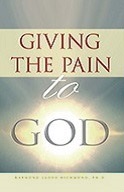
Giving the Pain to God:
The Path to Emotional Healing and Forgiveness
|
 |
 |
This is a small book based on a chapter in my book Healing,
a chapter largely taken from this webpage. This book, however, contains additional information that
has not been previously published and that is not on this webpage.
64 pages.
Ordering
Information |
|

Notes.
1. Note that the whole problem with science is that it is
trapped within the box of sin, and, no matter how
powerful its instruments, it simply cannot see
outside the box.
2. William Shakespeare, Macbeth, Act V, Scene
I.
3. This is why your anger can be so easily denied. Rather
than stinging like a direct insult, anger resulting from someone’s failure
often lurks in the shadows of the unconscious.
4. Imagine that, as you are about to receive from the chalice
at Mass, a thought occurs to you: “I could drop this and spill the Precious
Blood all over the floor.” This does not mean that you would actually
like to drop the chalice, but only that your intellect recognizes the possibility
that you could do it. If you push the thought out of your mind and don’t
worry about it, everything will be fine. But if you dwell on the thought,
allowing it to keep repeating in your mind, then you have an indication that
you secretly desire to drop the chalice. In this case, the
desire—manifested by the satisfaction of dwelling on the thought—is
an expression of your anger at God that in itself derives from your anger
at authority in general and which, in turn, specifically derives from
anger at your father. Consequently, going to confession
because of the “bad” thought about dropping the chalice will be less
helpful than going to psychotherapy to resolve your unconscious family conflicts
deriving from your childhood.
5. In fact, some persons are so good at repressing these fantasies
that they will claim—even to the point of vindictive anger—they
don’t even have them. This is why OCD is a disorder particularly resistant
to traditional treatment.
6. On another page of this website
I explain about understanding your fantasies rather than trying to ignore
them. This work of understanding is valuable, but even when you have understood
your fantasies they will not just grow wings and fly away. Distractions will
keep intruding into your mind as long as you live. The advice on the present
web page is therefore intended to help you ward off the distractions you have
already understood.
7. You don’t have to be concerned about getting your
work done. When you need to think logically, or when you need to pray other
prayers, the Jesus Prayer will not interfere. It will cease when you need
it to cease; just remember to start it again when you become aware that it
has stopped.
8. The sad thing for many children is that they lack any
living example of trust in God because
their parents really do not live a lifestyle
of genuine trust in God. Despite what their parents might say with their
lips, and despite all their novenas and devotions, the parents’ fundamental
psychological attitude is more often than not governed by attachment to the
secular ways of the social world around them. When
the children look to their parents’ religion, they see only dry rituals
and superstitions. The children are wounded
by their parents’ hypocrisy. They resent
it. They fear it. They secretly hate their parents
for denying them any experience of true faith. So
when the children feel anxiety or fear because of
their anger, they have nothing to protect them.
Their obsessive thoughts feel like demons tormenting them. Because they
don’t know how to call upon the name of God to defend them (see Psalm
91), they take matters into their own hands by creating their own compulsive
rituals to neutralize their anger. It’s as if they unconsciously use
psychological symptoms to “show” their parents that the family
lacks any meaningful faith.

Healing
|
Though
Demons
Gloat
|
Anger
&
Forgiveness
|
Falling
Families,
Fallen Children
|
Disasters
and
trauma
|
Psychology
from the
Heart
|
 |
 |
 |
 |
 |
 |
Psychological Healing
in the Catholic Mystic tradition |
True Christian
Identity
In Confronting
Evil |
How to Turn the
Emotional Wounds
of Daily Life Into
Psychological Growth. |
The Psychological
and
Spiritual Remedy
For Our Cultural
Disintegration |
The Struggle For
Psychological
and Spiritual
Growth |
Collected Texts
About the Spiritual Depth of
Clinical Psychology |
More information |
More information |
More information |
More information |
More information |
More information |
Desire
and
Distraction
|
Fear
|
Stopping
Smoking
|
Borderline
Personality
Disorder
|
Catholic
Compassion
|
 |
 |
 |
 |
 |
A Catholic Perspective
On Behavioral Change
and Its Subversion |
A Catholic Explanation
Of a Universal
Problem |
Through
Faith
and
Prayer |
Healing
the
Rage |
When They Tell You
That the Moral Teachings
of the Catholic Church
Are Wrong |
More information |
More information |
More information |
More information |
More information |
|