|
|
|
Catholic Psychotherapy |
Spiritual Counsels |
Books |
About CSF
Introduction |
BPD Symptoms |
The Rage from Feeling Abandoned |
The Rage Continues: Pushing Away |
“It’s Your Fault!” |
The Trap of Seeking the Acceptance of Others |
To Heal the Rage |
The Mystical Price of Love |
The Hard Work of Christian Prayer |
When Someone You Know is BPD
 SYCHOANALYTIC writers tend to focus on
identity—or, to be more precise, the lack of a stable identity—as
the core of Borderline Personality Disorder (BPD). But in
my experience, I know that
identity and
personality are social
illusions, and that the real core of BPD,
and other personality problems with
BPD elements, is rage. Rage is a raw and primitive
form of anger as a response to the fear of
intellectual, physical, or emotional abandonment. SYCHOANALYTIC writers tend to focus on
identity—or, to be more precise, the lack of a stable identity—as
the core of Borderline Personality Disorder (BPD). But in
my experience, I know that
identity and
personality are social
illusions, and that the real core of BPD,
and other personality problems with
BPD elements, is rage. Rage is a raw and primitive
form of anger as a response to the fear of
intellectual, physical, or emotional abandonment.
BPD therefore is not some shameful
illness that a person is born with. BPD is really just a collection of psychological defenses—all
related in some way to rage—that children acquire in childhood as a way to protect themselves
from the emotional trauma they experience in their families. In psychiatric terminology, these
defenses are referred to as the symptoms of a psychiatric disorder.
BPD Symptoms
Borderline
Personality Disorder applies as a descriptive
term to a person whose behavior is characterized by:
• |
Frantic efforts to avoid real or imagined
abandonment |
• |
Unstable relationships |
• |
Unstable self-image or sense of self |
• |
Impulsivity (usually involving sexuality,
alcohol, or drugs) |
• |
Suicide
attempts, threats, or self-mutilating behavior |
• |
Periods of emotional volatility and
instability of mood |
• |
Chronic feelings of emptiness |
• |
Self-mutilation and
self-sabotage |
• |
Frequent arguments, constant
anger, recurrent physical fights |
The clinical diagnosis of Borderline
Personality Disorder requires several specific criteria, but many persons can
experience some BPD symptoms apart from any clinical diagnosis.
These symptoms tend to develop from
early childhood experiences of chronic emotional abuse, sexual abuse, physical
abuse, or a combination of various forms of abuse and
trauma.
That is, when children are not
raised in an environment of loving guidance and protection, but are instead mistreated
and manipulated, they will be crippled psychologically and spiritually with a
smoldering inner sense of self-loathing, mistrust of others, and rage.
Regardless of whether or not the
symptoms meet the criteria for a clinical diagnosis of BPD, the treatment is the
same: learn to understand that the symptoms derive from childhood emotional injuries,
and then learn to respond to injuries in the present without falling into
rage.
The Rage from
Feeling Abandoned
If you have problems with borderline
symptomatology, and if you look closely, you will see that all of your
interpersonal difficulties in both the past and the present were—and
are—based in feelings of rage as a result of the trauma of being—or
feeling—unnoticed and emotionally abandoned. Abandoned, traumatized, and helpless.
You will find that your whole being is given over—consciously or
unconsciously—to
inflicting hurtful revenge on the world around you for
neglecting your emotional and physical needs and leaving you helpless.
In essence, this rage is a sort
of knee-jerk attempt to “get back at” the person who injured you.
Even masochistic self-mutilation can have a
component of this revenge. In cutting, for example,
individuals let out their rage in slow, “controlled” doses that don’t kill them. Seeing
their blood, they see themselves showing their wound—their life’s blood—to the “Other”
who, they know, has disavowed the value of their life.
So, too, attempts at
suicide are
attempts at revenge. “I’ll show
them! Maybe when I’m dead they will realize how miserably they’ve
treated me!”
Suicide can also have the component
of a desire to silence the rage by killing it. Sexuality,
alcohol, and drugs can also be used to “silence” the rage by numbing it. But none
of these attempts to distract your attention from your rage can ever be
successful. What is rage, after all, but a frightened infant crying because he or she has
been abandoned? Ignoring the infant and walking away won’t silence the crying. The
only way to soothe the infant is to pick it up and find out what it needs in the midst
of its fear—precisely what your parents didn’t bother to do.
|
Now, it’s
a difficult thing to admit that your parents did not love you. Most likely,
though, they didn’t love you because they couldn’t love
because they were afraid of love because their parents
didn’t love them.
And what is the
proof of this?
Well, the whole
purpose of bringing a child into the world is to take responsibility for
guiding an innocent soul into mature purity before God. Now, if your childhood
was filled with loving trust in God because your parents lived in chaste
loving trust in God, then we can say your parents loved you. But if your
childhood was filled with insecurity, hostility, self-loathing, and disobedience,
then you have the truth right under your nose. All you have to do is see
it.
Yes, all you
have to do is see it.
Sadly, some persons
prefer to destroy themselves by suicide or by slow self-sabotage rather than
admit that they
hate [1]
their parents for not loving them. |
|
The Rage Continues:
Pushing Away
Yes, when you
were a child, your father abandoned you emotionally,
if not also physically. Maybe he was alcoholic; maybe he was emotionally distant;
maybe he was weak and timid; maybe he was abusive; maybe he abandoned the entire
family. Maybe your mother was harsh and critical and, not knowing how to accept
you in real love, abandoned you emotionally as well. Essentially,
your parents pushed you away with their lack of love, and they gave you the implied
message, “You don’t matter.” So, to cope with that pain, you protected
yourself by pushing your parents away. You found your
revenge on them by becoming emotionally closed
off; you hid your true feelings from them, and you
acted
out in disobedience to hurt
them.
But now, as you
are older, the rage continues. Whenever others offend you, you become enraged
and you push them away, just as you pushed your parents away. Everyone who
offends you, you push away. But you don’t push them away by cutting ties
with them, you push them away by making them reject you because you are so
desperate to be accepted.
|
The dynamic of
pushing away actually begins as a benign defense in childhood when,
confronted with your parents’ anger and criticism, you say, if only
silently to yourself in frustration, “Stop!” All you want is for
the abuse to stop. But then this initial protective act grows into an aggressive
act. You slowly transition from passively trying to stop the abuse to actively
getting revenge by pushing away anyone who offends you. |
|
Sooner or later,
then, you will look around and feel completely alone. “Look!” you
say to yourself. “I’m all alone! Even God has abandoned me!”
But God hasn’t abandoned you. Your parents abandoned you, and now you push
everyone away in rage.
“It’s
Your Fault!”
When children have to cope with
dysfunctional parents—especially when
the mother is demanding and the father is abusive or
otherwise absent in providing emotional guidance and protection—for
self-protection they learn to suppress their own needs so as to capitulate to
the needs of the parents. Essentially, the children learn that hiding their true
thoughts and feelings is the safest way for them to survive.
Eventually, children will carry
this emotional hiding right into adulthood, where it will cause them frustrating
difficulties in interpersonal relationships. Always holding back their true
thoughts and feelings, they will feel constantly misunderstood. And then something
odd—that is, something
unconscious—occurs.
Blind to their own defenses, and
unable to see their role in the communication difficulties, they will blame
others for everything. “It’s your fault!” They will always
be at odds with others because, in blaming them, they fail to see that they
are unconsciously speaking the angry
words—“It’s your fault!”—they feared so deeply to
say to their own parents.
|
This hiding and
blaming can manifest in two particularly destructive forms of desire. First,
it can manifest as a desire to control circumstances to avoid being
“blindsided” (that is, taken by surprise), which will amplify the
defensive tendency to hide true thoughts and feelings; thus you can give others
the impression that you are manipulative, calculating, or untrustworthy. Second,
it can manifest as a desire to control others (“You need to do
[this or that]!”), which will more likely than not be followed by
outbursts of mutual anger. |
|
Moreover, this
hiding and blaming doesn’t stop in the social
world. It even interferes with spiritual growth. After all, how can you love
God when every difficulty in life is seen as God’s fault? “It’s
your fault!” How can there ever be healing when those words of
blame are constantly on your lips?
|
The dynamic
of blame explains why BPD clients are so dreaded not only by friends and
spouses but also by many psychotherapists. If
the psychotherapists haven’t done their own psychological scrutiny to
immunize themselves from getting caught in the unconscious
of their clients, those unwary psychotherapists will find that no matter how hard
they work, no matter how much of an effort they make, it only takes one BPD
client to make them feel like miserable failures. |
|
The Trap of Seeking
the Acceptance of Others
Infants and very young
children are by nature helpless and entirely dependent on their parents’ care and
protection. Because parental rejection can threaten the children’s survival, children
develop a fear of rejection and an intuitive desire for parental acceptance.
In healthy families,
parents attend closely to their children’s needs and teach their growing children
the skills necessary to survive independently. Ultimately, the children will progress
from an all-encompassing desire for the parents’ acceptance to the development of their
own personal interests and desires, and they will be well prepared to enter society as
confident individuals.
In dysfunctional families,
though, constant blame and criticism by the parents will keep the children in such a
state of fear that the children will suppress their own interests in order to maintain
a vigilant focus on the necessity of having the acceptance of their parents.
Consequently, throughout
life this anxious focus on getting acceptance from others will define the nature of a
person’s locus of control (from the Latin locus,
place) as being external. Locus of control refers to the psychological “place” in
which a person puts responsibility for the outcomes of various life situations. Persons with
an external locus of control attribute outcomes not so
much to personal actions as to the actions of other people—or luck. Thus when you have an
external locus of control you essentially live in a perpetual feeling of frustration, always
blown about by the whims of the world around you. When you’re caught up in this state of mind,
it seems as if your life is being stolen from you. You can never rest, and you can never get
enough from life to feel satisfied. There is no room for your own interests and desires because
everyone always seems to get in your way, or let you down, or ignore you, or reject you, and
you always end up angry—and it all goes back to the childhood pain
of not getting the acceptance of your parents.
|
If you are always focused
on external things, you will always have a bottomless reservoir of resentment for your
rage to feed upon. |
|
In contrast, persons with an
internal locus of control perceive that they can personally
exert command over the outcome of any situation because their motivation is always internal;
that is, focused on their personal desires. With such a state of mind, you will not be
thwarted by obstruction from external events, and you will keep your focus on the objective
you are seeking. Even if you encounter a situation that is truly impossible (such as changing
the behavior of another person, or of preventing a natural or social tragedy) you will still
have command over your reactions to that situation.
Therefore, emotional healing
from the painful rejections experienced in childhood depends on your shifting your mental
focus away from what other persons do and toward a curiosity about your own inner
experiences. This process requires dedicated effort, but it can be done in prayerful scrutiny,
and it can be done in psychotherapy. If it is done well, you will recover a deep respect
for your own personal interests and desires, and you will experience the
peace of mind of being free from the rage of a wounded
child.
To Heal the
Rage
Some persons will insist
that because your original wound happened in your early infancy, before you
could communicate with language (that is, in a pre-verbal psychological
state), the psychotherapist must take on the actions of a caring, supportive
parent until you can experience pre-verbal healing, and then you can progress
to a higher, cognitive level of treatment. Well, that idea misses the point
that you are now an adult with adult language skills, and that the
point of the treatment is to give adult linguistic expression to a trauma
that overwhelmed you as an infant precisely because the trauma could not
then be contained symbolically in
language. Thus it will be important that you now “tell your story” about your
childhood pain.
Learning to speak
about the pre-verbal pain and terror does several things. It provides a sense
of safety, through an acceptance of your thoughts and feelings as
non-threatening; it desensitizes you to the troubling aspects of your
memories of the traumatic experience; and it integrates positive
growth into your lifestyle. Thus you
can draw wisdom from pain and tragedy.
So, to heal this rage, it will
be necessary (a) to recognize that it affects
you to the core of your very being—that is, to recognize how every childhood
wound from your parent’s lack of real love continues to live in every
emotional hurt inflicted on you in the present. It takes good, honest
scrutiny to do this, along with
patience and training in emotional
sensitivity. Then it will be necessary (b) to
recognize in the moment how feelings of rage follow right on the heels
of feelings of insult, abandonment, and helplessness.
Then it will be necessary (c) to make the conscious
decision to push past your fear and respond to that
insult without rage.
(a) |
The Emotional
Triggers that Precede Anger |
|
In order to avoid
falling into anger as soon as you feel hurt by someone, learn to scrutinize
carefully each event that upsets you. Ask yourself in the moment these questions:
What are your emotions about that event? How have you felt hurt? Feel the
hurt. Feel the pain of your helplessness—but feel it without getting angry. Notice
how hurt always precedes anger because anger is a
hostile reaction to feeling hurt.
A common way to block out unpleasant and frightening emotions, especially
emotions of helplessness, is with anger, allowing free reign to impulses of
hatred and revenge. When you get angry you don’t really allow yourself to feel
your inner vulnerability and hurt. All you can think about in the moment is
your desire to get revenge, to defend your pride, to do something—anything—to
create the feeling that you have power and importance. In essence, your outbursts
of rage paradoxically hide your inner feelings of vulnerability, so you never
recognize the hurt you’re feeling that triggers your hostile reaction. All the
bitterness and hostility is a big puff of smoke, an emotional fraud. It hardens
your heart toward others so that you can seal off your own emotional pain.
|
(b) |
The Emotional
Bridge |
|
Next, follow each
example of hurt back into its roots in the past to all those times and
circumstances when you felt the same way. Carefully
scrutinize your childhood and examine your memories
of painful events to discover what you were really feeling then, as a child.
Through your psychological
and spiritual scrutiny you will come to understand that all the unpleasant and
frightening emotions which you have been pushing out of awareness all your life
have been secret causes for all the problems and conflicts you have been experiencing
all your life.
Remember, your impulsive
reactions to present injuries are an unconscious reaction to the original emotions
and fantasies you experienced, but suppressed, in childhood. This is what is meant
when someone is said to have overreacted: the person reacted to something said
or done in the present that unleashed a hidden store of emotions from the past.
|
(c) |
The
Remedy |
|
Having understood
the previous two steps, now deal with each event separately, according to
the thoughts and emotions specific to that event. Do something constructive
and creative about each problem, something emotionally honest and not based
in the desire to hurt others as you have been hurt. That is, choose something
different from the insanity of modern culture’s Satanic Rule: “Do to others
what they do to you.” Learn to express your thoughts and feelings to others
without blaming or criticizing them. Learn to express the hurt that underlies
all your anger, rather than just get angry.
|
Finally, all of you,
be of one mind, sympathetic, loving toward one another, compassionate, humble.
Do not return evil for evil, or insult for insult; but, on the contrary,
a blessing. . . . |
|
|
— 1 Peter
3:8-9a |
|
|
It’s as simple as a-b-c.
And that difficult. Because, essentially, it requires you to surrender your
unconscious satisfaction in
being
a victim and then learn to give to the world around you the very thing
your parents failed to give to you: real love. But,
if you do this, you can turn to your parents and say, “In spite of your
failures, I still managed to discover real love. So I offer you my success
as my love for you.”
|
Keep in mind
here that the
part of you that falls into rage has the emotional
maturity of a two year old child. When you feel frightened, it’s as
if you become two years old again; you become a terrified and angry
victim, and all rationality and trust in God flies
out the window. You will attack anything and anyone, friend or foe, to protect
yourself in the moment.
It will be important,
then, that the adult part of you be able to listen to the frightened
child part of you, as a wise adult would listen to a child: with
patience and kindness. Be gentle while
the child cries and screams. Give the child permission to cry. Then be firm
in guidance. “You’re crying because you feel unloved, right? Well,
to be loved it is necessary to show love to others. So let’s dry your
tears, understand what happened, and find a way for everyone to be treated
with respect.” |
|
In the realm of pure psychology,
constantly making that decision to love, rather than hate, can be very difficult.
Religion, however, offers an elegant solution: Christ.
Love: The Imitation
of Christ
Christ endured intense
suffering for our sake and He promised never to
abandon us. And He left us His sacraments to
console us and strengthen us.
Thus, whenever you feel hurt or
insulted by anyone, put it in perspective. Compared
to the embrace of divine love, all human insult is irrelevant. All human insult
is irrelevant because the desire to receive human love is irrelevant. All human
love is subject to lapses, failures, and even betrayals. Yes, all children need
the love of a mother and a father, yet even parental love is subject to failures,
and no other human love can replace failed parental love. Only God’s love can
bring healing because God’s love is perfect and never fails.
Christ can pick up the crying infant
and soothe the pain. With Christ, there’s nothing to fear about anyone. All
human insult is irrelevant. All failed human love is irrelevant. “Jesus, I
trust in You!” He will never abandon us.
You will be at peace, then, if you
surrender your pride to Christ. Accept the fact that without Christ you are helpless
and alone. Stop expecting to receive love from others and instead focus on giving to
others the love that you receive only from Christ.
|
In psychology
there is an axiom that anxiety and relaxation cannot both exist in a person
at the same time; this fact has become the empirical basis for
systematic desensitization,
a procedure for treating phobias. The spiritual realm has a similar axiom: you cannot hate others
and pray for them at the same time. Therefore, if you train yourself to pray
for the repentance and conversion of anyone
who insults or offends you; this does not
mean that your feelings of irritation will dissolve immediately; prayer simply
allows you to “sit with” your emotional pain and feelings of helplessness
while putting them into the hands of God so that those persons who hurt you can be
dealt with according to His perfect justice. |
|
The Mystical
Price of Love
Yet there is a price to all this.
Just as Christ suffered for us, to redeem us from
sin, so we, in accepting His loving embrace, are
obligated to embrace our own suffering for the sake
of others. We are called, therefore, not only to set aside all desire to
avenge our injuries (because this desire serves
only to hide our wretchedness by defending our
pride) but also to do so in the hope that our refusal
to fall blindly into anger will be a source of
healing for others.
|
You say you want
to be loved? Well, keep in mind that if you curse others, there will come
a time when you will be cursed. If you hate others, there will come a time
when you will be hated. And if you love others, well, there will come a time
when you will be loved. |
|
This price, then, explains why so
many “Christians” fail at being Christian. No matter how much they
say, Jesus, I trust in You! they really don’t trust in Him at all
because they fear what they will have to pay in order
to trust Him: everything they have. That is, they will have to pay the price of
giving up their belief that they are entitled to being loved by others,
and now, by giving love to others, they will have to
pay the price of making reparation for those past mistakes of
entitlement.
Thus, deep in their
hearts, they cling to the sweet taste of their own rage with a secret,
unconscious trust they have known like a good friend all their lives. They
sin out of the pride of
getting revenge, knowing that it’s sin, but, in the moment at least, it
tastes good. And then, in their own fear, they
create excuses to tell themselves that they really had no choice because they
are such weak persons. Yet it’s all a cunning unconscious
fraud to avoid the
responsibility of real love.
The Hard Work of
Christian Prayer
It takes hard work to be a real
Christian. The Catholic mystics have said this for ages. The only path to
real love is through prayer
and sacrifice in total obedience to Christ.
Therefore, learn to pray by sitting quietly
before God with all your emotional pain. Feel the pain—but feel it without anger.
Admit that you cannot make others act as you would like them to act. Admit that you
cannot save the world from its insanity. Admit your helplessness before God. Admit that
without God you are nothing. Feel the nothingness and accept it. Accept that only in your
helplessness and nothingness will you ever receive a mission from God to do anything
meaningful.
In making all these admissions, though,
notice something very important: you are not alone in your suffering. God is with
you in your brokenness and in your deepest emotional distress. God is with you in your
weakness to help you repair your life—and it takes humility to admit this.
 |
To be taken with
love for a soul, God does not look on its greatness, but on the greatness
of its humility. |
—St. John of the Cross
The Sayings of Light and Love, 103 |
If you are willing to learn this type of
prayerful humility and practice it constantly, you will find
healing for your pain. You will then understand that God’s love is all you need. It’s
always enough.
There’s no room in this for protest.
Protest, after all, is a constant symptom of Borderline
Personality Disorder, because the subtle, but often unspoken, motto of protest is,
“It’s never enough.”
When Someone You
Know is BPD
Individuals with BPD
symptoms are not bad persons, so it’s important to understand that, deep in their
unconscious,
they want someone to stand up to them rather than run from their rage; that is, they want
someone to refuse to be pushed away by their hostility and to have the courage to face
their BPD rage with compassion.
It’s also important to keep
in mind that when they do explode in rage, their communication patterns tend to have the
quality of “insanity”; that is, they can be dramatically impulsive and irrational. Note
carefully that it is impossible to reason with insane
communication because it’s just a frenzied visceral outburst; furthermore, being
“nice” (e.g., appeasing, capitulating to demands, trying to avoid
conflict, walking on eggshells) in response to insane communication will only reinforce it,
not cure it.
Consequently, in dealing
with someone who has BPD symptoms, it will be essential that you use strong but
sensitive boundaries. Consider the following points when you set boundaries to
protect yourself.
If the person is in a BPD rage, or is just
blatantly rude, then use forceful and succinct containment of the unwanted
behavior.
• |
Contain the
insanity. When someone rants in BPD rage, more
often than not facts can be distorted, and trying to defend yourself against unjust or
unfair accusations will be futile. So calmly but firmly say, “That was inappropriate
and unnecessary. Knock it off!” or “Cut out the hostility! That’s a sad lack of
charity!” or “Shut up!” or “Turn down the music!” |
If the person is in a relatively calm state
of mind, then speak confidently yet politely to address the unwanted behavior.
• |
Be careful not to tell
anyone what to do. Set boundaries by stating what
you will do under specific circumstances. For example, say, “If I hear cussing then I’m
going to [leave the room, or hang up the phone, etc.].” |
• |
Be willing to
teach. As an extension or the above point,
when someone speaks to you with hostility, smile and say calmly, “I’m not going to
listen to anything said with rudeness, but if you speak to me kindly then I will be glad
to listen to you. So go ahead, try saying it again, but with gentleness.” |
• |
Resist the temptation
to respond to accusatory e-mail, text, or telephone
messages. Responding to such messages puts you
in the impossible place of trying to reason with insanity. The only sane recourse is to
ignore all such messages. |

Notes.
1. The emotion of hate does not necessarily
mean a passionate loathing; it can just as well be a quiet, secret desire
for harm to come upon someone or something. Hate can be a subtle thing,
therefore, and it often is experienced more unconsciously than consciously.
Consequently, it will often be very easy to deny that you feel any hatred
for anyone at all. Nevertheless, whether your dysfunction be extreme—such
as suicide, drug addiction, alcoholism, and
personality disorders—or more
subtle—such as perfectionism, chronic procrastination, or a lack of
success in a career—it all has an unconscious intent of hating and hurting
your parents (especially your father in regard to
his lack of guidance, protection, or emotional involvement) by hating and
hurting yourself. And, because this intent is unconscious, it can be maintained
right into adulthood—even after your parents have died!
Recommended
Reading
A treasure of a resource for psychological and spiritual healing. Information
gathered from my websites is now available at your fingertips in book form.
 |
 |
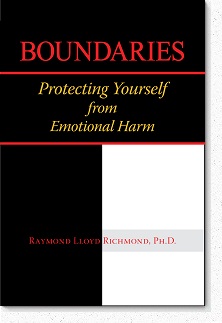
Boundaries by Raymond Lloyd Richmond, Ph.D. Always
treat others with respect and dignity, even if you do not agree with them. But if
they treat you with a lack of respect and dignity, then protect yourself with healthy
boundaries. This book teaches you about healthy psychological boundaries.
Ordering
Information |
|
|
 |
|
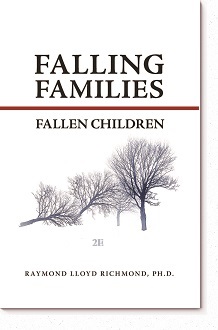
Falling Families, Fallen Children by Raymond Lloyd Richmond, Ph.D. Do
our children see a mother and a father both living in contemplative love for
God with a constant awareness of His presence and engaged in an all-out battle
with the evil of the world? More often than not our children don’t see living
faith. They don’t see protection from evil. They don’t see genuine, fruitful
devotion. They don’t see genuine love for God. Instead, they see our external
acts of devotion as meaningless because they see all the other things we do that
contradict the true faith. Thus we lose credibility—and when parents lose credibility,
children become cynical and angry and turn to the social world around them for
identity and acceptance. They are children who have more concern for social approval
than for loving God. They are fallen children. Let’s bring them back.
Ordering
Information |
|
|






















 Learn more about boundaries
  A
reader’s view of the healing process
A
reader’s view of the healing process