|
|
|
Psychological
Healing
in the Catholic Mystic Tradition

Questions
and Answers
Why
do religious and clerics have such a hard time with chastity and
celibacy? |
 ges ago, Satan made a bet with
God that he would be able to undermine a man of great faith. The book of
Job tells the story. ges ago, Satan made a bet with
God that he would be able to undermine a man of great faith. The book of
Job tells the story.
More recently, Satan made another
bet, this time about the Church herself. Toward the end of the 19th century,
Pope Leo XIII mystically “overheard” the details. Allegedly, Satan
declared that, given enough time, he could undermine the Church. Christ asked
him how much time he wanted. Satan said he could do it in a hundred years.
Christ asked which hundred years he wanted. Satan chose the 20th
century.
Now, we don’t know exactly
when the wager formally
started.[1]
Nevertheless, we are witness today to three effects of Satan’s work,
one effect spiritual, the other two psychological. They are grave problems
because they attempt to defile the divine mysteries by reducing worship to
acts of human fellowship.
Effect 1:
Spiritual Disintegration Among the Clerics
The best way to confuse and scatter
the sheep is to cripple the shepherds. This was initiated in several
ways.
• |
Fostering laxity in
Mass attendance and indifference to, if not outright
contempt for, daily Mass. |
• |
Fostering indifference to, if
not outright contempt for, authentic
liturgy. |
• |
Fostering indifference to, if
not outright contempt for, Church
Tradition. |
• |
Fostering indifference to, if
not outright contempt for, the literal reality of demonic influence in our
daily lives and our need to fight a constant spiritual battle against
evil. |
• |
Fostering indifference to, if
not outright contempt for, constant contemplative
prayer. |
• |
Fostering indifference to, if
not outright contempt for, devotion to the Blessed Virgin. |
• |
Fostering indifference to, if
not outright contempt for, devotional prayer, such as the
Rosary. |
• |
Fostering indifference to, if
not outright contempt for, Eucharistic adoration. |
• |
Fostering indifference to, if
not outright contempt for, prayers for the poor souls in
Purgatory. |
• |
Fostering indifference to, if
not outright contempt for, veneration of all the
Saints. |
|
The third secret
of Fatima points directly to this problem because the text of that secret,
which has been suppressed by the Church hierarchy, warns of a great
apostasy that will begin at the very top of the Church hierarchy itself, as
the reason for multitudes of souls being lost like so many stars being swept
from the sky (see Revelation 12:4). Moreover, the consequence of this
betrayal of true Catholic dogma will be schism, war, and martyrdom. Where will
the faithful be then? Well, if they remain under the protection of the Immaculate
Heart of Mary, they will be safe, but those who reject true dogma will
be doomed. |
|
Effect 2:
The Problem with Friendships
Before Vatican II, there was
a rule that religious and clerics were to avoid close friendships. This rule
wasn’t bad in its ultimate intent, for mystics have long emphasized
that no human relationships should interfere with love for God. And, if you
really experience true love for God, it will be
impossible to desire anything other than being
absorbed in divine love.
But this rule also caused many
unexpected problems, for if human friendships
are forbidden, as a misguided way to inspire love for God, then everything
backfires, and it only strengthens and amplifies the desire for human emotional
closeness in the hearts of spiritual novices. The frustrated desire for
friendship can easily become a secret desire for
sexual satisfaction.
Vatican II reversed this rule
and now encourages intimacy in all relationships. But for pre-Vatican II
religious and clerics, this reversal was a bit like taking a soldier trained
for combat and discharging him to civilian life without “untraining”
all the combat defenses. Such military foolishness only encourages the ex-soldier
to continue living a life based on aggressive hostility.
Well, imagine someone trained
to fear and avoid his inner emotional life who is then told to be
“intimate.” First of all, this demands that that person give what
he never learned how to give (emotional honesty); second, it overwhelms him
with freedom and responsibility he never learned
how to wield.
And this leads to a second
psychological problem.
Effect 3:
Teaching Intimacy with Humanistic Psychology
Today, in order to reduce fears
of emotional intimacy, we have books and articles and retreats based on
humanistic psychology and Jungian pseudo-mysticism
that teach the value of the psychological “self,” of human
“energy” needs, and of “natural” sexual wholeness. They
preach that self-denial amounts to self-hatred,
that the saints represent emotional repression raised to
unhuman ideals, and that Scripture demands
something unrealistic for ordinary persons.
Consequently, the Church has
been infested with psychologists, counselors, priests, and lay ministers
who idealize and glorify “love” relationships as the real meaning
of Christianity. In essence, the divine mysteries have been reduced to human
fellowship, and many Catholics have now succumbed to the popular notion that
Christian communion is a matter of happiness and friendship, and coffee
and donuts, rather than the Body and Blood of Christ.
Because of this subversion of
faith, Catholics have been cheated of any awareness of the
spiritual battle necessary for their
salvation. Thus many Catholics today have become
lukewarm, making them easy targets for the devil.
I have nothing against
friendships. But I know that anyone who plays
chess with the devil and expects to win is a fool.
|
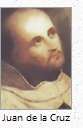 |
. . . the one
who would go to God relying on natural ability and reasoning will not be
very spiritual.
—Saint John of the Cross
The Living
Flame of Love, 2. 14 |
|
The devil knows more about psychology
than anyone who tries to stand up against him, so no Jungian psychobabble
can teach holiness.
|
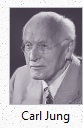 Carl Jung’s mother
practiced spiritism and his father was a Protestant minister who lost his
faith. Jung grew to despise his father’s
hypocrisy, and his “spiritual” attitude
to life was stained with a secret need to disavow authority. Therefore, his
psychology, too, is fundamentally anti-Christian. His article, Answer
to Job, is filled with blasphemy. Carl Jung’s mother
practiced spiritism and his father was a Protestant minister who lost his
faith. Jung grew to despise his father’s
hypocrisy, and his “spiritual” attitude
to life was stained with a secret need to disavow authority. Therefore, his
psychology, too, is fundamentally anti-Christian. His article, Answer
to Job, is filled with blasphemy.
Is it any wonder,
then, that a man who discarded the concept of sin
and made every effort to reduce evil to a mere
psychological problem could have committed
adultery with one of his patients, right
in his own house, right under the nose of his wife, and say that he was doing
nothing wrong?
And yet you
don’t have to look very far today to find “Catholic” retreats
that claim to provide “spiritual” healing through Jungian
psychology. |
|
A Gift of
Grace
The hard truth of all this is
that you can never live an emotionally open life of
chastity unless you understand it as a gift of divine
grace. Saint Augustine, for example, learned this the hard way. He repeatedly
failed to control his rakish desires until he gave himself over totally to
God:
|
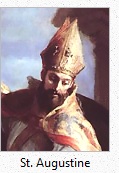 |
I thought that
continence arose from one’s own powers. . . . I was foolish enough not
to know . . . that no one can be continent unless You grant it. For You would
surely have granted it if my inner groaning had reached Your ears and I with
firm faith had cast my cares on You. |
|
|
—Saint Augustine,
Confessions 6.11.20 |
|
But when temptations abound and
prayer has been undermined, there can be only one consequence: sin, in
abundance.
The Pearl of
Great Value
Therefore, there’s only
one way to live in chastity: glorify God, not “relationships,”
glorify the Cross, not Quietist
“spirituality”, and let the Holy Spirit, not
humanistic psychology, teach you how to
love with a pure heart.
But to purchase this
“pearl” you have to pay for it with everything you have.
Nevertheless, many in the Church
will continue to have problems with a chaste, continent lifestyle, and liberal
humanism will thrive in place of sound theological counsel.
Why?
“Well, that pearl you speak
about is nice,” they will say, “but it’s just too expensive.
We need something the ordinary person can afford.”

Notes.
1. In her visions, the Venerable Anne Catherine
Emmerich said that Satan would be freed for “awhile” about fifty
or sixty years before the year 2000 AD. See Emmerich, Anne Catherine. The
Life of Jesus Christ and Biblical Revelations
(TAN Books and
Publishers), Vol. 4, pp. 353–354.
Hmm. . . right around the spread of Communism. And modern cinema.
And television. And New Age spirituality and psychology. And Vatican II. . . well,
it’s not that Vatican II was evil in itself, but that in acquiescing to secular
humanism, the Church opened the doors to the devil along with the rest of the crowd.
Additional
Resources
The
Story of a Repentant Psychologist —in an interview with Dr.
William Marra, Dr. Coulson, a contrite Catholic psychologist, discusses his
role in the destruction of Catholic religious orders, and his subsequent
change of mind.
AA-1025
|
 |
Abandoned in childhood by
his father, a man sought his revenge by laying plans to destroy the Catholic
Church from within. With the support of his Communist backers, he became
a priest influential in Vatican II and beyond—but then something happened
that he didn’t plan. The God in whom he did not believe caused him to
write his memoirs and then brought about his unexpected death in a traffic
accident. Subsequently, the memoirs were brought to light and published.
Moreover, in His great mercy, God gave the man a short time in a coma to
contemplate his sins before he actually died. We don’t know the ultimate
disposition of his soul, but we do know the reason for the unexpected disruption
to his plans: the mystical sacrifice of a young woman known to the man as
“Raven Hair.” Her sacrifice? She set aside her romantic hopes for
this intriguing man and became a Carmelite nun to pray for his soul and for
the good of the whole Church. Thus the conspiracy has been exposed, even though
its effects are real and continue to affect the entire Church today.
TAN Books and Publishers |
Healing
A treasure of a resource for psychological
and spiritual healing. Information gathered from my websites is now available at your
fingertips in book form.
|
 |
|
Though Demons Gloat: They Shall Not Prevail
by Raymond Lloyd Richmond, Ph.D.
Though we are attacked by liberal activists from without and by apostasy
from within, the true Church—that is, the body of those who remain
faithful to Church tradition—weeps, and she prays, because she knows
the fate of those who oppose God.
Our enemies might fear love, and they can push love
away, but they can’t kill it. And so the battle against them cannot be
fought with politics; it requires a profound personal struggle against
the immorality of popular culture. The battle must be fought in the
service of God with pure and chaste lifestyles lived from the depths of
our hearts in every moment.
Ordering Information |
|