|
|
|

I was
sexually abused by my father and raped by my uncles. Now I’m a Lesbian,
and I know that God loves me as I am.
 od is a loving God who wants to
forgive and heal you. So, yes, God loves you. He also loves
fathers who abuse their children. He loves rapists. And, as you can read
in the Gospels, He loves tax collectors and prostitutes as well, and He has
a special concern for the sick, the wounded, and the poor. God even loves
those who, despite His love for them, refuse to repent their sins and send
themselves into eternal separation from His love. od is a loving God who wants to
forgive and heal you. So, yes, God loves you. He also loves
fathers who abuse their children. He loves rapists. And, as you can read
in the Gospels, He loves tax collectors and prostitutes as well, and He has
a special concern for the sick, the wounded, and the poor. God even loves
those who, despite His love for them, refuse to repent their sins and send
themselves into eternal separation from His love.
|
To say that
“god loves us as we are” means that God gives His love to
us as a gift and that we can do nothing to earn it. But we can do many things
to push it away. To push God’s love away is a sin, and, if we don’t
repent our sins before we die, then those sins will condemn us to everlasting
separation from God in the spiritual realm. |
|
 God’s
love for us, therefore, is not an “anything
goes, I’m OK, you’re OK” kind of sentimental acceptance. To
say that God loves us means that God calls us away from our
sins into a life of holiness. God’s
love for us, therefore, is not an “anything
goes, I’m OK, you’re OK” kind of sentimental acceptance. To
say that God loves us means that God calls us away from our
sins into a life of holiness.
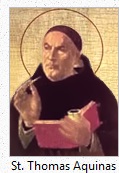
As Saint Thomas Aquinas explained,
to love is “to wish the good of another” (St. Thomas Aquinas,
Summa Theologica. I-II, 26, 4).
Therefore, God, in His love for
us, calls us to a life of holiness, looking to our good and our
salvation, knowing full well that left to our
own blindness and slavery to sin we will
send ourselves to hell.
Rape
and incest are despicable crimes and grave sins, and children abused
by persons who commit those sins suffer tremendous emotional trauma. Yet
in choosing to live a life-style defiant of chastity you “act out”
the emotional pain of your childhood abuse. That is, instead of seeking to
heal the emotional wounds of the abuse through
forgiveness
and trust in God,
you use your bodily sexuality to express the confusion
and bitterness you feel about the failure of your mother and father to protect
you from abuse. It’s as if you are saying, “I’m so angry that
you allowed this to happen to me that I will desecrate love itself to pay
you back for what I have had to suffer.”
Thus in the past even until now you
protect yourself from emotional pain with anger, and so your anger is your resistance
to opening yourself to trust in God and to live a holy and
chaste lifestyle.
|
In healthy
psychosexual development, the daughter’s bond of dependent
neediness on the mother must be broken through her affection for her
father. By “coming between” the daughter
and the mother, the father ensures that the girl will eventually be able
to function independently in the world. But if the father bungles his role, the
master-slave dialectic by which one woman gives herself in total submission to
another woman represents an angry mockery of the father’s
proper symbolic protection of the family.
Moreover, the masculine affectations of the “master” in such a
relationship represent an identification with masculine brutality—which,
in psychological language, is called
identification
with the aggressor.
This master-slave dialectic can also be motivated by the girl’s unconscious
hatred for her mother for failing to be a trustworthy source of emotional
consolation. The dialectic thereby reduces true motherly love to caricatured
extremes: the “mother’s” complete domination of the
“child,” and the “child’s” complete submission to
the “mother.” |
|
So, in His
true love for you, God constantly calls you away
from the unconscious anger at your parents that
will lead you into spiritual self-destruction,
and He calls you into the way of chaste holiness. Just as Christ Himself
forgave those who persecuted Him, you, too, can
forgive those who hurt you, taking up your
cross and following Christ in
chastity and
obedience—rather than make a mockery of divine
love and protection.
|