|
|
|

I have
been reading about the abuse scandals in the Church, specifically about how
women/girls are victimized in greater numbers than males, a fact that gets
overlooked given the frequency of abuse of women/girls in general. Not to
discount the affects of ANY abuse on anyone. I read about a researcher studying
chastity in the priesthood who estimates that 20% of priests are engaged
with sex relations with women at any one time, and only 2% of priests actually
maintain their vows of chastity. I would guess a large number are engaged
in gay acts/relationships. I didn’t see it in the article, but I would guess
that priests are breaking their vows through masturbation. These sort of facts
are kind of depressing and discouraging to me as someone trying to find my way
back to the Church; not that I would use their bad behavior to act badly myself.
How can I find guidance if the odds are so pathetic I’m going to find a priest who
truly practices the faith? Aside from the question of whether a priest
masturbates or not, not that that isn’t significant, but my greater
fear is how would I know that I’m not placing my trust in an abuser/rapist?
Even if he is not exploitative to me, personally.
|
 esearch such as this usually has
some methodological flaws that must be carefully evaluated before accepting
the conclusions at face value, so there may be more good priests than the
article suggests. Still, I agree that there is good reason for dismay, and
so I will address only the direct questions you ask. esearch such as this usually has
some methodological flaws that must be carefully evaluated before accepting
the conclusions at face value, so there may be more good priests than the
article suggests. Still, I agree that there is good reason for dismay, and
so I will address only the direct questions you ask.
“How would I know that I’m
not placing my trust in an abuser/rapist?” Well, in short, you can never
know for certain—except after the fact of his trying to abuse you. Still, even if
a priest is violating his vow of chastity, he can administer the sacraments
legitimately (see below). To be prudent regarding your safety, though, it will be
necessary to maintain an ongoing awareness of all emotional cues in your
interactions with any priest. If he makes any sexual suggestions or becomes
physically intrusive, then get away, fast. Run to your bishop and make a complaint.
Do not discount any odd behavior out of a desire to avoid being
“judgmental.”
|
To tell someone
that he is living in sin and is in grave danger of ending up in
hell is a warning, not judgment. As for what will
actually happen to this poor soul . . . well, only God can make that
judgment. |
|
Consequently, it will take courage
to stay alert and recognize sin as it slowly reveals
itself. And this leads us to the underlying problem.
The Underlying
Problem
Sadly, but simply stated, most Catholics
today have forsaken the virtue of chastity. This is because
most persons today, right from childhood, have been brainwashed by
education and
social media to believe that sexuality, not God, is the
source of our emotional comfort. The noble ideal of Holy Matrimony
has been pushed into the gutter by the desperate search for sex partners. Consequently, just
about all men who set out to become priests carry within them the pernicious psycho-spiritual
infection of this brainwashing, and hardly anything in their priestly education is directed
at deprogramming their core false beliefs about sexuality.
Yes, they can be taught to resist temptation, and they can
teach others to resist temptation, but deep in their hearts they are drawn to the glittering
desire for sexual delight more than they are drawn to
God.
Alone But Not
Lonely
So, you ask, “How can I find guidance
if the odds are so pathetic I’m going to find a priest who truly practices
the faith?” The answer here is that you must find your guidance by yourself.
You will be alone, but you don’t have to be lonely. So let me explain.
I say “you don’t have to be lonely” because
your guidance must begin with the sacraments
of the Church. And right here it is important to understand that the personal sanctity
of the priest does not affect the validity of the sacraments. Theologically,
Christ opened up this issue Himself: when His disciples came to Him in
indignation that someone who did not follow them had been driving out demons
in Jesus’ name, He told them, “Do not prevent him. There is no
one who performs a mighty deed in My Name who can at the same time speak
ill of Me” (see Mark 10:38–39).
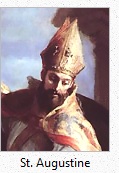 Ecclesiastically, Saint
Augustine addressed this issue back in the fourth century when he said, “The
spiritual power of the Sacrament is indeed comparable to light: those to
be enlightened receive It in Its purity, and if It should pass through defiled
beings, It is not Itself defiled.” Ecclesiastically, Saint
Augustine addressed this issue back in the fourth century when he said, “The
spiritual power of the Sacrament is indeed comparable to light: those to
be enlightened receive It in Its purity, and if It should pass through defiled
beings, It is not Itself defiled.”
The Catechism of the Catholic
Church quotes this passage from Augustine in support of its declaration that
“since it is ultimately Christ who acts and effects salvation through
the ordained minister, the unworthiness of the latter does not prevent Christ
from acting” (§ 1584). So when you’re in the Church, even though
you may be alone in your desire for holiness, you don’t have to be lonely.
Christ is always there with you, and so is the Holy Spirit.
But you are there by
yourself.
You Are There
By Yourself—and It Will Break Your Heart
The Catechism also says
that the “power of the Holy Spirit does not guarantee all acts of ministers
in the same way. While this guarantee extends to the sacraments, so that
even the minister’s sin cannot impede the fruit of grace, in many other
acts the minister leaves human traces that are not always signs of fidelity
to the Gospel and consequently can harm the apostolic fruitfulness of the
Church” (§ 1550).
|
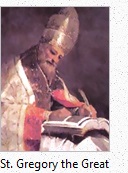 There is something else
about the life of the shepherds . . . which discourages
me greatly. . . . I speak of our absorption in external affairs;
we accept the duties of office, but by our actions we show that we are attentive
to other things. We abandon the ministry of preaching and, in my opinion,
are called bishops to our detriment, for we retain the honorable office
but fail to practice the virtues proper to it. Those who have been entrusted
to us abandon God, and we are silent. They fall into sin, and we do not extend
a hand of rebuke. There is something else
about the life of the shepherds . . . which discourages
me greatly. . . . I speak of our absorption in external affairs;
we accept the duties of office, but by our actions we show that we are attentive
to other things. We abandon the ministry of preaching and, in my opinion,
are called bishops to our detriment, for we retain the honorable office
but fail to practice the virtues proper to it. Those who have been entrusted
to us abandon God, and we are silent. They fall into sin, and we do not extend
a hand of rebuke.
But how can we who neglect ourselves be able to correct someone else? We
are wrapped up in worldly concerns, and the more we devote ourselves to external
things, the more insensitive we become in spirit. |
|
|
— from a homily on the Gospels
by Saint Gregory the Great, pope
(Office of Readings, Saturday of the 27th Week in Ordinary Time) |
|
Just as Saint Gregory said in
his own time, you will find many priests today who fail to preach the
truth. They might preach about Christ, but
they fail to preach Christ. They might preach about
patience and
peace, but they themselves are failing in patience and
peace because their minds are overflowing with intellectual arrogance while their
hearts are lacking in humble charity. And it will
break your heart.
You will find many priests unwilling
to speak about the need to put aside selfishness,
competitiveness, rivalries, lawsuits, partying
(“drinking bouts”), lust,
lifestyles defiant of chastity, foul language, and
angry outbursts. These are the things on which
our society is now based. Many bishops and priests
have too much to lose (like financial support from arrogant, cut-throat,
hard-drinking, licentious patrons) by preaching the truth in its explicit
fullness. And it will break your heart.
You will find many priests unwilling
to preach chastity. And it will break your
heart.
You will find bishops unwilling
to root out dissension and
heresy in their dioceses, all because they
are afraid and unwilling to insist on fidelity to the Gospel and the very
tradition that martyrs have died to protect through
the ages. And it will break your heart.
You will find so-called Catholic
schools and universities not only unwilling to teach the Gospel truth but
also eagerly and flagrantly teaching outright
heresy. And it will break your heart.
You will find that many of those at
the Novus Ordo Mass are more concerned about the liberalism of accepting anything,
even sin, in the name of Christ, than they are about conserving the real faith.
And it will break your heart.
You will find that many of those
at the traditional Latin Mass are more concerned about the politics of resisting
the Novus Ordo Mass than they are about pious love for Christ. And it will break
your heart.
You will find many Christians,
everywhere, claiming with their words that they
believe in Christ but who have no yearning for mystical
piety in their hearts. And it will break your heart.
You will find yourself thirsting
for holiness, and all around you will be an ocean of
sin. You will be alone. And it will break your heart.
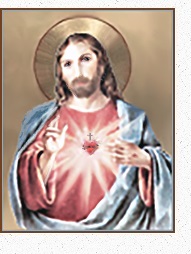
Christ’s
Broken Heart
Therefore, if you are to
find the truth, you must find it by yourself. It will be
necessary to focus on your own desire for a
holy life, seeking especially modesty
and chastity. There are many good priests and many good
spiritual directors in this world, but you cannot
recognize them unless you yourself make a disciplined effort to understand
the very truth to which they should be leading you.
 Therefore, it will be important to put as much attention into
spiritual reading and prayer as most of
the persons around you put into TV, movies, social media, sports, shopping, and other
frivolous entertainment. You will find yourself standing
alone, opposed to the culture
around you. Snatched by evil themselves, your friends and
relatives will reject you. Very few will understand you. And it
will break your heart. You will be alone, but you won’t be lonely. Christ, too,
understands full well the pain of a broken heart.
Therefore, it will be important to put as much attention into
spiritual reading and prayer as most of
the persons around you put into TV, movies, social media, sports, shopping, and other
frivolous entertainment. You will find yourself standing
alone, opposed to the culture
around you. Snatched by evil themselves, your friends and
relatives will reject you. Very few will understand you. And it
will break your heart. You will be alone, but you won’t be lonely. Christ, too,
understands full well the pain of a broken heart.
It sounds dismal, doesn’t
it? Well, as I said, take heart: Christ’s broken heart. For if you want
to be in the Church, it is Christ’s broken heart that you must seek.
This is not something to be taken
lightly, even though too many of us—including many bishops, priests,
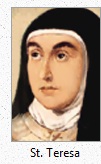
and deacons—do take Christianity too lightly. Saint
Teresa of Avila—who had her share of bad confessors—offered this warning to those
who come seeking Christ:
 And His Majesty, as one
who knows our weakness, is enabling the soul through
these afflictions and many others to have
the courage to be joined with so great a Lord and to take Him as its
Spouse. And His Majesty, as one
who knows our weakness, is enabling the soul through
these afflictions and many others to have
the courage to be joined with so great a Lord and to take Him as its
Spouse.
You will laugh
at my saying this and will think it’s
foolishness. . . . but . . . I tell you
there is need for more courage than you think. |
— Saint Teresa of Avila
The Interior Castle
VI:4.1–2. |
So take courage, seek purity
of heart, and pray ardently for guidance—and you
shall have it.

Healing
Psychological Healing in the Catholic Mystic tradition
by Raymond Lloyd Richmond, Ph.D.
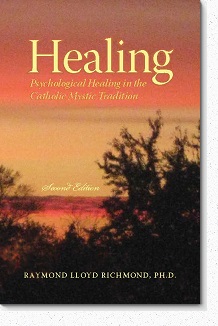 A treasure of a resource for psychological
and spiritual healing. Information gathered from my websites is now available at your fingertips
in book form with a comprehensive index. A treasure of a resource for psychological
and spiritual healing. Information gathered from my websites is now available at your fingertips
in book form with a comprehensive index.
Psychological defenses help to protect us from
emotional injury, but if you cling to the defense mechanisms that were created in your
childhood and carry them on into adulthood—as most everyone does unconsciously—your quest
for spiritual healing will be thwarted by overwhelming resentments and conflicts.
Still, God has been trying to show you that there is more to life than resentment and
conflict, something so beautiful and desirable that only one thing can resist its pull:
hate.
So now, and in every moment until you die, you will have a profound choice between your
enslavement to old defenses and the beauty of God. That decision has to come from you.
You will go where you desire.
More information
|